LastWeekTonight
Executive Summary
Breaking news on a weekly basis. Sundays at 11PM - only on HBO. Subscribe to the Last Week Tonight channel for the latest videos from John Oliver and the LWT team.
Across 10 videos, this channel demonstrates low persuasion intensity, primarily through Character flattening. Recurring themes suggest consistent operative goals beyond stated content.
Key Metrics
Character flattening
Reducing a complex person to one defining trait — hero, villain, genius, fool — stripping away nuance that would complicate the narrative. Once someone is labeled, everything they do gets interpreted through that lens.
Fundamental attribution error (Ross, 1977); Propp's narrative archetypes (1928)
Channel Rating
Moderate persuasion used transparently. The channel is upfront about its perspective — this is rhetoric, not manipulation.
What's Valuable Here

This clip provides a brief update on a long-running community-focused stunt involving minor league sports culture.
Minor League Baseball Update
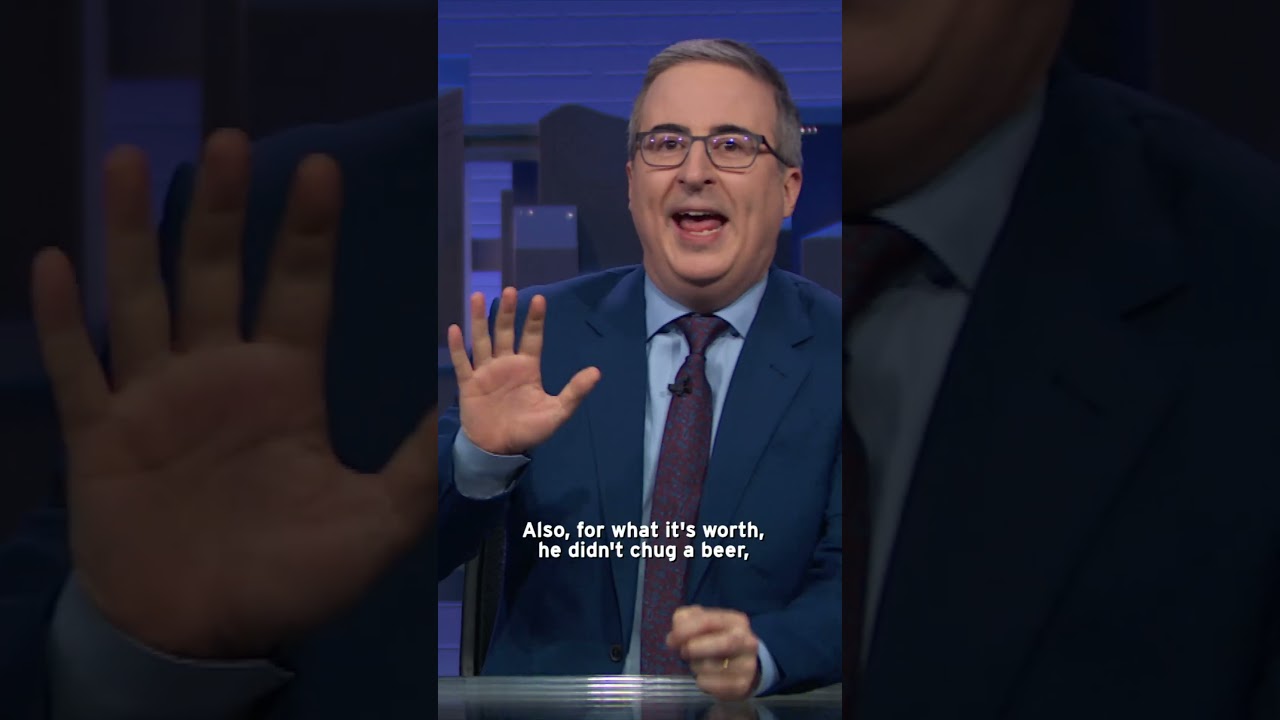
This clip provides a concise example of how political satire uses hyperbole to highlight specific public figures currently in the news cycle.
Kash Patel #lastweektonight

This content highlights the intersection of celebrity culture and federal policy appointments, specifically regarding the oversight of Medicare Advantage.
Dr. Oz & Medicare Advantage #lastweektonight

Provides a concise, evidence-based correction of specific statistical errors that might otherwise mislead the public.
RFK Jr. & Statistics #lastweektonight

Provides a concise, humorous entry point into local NYC political events that might otherwise be overlooked by a national audience.
NYC Elections #lastweektonight

Provides a concise, humorous summary of recent public setbacks for one of the world's most influential figures.
SpaceX #lastweektonight
Persuasion Dimensions
Most Used Techniques
Character flattening
Reducing a complex person to one defining trait — hero, villain, genius, fool — stripping away nuance that would complicate the narrative. Once someone is labeled, everything they do gets interpreted through that lens.
Fundamental attribution error (Ross, 1977); Propp's narrative archetypes (1928)
Association
Pairing a new idea, product, or person with something you already feel positively or negatively about. The goal is to transfer your existing emotional response without any logical connection. It works below conscious awareness.
Evaluative conditioning (Pavlov); IPA 'Transfer' technique (1937)
Curiosity gap
Creating a deliberate gap between what you know and what you want to know, triggering curiosity as an almost physical itch. Headlines like "You won't believe..." are engineered to exploit this. The content rarely delivers on the promise.
Loewenstein's Information Gap Theory (1994)
Viewer Guidance
Content structure prioritizes keeping you watching over informing you. Ask if the format serves understanding or attention.