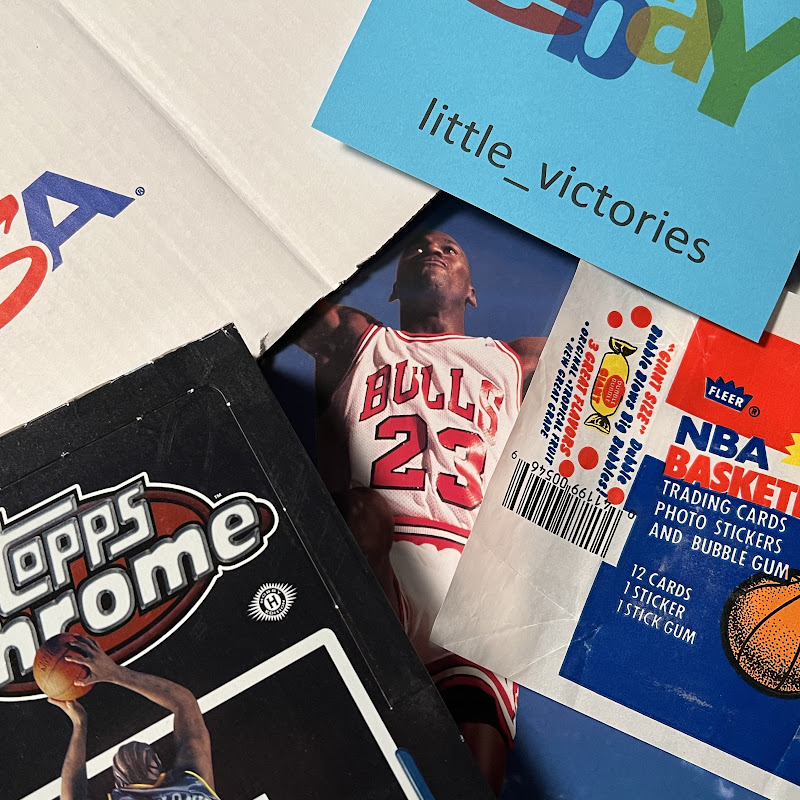
Little Victories Sports Cards
Executive Summary
Submission reveals and informative grading content for sports cards
Across 4 videos, this channel demonstrates low persuasion intensity, primarily through Performed authenticity. Recurring themes suggest consistent operative goals beyond stated content.
Key Metrics
Performed authenticity
The deliberate construction of "realness" — confessional tone, casual filming, strategic vulnerability — designed to lower your guard. When someone appears unpolished and honest, you evaluate their claims less critically. The spontaneity is rehearsed.
Goffman's dramaturgy (1959); Audrezet et al. (2020) on performed authenticity
Channel Rating
Minimal persuasion techniques detected. Content is primarily informational.
What's Valuable Here

Provides a realistic look at the high-variance and often frustrating nature of professional sports card grading for collectors.
23 Card PSA Sub Order Reveal! 👎 Got tight New Jersey grader....

Provides a transparent look at the financial realities of a card-grading business and the specific differences in how CGC and PSA handle 'error' cards and 'altered' cards.
9 Card CGC Reveal 👍 + My thoughts on PSA price increase, fut...

Provides a very granular look at the logistics of card grading, including specific shipping quirks and a side-by-side comparison of expected vs. actual grades.
25 Card CGC Sub Order Reveal! 🦃 My thoughts & review of CGC....

Provides realistic insight into current PSA turnaround times and the specific visual defects (like bottom-heavy centering) that lead to a Grade 9 instead of a 10.
25 Card Pokemon PSA Sub Order Reveal 👍 $18.99 Bulk Rate Gra...
Persuasion Dimensions
Most Used Techniques
Performed authenticity
The deliberate construction of "realness" — confessional tone, casual filming, strategic vulnerability — designed to lower your guard. When someone appears unpolished and honest, you evaluate their claims less critically. The spontaneity is rehearsed.
Goffman's dramaturgy (1959); Audrezet et al. (2020) on performed authenticity
Us vs. Them
Dividing the world into two camps — people like us (good, trustworthy) and people not like us (dangerous, wrong). It exploits a deep human tendency to favor our own group. Once you accept the division, information from "them" gets automatically discounted.
Tajfel's Social Identity Theory (1979); Minimal Group Paradigm
Viewer Guidance
Information is consistently shaped from one angle. Seek out how other sources present the same facts.
This content frequently uses emotional appeal. Notice when feelings are being prioritized over evidence.