
The Ezra Klein Show
Executive Summary
A host who actually does the reading. Conversations worthy of the ideas they explore. Theories and frameworks that help you see the world a little bit differently — and a little more clearly. Got a suggestion for our next episode? Or a question you w...
Across 12 videos, this channel demonstrates low persuasion intensity, primarily through Anchoring. Recurring themes suggest consistent operative goals beyond stated content.
Key Metrics
Anchoring
Presenting an extreme number or claim first so everything after seems reasonable by comparison. The first piece of information becomes your reference point — even when it's arbitrary or deliberately inflated. Works even when you know the anchor is irrelevant.
Tversky & Kahneman's anchoring heuristic (1974)
Channel Rating
Moderate persuasion used transparently. The channel is upfront about its perspective — this is rhetoric, not manipulation.
What's Valuable Here
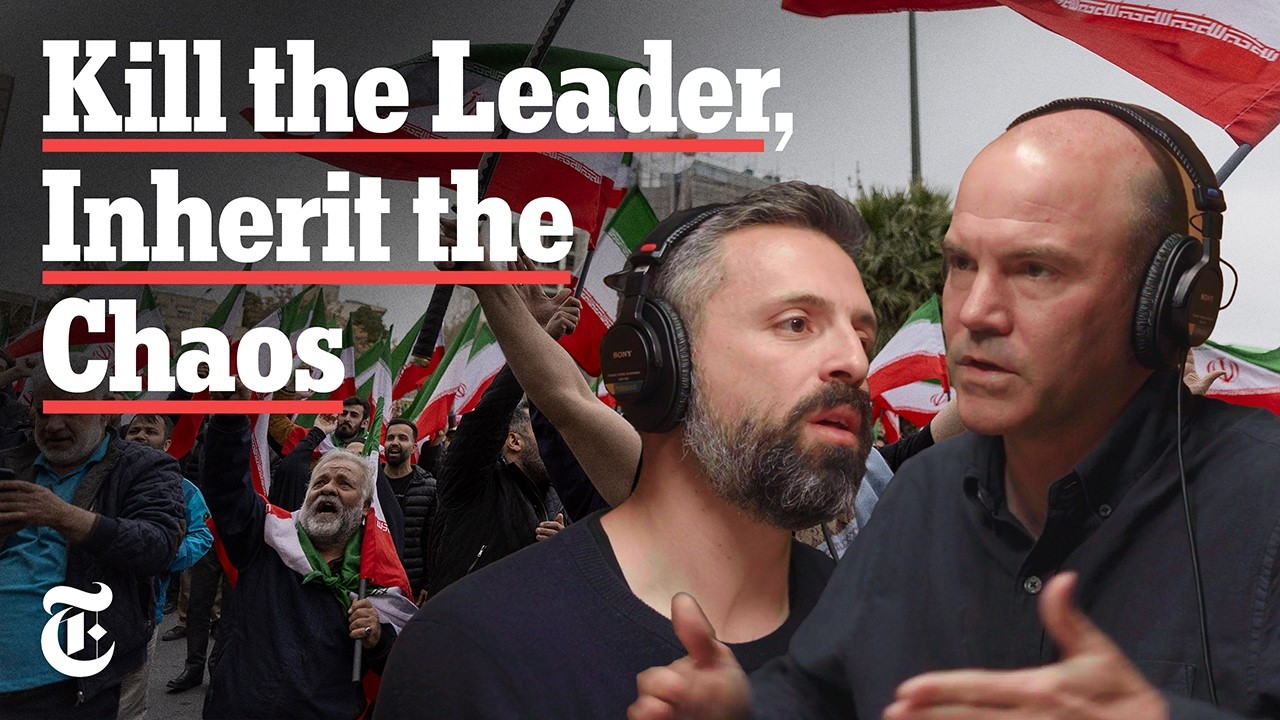
Provides detailed insider analysis from Ben Rhodes on Obama-era war-gaming scenarios and regional risks, offering frameworks for evaluating targeted strikes versus full interventions.
The Great Lie of War | The Ezra Klein Show

This clip provides a concise list of influential historical and political texts for viewers interested in the intellectual foundations of conservatism and early American history.
Book Recommendations from Dean Ball | The Ezra Klein Show

Provides a concise list of high-quality intellectual history and memoir recommendations for viewers interested in international relations and 20th-century history.
Book Recommendations from Ben Rhodes | The Ezra Klein Show

Provides a detailed breakdown of how political approval ratings on specific issues (tariffs, immigration) can diverge from a president's public messaging.
Trump ‘Is Living in a Fantasy Version of His Own Presidency’...

Provides a diverse list of high-quality literary and non-fiction recommendations ranging from 17th-century history to modern DC memoirs.
Book Recommendations from Ashley Parker and Michael Scherer ...

Provides a high-level conceptual framework for understanding how AI is evolving from simple text generation to multi-step autonomous problem solving.
How Fast Will A.I. Agents Rip Through the Economy? | The Ezr...
Persuasion Dimensions
Most Used Techniques
Anchoring
Presenting an extreme number or claim first so everything after seems reasonable by comparison. The first piece of information becomes your reference point — even when it's arbitrary or deliberately inflated. Works even when you know the anchor is irrelevant.
Tversky & Kahneman's anchoring heuristic (1974)
In-group/Out-group framing
Leveraging your tendency to automatically trust information from "our people" and distrust outsiders. Once groups are established, people apply different standards of evidence depending on who is speaking.
Social Identity Theory (Tajfel & Turner, 1979); Cialdini's Unity principle (2016)
Performed authenticity
The deliberate construction of "realness" — confessional tone, casual filming, strategic vulnerability — designed to lower your guard. When someone appears unpolished and honest, you evaluate their claims less critically. The spontaneity is rehearsed.
Goffman's dramaturgy (1959); Audrezet et al. (2020) on performed authenticity
Viewer Guidance
Information is consistently shaped from one angle. Seek out how other sources present the same facts.
Arguments rely on assumptions treated as obvious. Ask what you'd need to already believe for the claims to land.