
Anthropic
Executive Summary
We’re an AI safety and research company. Talk to our AI assistant Claude on claude.com. Download Claude on desktop, iOS, or Android. We believe AI will have a vast impact on the world. Anthropic is dedicated to building systems that people can rely...
Across 11 videos, this channel demonstrates low persuasion intensity, primarily through Performed authenticity. Recurring themes suggest consistent operative goals beyond stated content.
Key Metrics
Performed authenticity
The deliberate construction of "realness" — confessional tone, casual filming, strategic vulnerability — designed to lower your guard. When someone appears unpolished and honest, you evaluate their claims less critically. The spontaneity is rehearsed.
Goffman's dramaturgy (1959); Audrezet et al. (2020) on performed authenticity
Channel Rating
Moderate persuasion used transparently. The channel is upfront about its perspective — this is rhetoric, not manipulation.
What's Valuable Here

Humorously illustrates how ads degrade AI utility, specifically showcasing Claude's ad-free design as a user benefit.
How can I communicate better with my mom?

This video effectively illustrates a potential future user-experience conflict in AI interfaces through a creative and humorous scenario.
Is my essay making a clear argument?

This video effectively illustrates the potential user-experience friction that could occur if generative AI models adopt traditional interruptive advertising models.
Can I get a six pack quickly?

This video effectively uses satire to highlight the potential privacy and user-experience risks of integrating aggressive advertising into conversational AI.
What do you think of my business idea?
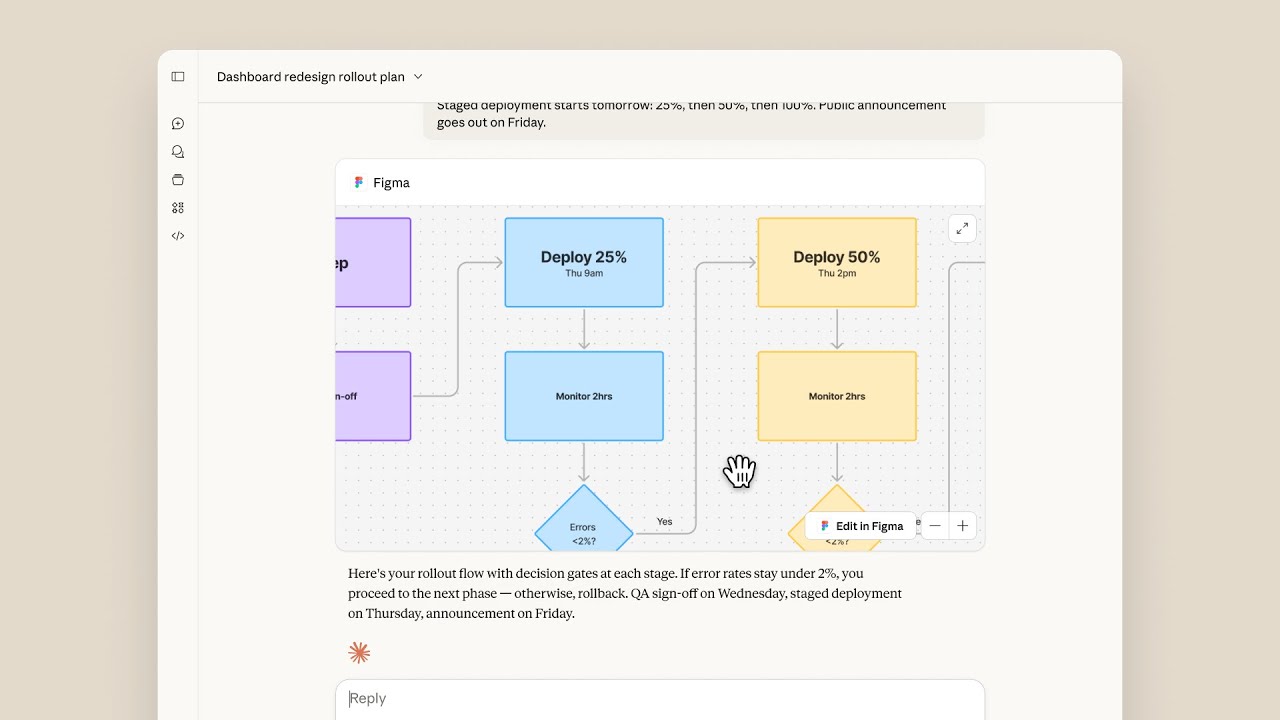
Provides a clear visual demonstration of how LLMs are evolving from chatbots into 'agents' capable of executing tasks across different software ecosystems.
Your tools are now interactive in Claude

Provides a clear visual overview of the intended user interface and integration capabilities of Anthropic's new agentic AI features.
Introducing Cowork: Claude Code for the rest of your work
Persuasion Dimensions
Most Used Techniques
Performed authenticity
The deliberate construction of "realness" — confessional tone, casual filming, strategic vulnerability — designed to lower your guard. When someone appears unpolished and honest, you evaluate their claims less critically. The spontaneity is rehearsed.
Goffman's dramaturgy (1959); Audrezet et al. (2020) on performed authenticity
Anchoring
Presenting an extreme number or claim first so everything after seems reasonable by comparison. The first piece of information becomes your reference point — even when it's arbitrary or deliberately inflated. Works even when you know the anchor is irrelevant.
Tversky & Kahneman's anchoring heuristic (1974)
Association
Pairing a new idea, product, or person with something you already feel positively or negatively about. The goal is to transfer your existing emotional response without any logical connection. It works below conscious awareness.
Evaluative conditioning (Pavlov); IPA 'Transfer' technique (1937)
Curiosity gap
Creating a deliberate gap between what you know and what you want to know, triggering curiosity as an almost physical itch. Headlines like "You won't believe..." are engineered to exploit this. The content rarely delivers on the promise.
Loewenstein's Information Gap Theory (1994)
In-group/Out-group framing
Leveraging your tendency to automatically trust information from "our people" and distrust outsiders. Once groups are established, people apply different standards of evidence depending on who is speaking.
Social Identity Theory (Tajfel & Turner, 1979); Cialdini's Unity principle (2016)
Viewer Guidance
Information is consistently shaped from one angle. Seek out how other sources present the same facts.
This content frequently uses emotional appeal. Notice when feelings are being prioritized over evidence.
Arguments rely on assumptions treated as obvious. Ask what you'd need to already believe for the claims to land.