We can't find the internet
Attempting to reconnect
Something went wrong!
Attempting to reconnect

Communication Profile (across 11 videos)
Stated Purpose
Gary Vaynerchuk is a serial entrepreneur and serves as the Chairman of VaynerX, the CEO of VaynerMedia, and the Creator and CEO of VeeFriends. Gary is considered one of the leading global minds on wha...
Operative Pattern
Across 10 videos, this channel demonstrates moderate persuasion intensity, primarily through Confirmation Appeal. Recurring themes suggest consistent operative goals beyond stated content.
Avg Intensity
Avg Transparency
Top Technique
Confirmation appeal
Selectively presenting information that confirms what you probably already believe. Content that matches your existing worldview requires almost no mental effort to accept — it just feels obviously true.
Wason (1960); Nickerson's confirmation bias review (1998)
Persuasion Dimensions
Per-Video Operative Goals — detected in individual analyses

The content aims to reinforce Gary Vaynerchuk's personal brand as a relentless, process-oriented entrepreneur to maintain his influence and authority in the business coaching space.

The content aims to reinforce GaryVee's brand as a holistic life/business mentor by encouraging viewers to address psychological barriers to success.

The video aims to drive adoption of live social shopping platforms like TikTok Shop and Whatnot, likely to increase the value of GaryVee's investments and consulting relevance in these emerging markets.

The content aims to validate GaryVee's expertise as a digital strategist and encourage creators to adopt his 'volume-first' content strategy on algorithmic platforms.

The content aims to reinforce Gary Vaynerchuk's personal brand as a 'tough love' business mentor while indirectly promoting his marketing services by framing success as a matter of 'math' and 'analytics.'
What's Valuable Here

It accurately describes the technical shift in how TikTok and Instagram Reels distribute content based on content-matching rather than follower counts.
We are in the “interest media” era no...

The video provides a concise and accurate historical anecdote regarding Grace Hopper's 'bug' at Harvard in 1947.
Little fun fact for you 😂 #funfacts #...

The video provides a helpful reminder that financial success does not solve underlying emotional unhappiness and encourages seeking professional help (therapy).
For some, the right investment is spe...

Provides a concise overview of the massive scale of the live-shopping industry and identifies specific platforms currently leading the trend.
I will keep pushing Live Shopping as ...
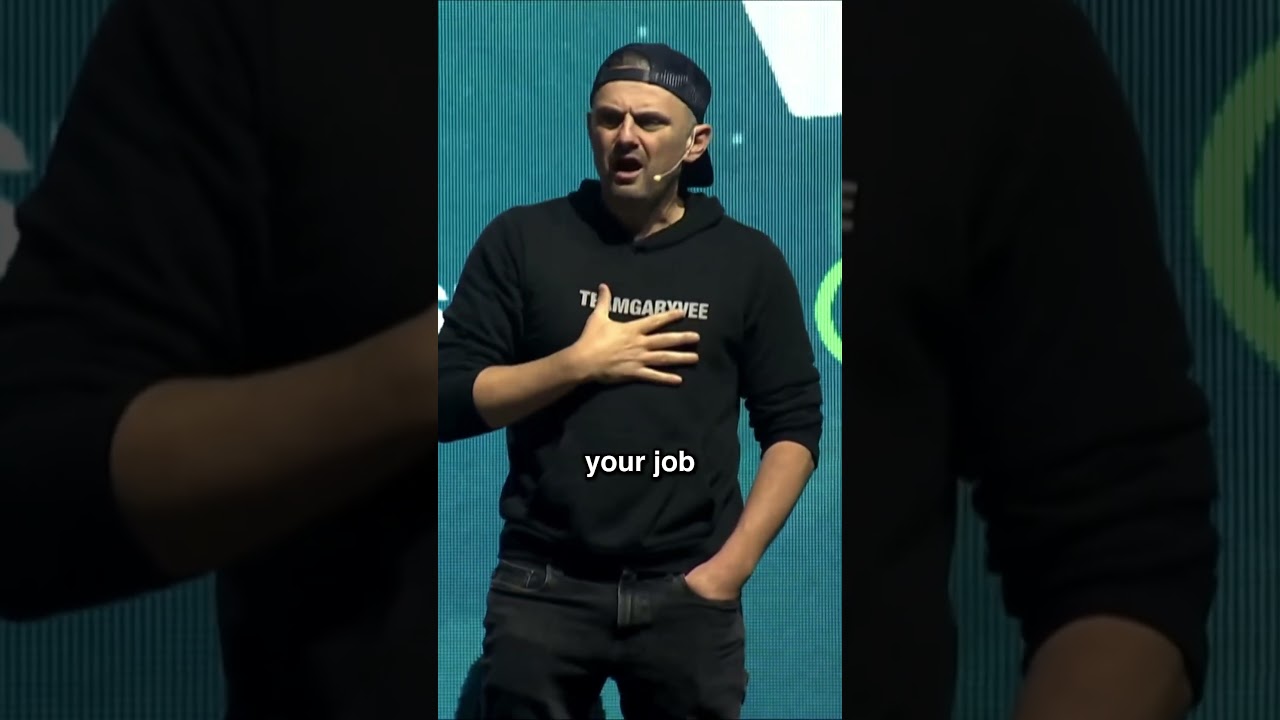
Provides a healthy reminder that leadership involves shielding employees from external stress rather than amplifying it.
Yooooo a lot of you need to hear 👂thi...

Provides a helpful reminder that internal resilience and confidence are critical components of a child's safety in any environment.
I really hope this helps a lot of par...
Viewer Guidance (3 tips)
Watch for emotional framing
This content frequently uses emotional appeal. Notice when feelings are being prioritized over evidence.
Consider alternative frames
Information is consistently shaped from one angle. Seek out how other sources present the same facts.
Question unstated assumptions
Arguments rely on assumptions treated as obvious. Ask what you'd need to already believe for the claims to land.
Technique Fingerprint (from knowledge graph)
Confirmation appeal
AI detected as: Confirmation Bias
Selectively presenting information that confirms what you probably already believe. Content that matches your existing worldview requires almost no mental effort to accept — it just feels obviously true.
Wason (1960); Nickerson's confirmation bias review (1998)
Urgency framing
AI detected as: False Urgency
Creating artificial time pressure to force a decision before you can think it through. 'Only 3 left!' 'Act now!' The technique works because genuine scarcity is a real signal, so the urgency feels rational even when it's manufactured.
Cialdini's Scarcity principle (1984); dark patterns research (Mathur et al., 2019)
Non-sequitur Pivot
This technique was detected by AI but doesn't yet map to our curated glossary. We're tracking its usage patterns.
Call To Action
This technique was detected by AI but doesn't yet map to our curated glossary. We're tracking its usage patterns.
Intensity amplification
AI detected as: Hyperbolic Opportunity Framing
Inflating the importance, drama, or shock value of information using superlatives, alarming framing, and emotional language. Once your alarm system activates, you stop evaluating proportionality.
Cultivation theory (Gerbner, 1969); availability heuristic (Tversky & Kahneman, 1973)
In-group/Out-group framing
AI detected as: High-certainty Framing
Leveraging your tendency to automatically trust information from "our people" and distrust outsiders. Once groups are established, people apply different standards of evidence depending on who is speaking.
Social Identity Theory (Tajfel & Turner, 1979); Cialdini's Unity principle (2016)
Confirmation appeal
Selectively presenting information that confirms what you probably already believe. Content that matches your existing worldview requires almost no mental effort to accept — it just feels obviously true.
Wason (1960); Nickerson's confirmation bias review (1998)
Urgency framing
Creating artificial time pressure to force a decision before you can think it through. 'Only 3 left!' 'Act now!' The technique works because genuine scarcity is a real signal, so the urgency feels rational even when it's manufactured.
Cialdini's Scarcity principle (1984); dark patterns research (Mathur et al., 2019)
Intensity amplification
Inflating the importance, drama, or shock value of information using superlatives, alarming framing, and emotional language. Once your alarm system activates, you stop evaluating proportionality.
Cultivation theory (Gerbner, 1969); availability heuristic (Tversky & Kahneman, 1973)
In-group/Out-group framing
Leveraging your tendency to automatically trust information from "our people" and distrust outsiders. Once groups are established, people apply different standards of evidence depending on who is speaking.
Social Identity Theory (Tajfel & Turner, 1979); Cialdini's Unity principle (2016)
Similar Channels (shared influence techniques)
Featured People
Analyzed Videos (11)
You gotta ❤️ your process
786 views

Lets share some positivity!
1.3K views
We are in the “interest media” era not the social media era anymore
5.1K views
Spoiler: Your content sucks
2.0K views

An astonishing era is upon us and so many of you with time 🕰️ on your hands
8.3K views

Little fun fact for you 😂 #funfacts #computerbugs
11.8K views

I really hope this helps a lot of parents
24.5K views
For some, the right investment is spending it on “dealing with some things”
8.2K views
I will keep pushing Live Shopping as an opportunity to all of you
20.3K views

Yooooo a lot of you need to hear 👂this
8.0K views

The Biggest Financial Opportunity This Generation Will See
190.4K views