We can't find the internet
Attempting to reconnect
Something went wrong!
Attempting to reconnect

Deep Dive with Ali Abdaal
@deepdivewithaliabdaal · 561.0K subscribers · 560 videos · 11 analyzed
Share Influence ReportCommunication Profile (across 11 videos)
Stated Purpose
Ali Abdaal, world's most followed productivity expert and author of 'Feel Good Productivity,' hosts Deep Dive podcast featuring inspiring creators, thinkers, and entrepreneurs. His key insight: happin...
Operative Pattern
Across 11 videos, this channel demonstrates low persuasion intensity, primarily through Performed Authenticity. Recurring themes suggest consistent operative goals beyond stated content.
Avg Intensity
Avg Transparency
Top Technique
Performed authenticity
The deliberate construction of "realness" — confessional tone, casual filming, strategic vulnerability — designed to lower your guard. When someone appears unpolished and honest, you evaluate their claims less critically. The spontaneity is rehearsed.
Goffman's dramaturgy (1959); Audrezet et al. (2020) on performed authenticity
Persuasion Dimensions
Per-Video Operative Goals — detected in individual analyses
The video aims to establish Ali Abdaal as a high-level business strategist while funneling viewers into his paid 'Part-Time YouTuber Academy' and newsletter ecosystem.

The content aims to promote Ali Abdaal's 'Part-Time YouTuber Academy' and his book by framing entrepreneurship as an accessible 'organizing' role rather than a technical skill set.

The content aims to establish the host and guest as authoritative experts in productivity to drive enrollments in the 'Part-Time YouTuber Academy' and 'Productivity Lab' communities.

The content aims to establish Ali Abdaal and TJ Power as authoritative guides on neurochemistry to drive subscriptions to their newsletters and communities.

The video serves as a high-level marketing demonstration for Russell Brunson's 'ClickFunnels' methodology while simultaneously funneling Ali Abdaal's audience into his own 'Productivity Lab' and 'Part-Time YouTuber' courses.
What's Valuable Here
The discussion on 'known costs vs unknowable benefits' provides a useful mental model for evaluating major life decisions like marriage or career changes.
Chasing Success vs True Fulfilment - ...

The video offers practical insights into the 'middle market' of small businesses (2-10 employees) and the specific mechanics of joint ventures and lead generation.
How to start a 7-figure business in 2...
The video provides a clear, actionable breakdown of the 'Jobs to be Done' framework and the importance of identifying high-leverage growth activities over busywork.
How I’m Scaling My Business from 7 to...

The video provides a useful taxonomy of community types (peer, proximity, course-powered, transformational) that helps clarify different business incentives.
How to make $10k/month from a communi...
Offers a highly accessible, if simplified, mental model for understanding why certain habits feel draining and how to build momentum through 'effortful' tasks.
How Dopamine Shapes Your Habits and P...

Offers a useful shift in perspective by identifying 'internal triggers' (boredom, anxiety) as the root cause of procrastination rather than just blaming apps.
How to Stay Focused and Beat Distract...
Viewer Guidance (3 tips)
Evaluate the ask
Calls to action follow emotional buildup. Consider whether the ask would feel as urgent without the preceding framing.
Consider alternative frames
Information is consistently shaped from one angle. Seek out how other sources present the same facts.
Question unstated assumptions
Arguments rely on assumptions treated as obvious. Ask what you'd need to already believe for the claims to land.
Technique Fingerprint (from knowledge graph)
Performed authenticity
AI detected as: Manufactured Authenticity
The deliberate construction of "realness" — confessional tone, casual filming, strategic vulnerability — designed to lower your guard. When someone appears unpolished and honest, you evaluate their claims less critically. The spontaneity is rehearsed.
Goffman's dramaturgy (1959); Audrezet et al. (2020) on performed authenticity
Association
AI detected as: Prestige Association
Pairing a new idea, product, or person with something you already feel positively or negatively about. The goal is to transfer your existing emotional response without any logical connection. It works below conscious awareness.
Evaluative conditioning (Pavlov); IPA 'Transfer' technique (1937)
Moral framing
AI detected as: Moral Framing Of Technical Problems
Presenting a complex issue with genuine tradeoffs as a simple choice between right and wrong. Once something is framed as a moral issue, compromise feels like complicity and disagreement feels immoral rather than reasonable.
Haidt's Moral Foundations Theory; Lakoff's framing research (2004)
Association
AI detected as: Brand-as-remedy Framing
Pairing a new idea, product, or person with something you already feel positively or negatively about. The goal is to transfer your existing emotional response without any logical connection. It works below conscious awareness.
Evaluative conditioning (Pavlov); IPA 'Transfer' technique (1937)
Performed authenticity
AI detected as: Self-referential Validation
The deliberate construction of "realness" — confessional tone, casual filming, strategic vulnerability — designed to lower your guard. When someone appears unpolished and honest, you evaluate their claims less critically. The spontaneity is rehearsed.
Goffman's dramaturgy (1959); Audrezet et al. (2020) on performed authenticity
Anchoring
Presenting an extreme number or claim first so everything after seems reasonable by comparison. The first piece of information becomes your reference point — even when it's arbitrary or deliberately inflated. Works even when you know the anchor is irrelevant.
Tversky & Kahneman's anchoring heuristic (1974)
Moral framing
Presenting a complex issue with genuine tradeoffs as a simple choice between right and wrong. Once something is framed as a moral issue, compromise feels like complicity and disagreement feels immoral rather than reasonable.
Haidt's Moral Foundations Theory; Lakoff's framing research (2004)
Association
Pairing a new idea, product, or person with something you already feel positively or negatively about. The goal is to transfer your existing emotional response without any logical connection. It works below conscious awareness.
Evaluative conditioning (Pavlov); IPA 'Transfer' technique (1937)
Performed authenticity
The deliberate construction of "realness" — confessional tone, casual filming, strategic vulnerability — designed to lower your guard. When someone appears unpolished and honest, you evaluate their claims less critically. The spontaneity is rehearsed.
Goffman's dramaturgy (1959); Audrezet et al. (2020) on performed authenticity
Similar Channels (shared influence techniques)
Featured People
Analyzed Videos (11)
How I’m Scaling My Business from 7 to 8 Figures
27.1K views

The Science of Productivity
15.2K views
How to start a 7-figure business in 2025: Advice from 4 millionaires
58.0K views
How to Stay Focused and Beat Distraction - Nir Eyal
124.2K views
How Dopamine Shapes Your Habits and Productivity - Tj Power
103.8K views
A Sales & Marketing Coaching Session with Russell Brunson
63.3K views
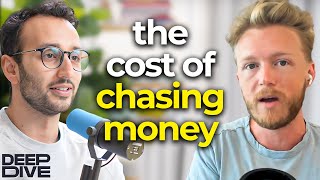
Chasing Success vs True Fulfilment - Nat Eliason
17.1K views
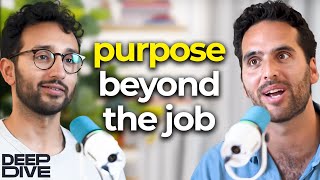
Life’s Meaning Outside of Work - Simone Stolzoff
20.2K views

How to make $10k/month from a community - Jordan Godbey
24.6K views

Joe Hudson: How your Emotions Drive your Success & Fulfillment
62.9K views

Money Tips That Will Change Your Financial Life - Rob Dix
30.8K views