We can't find the internet
Attempting to reconnect
Something went wrong!
Attempting to reconnect

Communication Profile (across 10 videos)
Stated Purpose
The full story, first. Download the Sky News app: https://qrcode.skynews.com/skynews/appdownload
Operative Pattern
Across 10 videos, this channel demonstrates low persuasion intensity, primarily through Anchoring. Recurring themes suggest consistent operative goals beyond stated content.
Avg Intensity
Avg Transparency
Top Technique
Anchoring
Presenting an extreme number or claim first so everything after seems reasonable by comparison. The first piece of information becomes your reference point — even when it's arbitrary or deliberately inflated. Works even when you know the anchor is irrelevant.
Tversky & Kahneman's anchoring heuristic (1974)
Persuasion Dimensions
Per-Video Operative Goals — detected in individual analyses
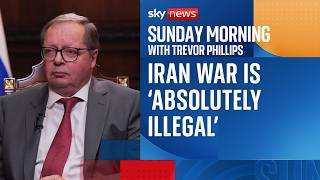
The Russian ambassador aims to justify Russia's invasion of Ukraine by contrasting it with Western military actions in Iran, framing Russia as a disciplined, law-abiding actor compared to 'unprovoked' Western aggression.
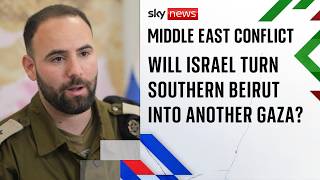
The content serves as a platform for the IDF to present its military operations as defensive, precise, and in total alignment with US interests.
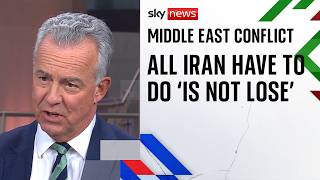
The content aims to provide a strategic military analysis of the Iran-US conflict while subtly advocating for increased UK defense spending and military readiness.

The content aims to report on regulatory pressure and public backlash against X's AI safety protocols, aligning with Sky News' role as a traditional media watchdog.

The content aims to provide a geopolitical analysis of how Middle Eastern instability creates strategic opportunities for China, aligning with Sky News' role as a mainstream Western news outlet.
What's Valuable Here

Offers a detailed look at the logistical constraints of modern naval operations and the specific capabilities of B1 bombers in a Middle Eastern theater.
Analysis: Has there been a change in ...

Provides a clear example of how opposition parties use current crises to differentiate their policy platforms from the sitting government.
Shadow home sec accuses govt of a 'de...
Provides a concise and factual summary of the 1953 coup, explicitly citing declassified CIA documents to validate its claims.
Why did the Iran war start? | Sky New...

Provides a concise summary of the specific diplomatic readouts and the domestic political pressure from the Liberal Democrats regarding the King's state visit.
Trump and Starmer speak after preside...

Provides a concise summary of the specific economic links between China and Iran, such as the 80% oil export figure.
Iran War: The China Angle

Provides a direct look at how the UK government justifies its divergence from US military action and manages the logistics of citizen evacuation in conflict zones.
Sunday Morning with Trevor Phillips |...
Viewer Guidance (2 tips)
Consider alternative frames
Information is consistently shaped from one angle. Seek out how other sources present the same facts.
Question unstated assumptions
Arguments rely on assumptions treated as obvious. Ask what you'd need to already believe for the claims to land.
Technique Fingerprint (from knowledge graph)
Deflection
AI detected as: Whataboutism
Deflecting criticism by pointing to someone else's wrongdoing instead of addressing the original issue. "What about when they did X?" changes the subject and puts the critic on the defensive. A specific form of the tu quoque fallacy.
Tu quoque fallacy; associated with Soviet propaganda technique (Nimmo, 2015)
Pathos
AI detected as: Emotional Anchoring
Appealing to your emotions — fear, joy, anger, sadness — to make an argument feel compelling. Rather than persuading through evidence, it works by putting you in an emotional state where you're more receptive. The emotion becomes the proof.
Aristotle's Rhetoric; Kahneman's System 1 processing
In-group/Out-group framing
AI detected as: Strategic Framing
Leveraging your tendency to automatically trust information from "our people" and distrust outsiders. Once groups are established, people apply different standards of evidence depending on who is speaking.
Social Identity Theory (Tajfel & Turner, 1979); Cialdini's Unity principle (2016)
Deflection
AI detected as: The Pivot
Deflecting criticism by pointing to someone else's wrongdoing instead of addressing the original issue. "What about when they did X?" changes the subject and puts the critic on the defensive. A specific form of the tu quoque fallacy.
Tu quoque fallacy; associated with Soviet propaganda technique (Nimmo, 2015)
Anchoring
Presenting an extreme number or claim first so everything after seems reasonable by comparison. The first piece of information becomes your reference point — even when it's arbitrary or deliberately inflated. Works even when you know the anchor is irrelevant.
Tversky & Kahneman's anchoring heuristic (1974)
Pathos
Appealing to your emotions — fear, joy, anger, sadness — to make an argument feel compelling. Rather than persuading through evidence, it works by putting you in an emotional state where you're more receptive. The emotion becomes the proof.
Aristotle's Rhetoric; Kahneman's System 1 processing
In-group/Out-group framing
Leveraging your tendency to automatically trust information from "our people" and distrust outsiders. Once groups are established, people apply different standards of evidence depending on who is speaking.
Social Identity Theory (Tajfel & Turner, 1979); Cialdini's Unity principle (2016)
Deflection
Deflecting criticism by pointing to someone else's wrongdoing instead of addressing the original issue. "What about when they did X?" changes the subject and puts the critic on the defensive. A specific form of the tu quoque fallacy.
Tu quoque fallacy; associated with Soviet propaganda technique (Nimmo, 2015)
Similar Channels (shared influence techniques)
Featured People
Analyzed Videos (10)
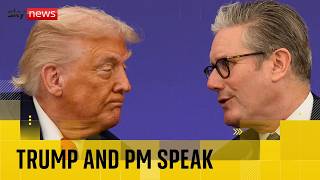
Trump and Starmer speak after president's social media attack on prime minister
12.8K views
In full: IDF quizzed over claim Israel would turn Beirut's southern suburbs into another Gaza
922 views
Analysis: Has there been a change in tactic? | Iran war
36.9K views
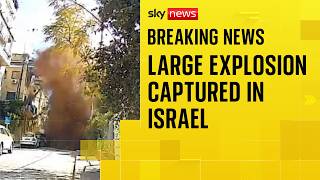
Large explosion captured on video in Israel
18.6K views
X investigating vulgar responses by chatbot Grok
2.4K views

Why did the Iran war start? | Sky News Explains
9.9K views
Iran War: The China Angle
14.8K views
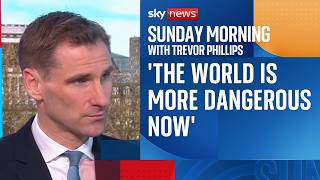
Shadow home sec accuses govt of a 'dereliction of duty' | Middle East war
7.5K views
In full: Iran war displays 'unprovoked aggression' by Israel and US, says Russian ambassador
12.8K views

Sunday Morning with Trevor Phillips | Sunday 8th March
28.4K views