We can't find the internet
Attempting to reconnect
Something went wrong!
Attempting to reconnect
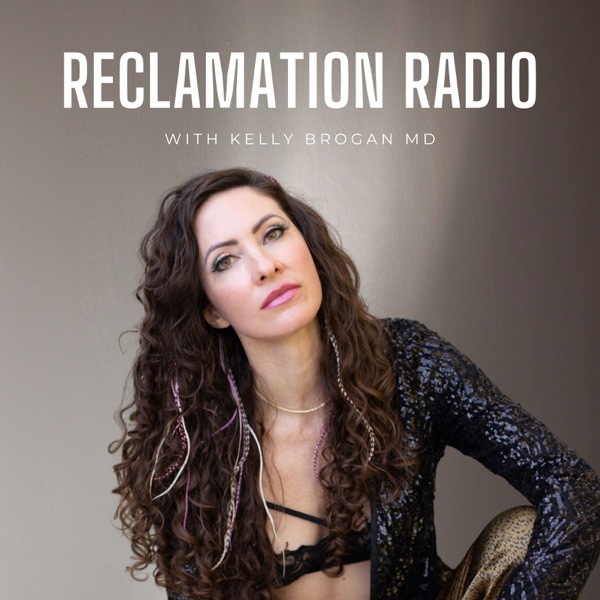
108: How to Break Through Your Limiting Beliefs & Attract Abundance | Gay Hendricks
Reclamation Radio with Kelly Brogan MD · 55:59 · 497d ago
"Be aware that the host's intimate sharing of personal mishaps after positive moments creates a friendly rapport that transfers trust to her recommendations for the book and her community, potentially making you more receptive to purchasing."
Transparency
TransparentPrimary Technique
The podcast features host Kelly Brogan interviewing psychologist Gay Hendricks about unconsciously blocking success through 'upper limit problems,' using personal anecdotes of joy followed by drama to illustrate the concept and promote moving into one's 'zone of genius.' Beneath the surface, the host builds parasocial trust through vulnerable personal stories, making her strong endorsement of the guest's book and her own paid community feel like friendly insider advice rather than promotion.
Worth Noting
Provides specific, relatable examples like joy-to-drama transitions and the 'automatic pilot' metaphor for recommitting to positivity, offering a practical tool for self-awareness in personal growth.
Influence Dimensions
How are these scored?About this analysis
Knowing about these techniques makes them visible, not powerless. The ones that work best on you are the ones that match beliefs you already hold.
This analysis is a tool for your own thinking — what you do with it is up to you.
Transcript
The mind is a brilliant movie maker, and if you give it a subject like, make me miserable, it will just come up with one scene after another. My experience as an entrepreneur has been potentially, in part, an elaborate upper limit. Those kinds of beliefs are made of agreement. You just agree with them, and that makes them sticky in your consciousness. The moment you say, wait a minute, that's just some crazy belief I imbibed when I was five years old. I don't have to believe that way anymore, but that requires energy. That's why a lot of people don't go into what I call your geniuses are. I wonder if you could shed some light on the root cause drivers of the habit of staying small. Yes, I mentioned fear, and what fear does is... Hi, and welcome back to Reclamation Radio. I am Dr. Kelly Brogan, and today I will be in conversation with Dr. Gay Hendricks, who is a psychologist and one of the original gangsters in the realm of personal growth and development. He's authored more than 50 books. He talks about the compendium of his life's work in this conversation. And I really want to highlight a book called The Big Leap, which I have decided is the book I would like my daughters to read of all my millions of recommendations. And it is One that addresses what I believe to be the most essential, really, point of mastery as a human, which is the expansion into what I call havingness. But it's really joy, pleasure, and the experience of getting what you want. If you can't hold that, you will be forever in your contraction, in your complaint, and in your struggle. So we cover many things, including one, why it is that we stay small. Two, how it is that we stay small and how to spot these upper limit problems and tendencies, as he refers to it. And also, three, why and how to live in what he calls your zone of genius rather than just your zone of competence. Enjoy. Welcome, Gay, to the show. I'm so, so, so thrilled to be having this conversation. Thank you, Kelly. I appreciate you. You're inviting me. Amazing. So I wanted to start off with a couple of examples from my personal life, because I learned best through example. And I've shared a couple of these examples with my audience before and I use them to illustrate what I call clumsily havingness capacity, right? So one's ability to kind of have and hold. And then I want to get your expert analysis because I have never heard somebody analyze and describe this phenomenon the way that you do. So the first was very recent. I was having a good day. Okay, so things were going my way. I got the email I wanted to get. You know, my girls were off to school in a seamless manner. And I decided to go to my P.O. box in town. And I decided to put on a dress and heels. And it had been many weeks since I had bothered to do that. My favorite sweatsuit was like really getting its moment in the sun. So I put on the dress and heels and I'm feeling really good. I go, I have this like playful banter with the guy who runs my UPS store. He's great. We're laughing. I leave the store and this group of older women are walking by. And this one woman turns to me and she almost yells at me, right? She's so enthusiastic. And she says, you're so beautiful. Like that. Okay. So I love, I love women. I love interacting with women. It was just such a delightful moment. and I felt really like something is shifting, right? Like there's some kind of shift. Things are going to get easy now. I get in my car and I have my eyes. Let's start to like fill with tears of joy, just like a swell, right? And so I breathe so that I could feel it. Okay, I got two to three breaths in before I started to think about whether or not there was a camera in the lot that was recording my license plate because I don't pay for parking tickets typically and parking meters or whatever. And so I started to think, wait, I think one of the four parking tickets I've gotten in four years was in this lot and is watching me. Okay. So that was the first example. The second is one that I've shared many times where in my homesteading days, back in 2020, I had a generator put in the house, my then partner and I did. and I was home alone one day and all of the lights went out, like the power went out and I went outside to check out what was going on just as the power was coming right back on in my house. Okay. And I had fuchsia landscaping lighting and I love, as you can see, I love Christmas lights and I had, you know, it was like Rockefeller Center at my house. Okay. And I looked down the street and it's pitch, pitch, pitch black. My first thought was somebody's going to come get me. I literally thought I was in danger because I had a house on the street that was all lit up. Okay. Last example, I have millions of these, but last example is that I, it's another car experience. So I am driving and I am, as I sometimes do, I'm speeding. Okay. So I'm speeding through an area of my neighborhood is very close to my house and I get pulled over, except I get pulled over by this extremely handsome cop that I've noticed in my neighborhood many times. Okay. So he comes up to the window and he introduces himself and he says, I am officer so-and-so. And And I work this district and he starts to tell me that I was speeding through this area. And I saw him and I said, oh, I know. I notice you every day, which is true. So I flirted my way out of this ticket successfully. Okay. I drive for another few minutes and an enormous, okay, I live in Miami. We have huge oak trees and banyan trees. An enormous branch falls on my windshield. This has never happened before or since and shatters my entire windshield. And I'm like pulled over on the side of the road, stunned after feeling so excited that I flirted my way out of my first speeding infraction. And this is a range of experiences from the mundane to the seemingly accidental that you address in your book. And today, we could focus on so many of your books. Today, I want to focus on the big leap because I think this is the most important information, literally, for a human to have in this lifetime. And I'm pretty sure you agree that the interaction with these moments of expansion requires a maturation. It requires self-discovery and introspection. And first of all, it requires awareness of this phenomenon. So I'd love to just tee you up with those couple of examples to see how you would explain this kind of phenomenon and how it is that you began to study this, like how it is that you began to observe this and what it is that you think is important to know about the kinds of dynamics that we set up in our life to stay small. Yes. Well, great setup, because what we're really talking about there is something that I explain a lot in the big leap, which is what I call the upper limit problem that human beings have an upper limit on how much positive energy, love, good feeling, money, abundance. it's different for everybody but one person may have a complete openness to receiving money you know and live at a mansion and have 16 cars and all of that but they may be lacking on their ability to feel love or to open up to positive energy in general and so we call that here the upper limit problem i first started noticing it in my own life way back a long time ago before i started working with it in people. But I found that I've since been around the world many times. I think I have something like, you know, 1.2 million frequent flower miles. And I haven't found any place yet on earth that doesn't have their version of the upper limit problem. Like if you go to Australia, they call it the tall poppy syndrome. They say, don't be the tall poppy because you'll stick out above all the others and the farmer will cut your head off. That's their image of that. Whereas if you go to Sweden, one of the first words you'll learn there is lagom, which means don't be too much. Don't be too little. Just stay right in the middle of the pack. And it's an ethic that goes around the world. And what it's based on is fear. and somewhere like for example let's take a beautiful example by the way of the of the gorgeous traffic cop and then the tree falls on you that's uh that's a perfect example because what it says now don't throw a rock at me virtually when i say this to you but what it says is that somewhere down in you, you have an unconscious belief that upwelling of love, lust, positive energy has to create drama. Everybody knows I have this belief. I've been very public. I haven't met you before, so I didn't know. 100% the case. Yes. Okay. So what we have to install now in your havingness, which I love that word, by the way, in your havingness is, Would you, Kelly, be willing to have abundant love, good feeling, sexual connection with whomever totally delights your heart? And would you be willing to have that in a peaceful way that continues on and on and on interrupted for as long as you want to continue it? At this point, even the perpetuity that you're referencing feels uncomfortable. Like I'm aware of that. It feels unsustainable. like I would have to perform and make it last in all of these important ways. It's revealing, right? It's really revealing about something that you fear, that you fear the ability to do that, that you're not sure you could sustain that kind of authenticity and aloftness, you know, to stay aloft for that long. And a good thing to know is that human beings are not wired up to stay aloft. And we're not wired up to always stay on our purpose. What happens is the example I use is, you know, people who fly a lot know that they get to their destination with an automatic pilot. The pilot is not up there monitoring every little twitch in the clouds and that kind of thing. But there's a computer that makes a judgment like with the steering of the airplane. It makes it every hundredth of a second or so. Are we drifting to the right? Oh, we are. Let's correct a little bit to the left. Oh, are we drifting to the left now? Let's correct a little bit to the right. And so it keeps homing in on the right signal. And the way I say it is you get all the way from New York to Honolulu by being wrong most of the time, because it's not the ability to stay on the beam that's important in life. it's recommitting. It's getting back on the horse once you've been thrown off because, you know, life is full of challenges and obstacles. And, you know, there are going to be trees that fall on the top of your car. And how you respond to that, do you let that get you off track or do you come back on and start aiming towards what you want to get? So we're always going to be confronted by upper limits. What the big leap is all about is how to move through those instantaneously rather than getting trapped by them for a month or a year or your whole life. Yes, exactly. So I want to drill a bit deeper in terms of a lot of the, you know, in medicine, we would call it etiology, a lot of the like root causes of what it is that we all are familiar with, either from our family conditioning or societal conditioning or just the habits that we observe of creating drama and getting into these almost like fetishized dynamics with our particular flavors of complaint, whether that's, you know, illness or scarcity and finances or money or just inconveniences and overwhelm. So you talk about some of the barriers to expansion and have analyzed, some of the drivers for this, that it makes sense that we are wired this way. It's not an accident, it's not a flaw in our design, and that it seems to serve at least on the societal level, right? The fabric of society is somehow maintained and you referenced that that fascinating I hadn heard those particular phrases internationally right That this is a phenomenon that most can relate to So I wonder if you could shed some light on the root cause drivers of these barriers to expansion and why they exist and why it is commonly the case that we find ourselves in the habit of staying small. Yes. Well, I mentioned fear. And what fear does is drive unconscious beliefs that you may have stashed away long before you could think for yourself. You know, by the time most of us go to kindergarten or first grade, we've already kind of imbibed and embodied a lot of the unconscious beliefs that are going to run our lives. Some of them are very positive, you know, like being mom's helper. That's a great belief to have that good things will happen if I just help out around the house. Well, that's very positive beliefs happen. But a lot of times we get saddled with unconscious beliefs like I don't deserve love or another popular one is I don't deserve to have the spotlight shined on me. I don't deserve to be the star of my own life. And so what I do in the big leap as I go through the unconscious beliefs that I've seen that trouble the most people, even very bright people. I mean, I first started out actually by noticing these things in really super bright people like executives at Silicon Valley firms, because I started noticing this right around the time I was just about to get my doctorate from Stanford in counseling psychology, and they offered me a job to stay on for a year after I finished my PhD. And so I really valued that. And I was at kind of a peak high because I was going to get paid to do the same thing. I'd been the same research I'd been working on and paying a small fortune to do the month before. Suddenly, I was now Dr. Hendricks in charge of a research study that had actually been started when I was a starving graduate student living on $300 a month. So I was at this all-time high. And I'd also just taken my daughter, who was about five or six at the time, six, I think, over to her first sleepaway camp, which was only going to be three days. So she was only going to spend two nights away from home, and it was only 10 miles away. So it wasn't like she was being sent to Timbuktu to camp or anything like that. But it was her first time, and she was very excited about it. And I was nervous about it. And I didn't even realize it until after I got back in my office and I was feeling so good. Then all of a sudden I started thinking, oh, I'm picturing Amanda being lonely, sitting in a corner by herself. And I'm picturing her not getting along with the other girls. The other girls are shunning her. And just one little negative thing after the other. You know, the mind is a brilliant movie maker. And if you give it a subject, like make me miserable. It will just come up with one scene after another, you know, that'll turn your stomach. It's designed to turn your stomach. But anyway, so I started running off this chain of negative thoughts and I went totally unconscious. I picked up the phone and I called the camp. And the woman that ran the place was the most lovely person that I'd met her before when I dropped Amanda off. She said, yes, may I help you? And I said, yeah, I'm just getting really signals that Amanda is feeling lonely. It's her first day away and first time sleep away camp and everything like that. And I just want to just do a check on her and make sure you take care of her if that's the way she's feeling. And the woman was so great. She said, well, I'm looking out the window and I see Amanda out there kicking a soccer ball around with other girls. She doesn't look unhappy to me. And then she said, this was the most profound thing. She said, Dr. Hendricks, could it be that you're the one that's feeling kind of lonely and left behind? You know, now your daughter's kind of going out of the world and sleeping other places. And the second And she said that, I said, oh, my gosh, what good is having a PhD in counseling psychology from Stanford if I can't see one projection of my own? You know, so it's kind of a humbling moment at the time. So that was, I began looking for that with other people. And what I saw, especially with these brilliant executives, they would do something really fabulous at work. You know, like in one case, a guy got a one point five million dollar bonus dropped on him one Friday afternoon. And instead of going home and celebrating with his family, what did he do? They had the worst fight that they'd had in the history of their 12 year marriage, you know, which now involve children and a fancy house and everything like that. So but what triggered it and what triggers in us is kicking us into the unknown. You see, when something like that happens, it doesn't even have to be a million dollar check in your lap or anything like that. It can be just me saying to you, hey, Kelly, you're operating in your genius zone right now. It's very clear from the way your voice is and how authentic your body movements are that you're doing what you ought to be doing in life. So I just want to give you feedback here from another part of the universe. stay on with what you're doing because it looks really good on you it lines you up very well with the forces of good in the universe so now this is your point to see how much positive energy can i possibly take because see that's the big trick in life is to let ourselves feel good and then keep feeling good and then keep feeling good and keep feeling good and same thing with keep succeeding and then succeeding more but what often happens is we have an old unconscious belief like i don't deserve all this love clunk we put the brakes on and screech to a halt and create dramas around us so people love to ask me questions and i love to ask questions of others because inquiry is play but some of my interviews and answers are too hot to handle for reclamation radio so in my membership vital life project i have created a private podcast that gets delivered to wherever you listen to podcasts where I answer your questions that arise because of my provocative subject matter. And I also share interviews that might otherwise be censored that I call the Sovereignty Series. So you'll get access to these private podcasts and a private chat by joining my membership Vital Life Project. I'll see you in there. The sort of nuances of that undeserving state, I think, are very relatable, right? So you talk about, and you referenced already in this conversation, what it is to outshine. And as a woman and as someone who primarily speaks to women attempting to unpack this birthright that we have of our feminine essence and energetic expansion, this is a big one. I like to think about it as related to mother dynamics, mother-daughter dynamics, and the sort of forbidden territory of being more powerful, more loved, more beautiful, more whatever than your mom and the subconscious commitments we make to staying within her comfort zone. And we extend that to our relationships with other women so that we connect through complaint and commiseration rather than celebration. And I remember when I started to commit to really celebrating with my friends rather than continuing to foment material for a complaint, I really worried that I would have nothing to talk about, that it would be boring, that my personality and the essence of what's interesting about me would somehow drain through the floorboards and all that would be left was me coming to talk about how amazing my daughters are and how much revenue the business made this week. And then it'd be like silence, just like a total air ball nobody's catching. And that outshining, and again, it's the very valid roots of that fear, the perception that we are fundamentally broken people that don't, you know, aren't worthy of a different kind of experience. These loyalties, I'm a big fan of family constellation therapy and loyalty to our parents and ancestors and their dilemmas, right? Taking on other people's challenges as our own and staying loyal to not only these individuals, but then the tribe kind of, right? Like the concept of moving beyond the pale and, you know, this litany of reasons that we stay small. I think you've contributed yet another one I want you to say a word about, which is like this idea that if we're already feeling like too much, like we already are apologizing for our existence to some extent, if we become more of ourselves materially or metaphysically, energetically, then we would be even more of a burden. I noticed that with these executives is when I would talk to them about why they were holding themselves back. That was one of the frequent fears that would come to light was, you know, I've got a hundred. I remember one guy in the Midwest company that I was consulting in. He said, I already get 150 emails a day. You know, what if I become a CEO? What then? You know, this was a senior vice president kind of person. And he did later on become a CEO of a whole other company. But so he successfully worked this out. But it turned out that from a very early age, he'd felt the burden of success because his father would come in every day. And, you know, I had a great day, but a day, but it's killing me. And so being inoculated day after day, of course, he would have this unconscious belief that life is a burden. Success means more burden. You've got to make yourself hurt to succeed. And those kinds of beliefs are a lot more prevalent than you would think among even the top flight executives that I've worked with. So don't feel a bit bad if you uncover that you have a fear of really fundamentally believing that you're lovable. Well, gosh, half the people I work with, even they may be the CEO, but down in there, they uncover the fact that they feel like an imposter. They don't deserve the amount of love if people only knew who I really am. You know, and somebody is telling me this is worth $100 million and runs a billion dollar company. It's amazing that we can have such deeply held negative beliefs ourselves and then prove ourselves lovable and capable. But that requires energy to do that. And so that's why a lot of people don't go into what I call your genius zone, because they're afraid that they'll have a lot more burdens there. And I want to set that to the right. But your burdens are all between your ears and you can leave them behind with just that amount of effort. You know that those kinds of beliefs are made of agreement. You just agree with them and that makes them sticky in your consciousness. That keeps them stuck on. At the moment you say, wait a minute, that's just some crazy belief I imbibed when I was five years old. I've got to believe that way anymore. Here's the thing, though. You know, it gets back to this issue of having this. It gets back to people being really willing to have the experience that they're lovable for long periods of time without feeling the need to mess that up. It has to start somewhere. You have to start by at least acknowledging the problem. Oh, I have an upper limit problem. I can't let myself feel good for many days or months at a time without invoking some kind of disaster. That's the belief. And so the moment you shine a light on it, it's like when my mom, when I was a little boy, I thought I saw this monster up in the drapes of the way the drapes were and the way they were blowing a little bit. The window was open. And she had a great ingenious solution to it. Although she was a high school graduate, by no means a psychologist. She said, here, take the flashlight. She wanted to go back to bed. She said, here, take the flashlight and shine it up there. Let me look with you. And so I shined it up and we saw that there was no monster there. And she said, just keep the thing by your bed. If you have any doubts, just shine a light. And if there's a monster, definitely come get me. You know, otherwise don't bother me. My mother was a newspaper columnist who always had a deadline to meet. And she always had a camel unfiltered cigarette in one hand and a cup of coffee in the other. And her old fashioned bam, bam, bam, Underwood typewriter that she was pounding away on. That was the soundtrack of my childhood. That is amazing. It such a powerful reminder that we have a habit of feeling like we have to earn and then validate what it is that could otherwise feel gifted to us right Or like a blessing or something that has emerged from the divinity of our souls And instead, I so relate to this. I mean, I'll give a teeny example, and then I want you to hold you a thought. But I was promoting, because part of my expansion, right, has been to kind of come out of the closet, as it were, as an entrepreneur, right? So I have built this beautiful business where I get to experience what a term I learned. I'm sure you know it, Ikigai, right? Like I get to experience prosperity and what it is that I'm good at. And I want to talk more about the zone of genius and, you know, my own experience of serving, you know, the community. I get to have all of this at once. and I don't work very many hours a week at all. In fact, this hour is one of two hours that I will be sitting at this computer this week. And I have gotten here over 15 years and I have a beautiful experience and I've done it wrong many times. And so I share this, right? And some of the feedback that I got was of course a reflection of my own shadow, right? My own subconscious beliefs that I have to have earned it. Because I even told you just now, I've been doing it for 15 years. Like I wanted you to know, I didn't just wake up like this, right? You didn't just fall off a turnip truck. So somebody says, how dare you flaunt how little you're working and how much money you're making when there are people who are working 80 hours a week and barely able to pay their rent. Okay. So I thought this was fascinating because it is a belief that I have that's reflected back to me in the beautiful projection screen that is social media. And I got to look at this belief that I have that if I haven't earned it, and if there isn't a good reason for me to have it, then I'm vulnerable, right? Then there's some risk. There's something that I might lose, whether it's reputational or relational, and that I better have my, you know, my alibi at the ready. And, you know, what I hear you suggesting and inviting us more, because there's so much about your writing and your energy that is invitational, right? It's like, if you're interested, come aboard. It's more fun and there will be a tight squeeze. You got to move through before you can start to practice this more readily. But what I hear you inviting us to consider is the possibility that these constructs between our ears are not necessary when you get in the practice and habit of simply enjoying what is. Yes, that's such an important point that you have to start by giving yourself permission to do something like let myself feel good for 10 seconds in a row without interrupting it with what I should be doing later. You know, and first then expand that for 20 seconds. And then someday you'll get to, I mean, it took me a lot of focus just to get to the point where I could let myself feel good and be happy for a couple hours at a time. And I set myself the intention of spending half my time in my genius zone, doing only things I love to do. But that didn't happen overnight. I mean, it took me several years of work to get to the point where half my nine hours of work a day were spent doing the things I most love to do. But I didn't mind doing it because every little bit along the way, I was doing more stuff that I love to do. And I want to put in a plug for that because I just, speaking of prosperity, I never imagined that I would ever make any money from writing my books. I wrote my first book. I got paid $800 for it in 1973. And I was a starving graduate student. And I wrote it on a borrowed typewriter. I didn't have a typewriter at the time. And I would sneak into the School of Education building where they had these fancy, cool IBM Selectrics. and I would just pound away from seven o'clock at night till 11 o'clock at night on working on my book. Anyway, I mentioned that because it didn't occur to me that I could make any money doing this. And yet 51 books later, I've published 51 books, I just sold my entire literary catalog, which basically means the right to collect my royalties to a big company for a seven-figure deal. And so it's possible to have a good time along the way, Make plenty of money with your genius. And even if you work it right, get rich doing it. But you'll never find out what you could do until you kind of take yourself off the bench and stand up and walk onto the field. That's the requirement. You've got to show up. You've got to be willing to make a commitment to living in your genius zone. So right now, there's nothing stopping you. Make a commitment. Right this moment, if you're hearing this or watching this, make a commitment to opening up more genius in your life, to spending more of your time doing what you most love to do. When I first started, I was barely doing an hour a day of what I most love to do. Then it took me with some work four and a half hours a day. Then I set the dimension of 70 percent. I wanted to be in my seven of my nine hours spent every day doing what I most love to do. Then I hatched a really wild idea. Wow. What if I had a relationship with a woman where we had a relationship where both of us were just ran on positive energy, where we didn't stop to have an argument every three hours or three days? That was a big one because I was in my 20s at the time and I'd never created a lasting love relationship. They were all, you know, a couple of them lasted a couple of years, but they would always end up the same way. I always compared it to the launch of the Titanic. You know, there would be great fanfare. But then six months later, we would hit an iceberg. And I realized after many icebergs that, hmm, who is the iceberg here? Hmm. Hmm. Yeah. What do I have to do with this? Yeah. So that's anyway, Katie, I should mention also that Katie and I are in the midst of celebrating our 43rd wedding anniversary as we speak here. So you solve that upper limit problem. I solve that one to the max, just like I solve my mom. I should. My mom was this wonderful woman who lived her whole life. She was a newspaper columnist who wanted to write a novel. and she put it off for 60. At first it was, I'm going to do it as soon as I get a few weeks off from writing my column. Then it became, I'll do it when I'm retired, when I'm 60. And then when she was 60, they said, stay on for another five years. And so anyway, what I'm saying is that she lived in this space of unfulfillment. Now, I went to the opposite extreme. I'm the most fulfilled writer you'll meet today, probably, because I've published a lot of stuff and made a lot of money doing it. And so I went to the opposite extreme. But there are some ways in which I limited my life based on some of those old limiting beliefs, like I don't deserve the spotlight. You know, I'm here to support the spotlight, but not to be the star of my own life. Those kinds of things that you as an entrepreneur certainly need to monitor and master your ability to go full out in the passionate program of your life. And part of it involves a business and part of it involves your children and part of it involves your audience and things like that. But your invitation is always to go more and more and more in the direction of your genius zone, always doing more of what you're most loving to do. Yes. Well, it's fascinating because as a product of a lot of feminist programming that I work to expose in my process of bringing awareness to sort of the bait and switch of a lot of it, I've come to understand that my entrepreneurship, if that's a noun, that my experience as an entrepreneur has been potentially in part an elaborate upper limit, right? So that I didn't experience and maybe haven't and hope to the fulfillment of my relational world, right? So, you know, the husband and the kids and the family that could have offered me as a mother and as a wife, a kind of fulfillment that is never going to be available through my job as a woman, right? So what if I created this elaborate experience as an entrepreneur and a professional and a credential clinician and all these things so that I didn't have to feel right? Like the discomfort of that kind of abundant love. And you can spot these these limits once you once you get the concept in very elaborate forms and very sort of mundane forms. And I want to spend a moment just so that people can feel like they have a bit of a roadmap and they can start to detect these because you do an incredible job in this book and in your work of helping us to see what upper limits look like. So they don't just look like worrying, although that's the most common one I think we all can relate to is just worrying about stuff like with your daughter at her sleepaway experience. So you just started worrying. I manufactured the worrying about the parking ticket while I was sitting there feeling joy for a few seconds of my life. Just joy for the sake of joy. So what are some of the other ways that... Well, you mentioned worry and you mentioned arguments. So I think generating arguments, especially in the romantic domain, if I had known about this in my past relationships, I think it would have at least led me to some sense of awareness of patterns of that contraction expansion. You have this ecstatic, connected experience with your partner, and then somehow the next morning, the way they're washing the dishes is literally driving you out of your mind. So worry and arguments. But you talk about a few more, and I wonder if you can illustrate other ways that the upper limit contraction can look? Well, one way is through illness and accidents that oftentimes, for example, there was a scientific study where they looked at single person auto accidents. In other words, where only one person was driving the car, they were in the car by themselves. So there was nothing else that they could pin down. You know, there was, it was them in the car. And they found that a very high percentage of car accidents occur within an hour of an emotional upset. And the typical scenario is somebody storms out of the house and decides to drive down to the convenience store and buy a pack of cigarettes or buy a six pack of beer or something. And on the way, they crash their car because they're still caught up in an argument. And all couples' arguments occupy the same pattern in the sense that they're all a race to occupy the victim position. That you start feeling victim-y, something's wrong, and I know it's the other person's fault, and if they just dot, dot, dot, I'd be a lot happier. So the moment you go into that, then if you communicate from that victim position, you blame the other person. Then, of course, the other person won't go along with that. They don't ever say, I've never seen it happen where they say, I appreciate you telling me all the ways I'm ruining your life. You know, upon reflection, I am ruining your life. It is all my fault. No, it never happens that way. Because what happens, the moment you go into the victim position and blame the other person, they drop everything and blame you back. And then I know because Katie and I went through that sequence in the early days of our relationship before we sort of caught on to what we were doing. And it used to take us sometimes, gosh, days to get out of that. You know, we'd get locked into this pattern. I remember once it took three weeks. Gosh, then I spent three weeks of my life locked into some pattern that was simply between my ears. You know, it didn't have any real life to it. And so arguments, accidents, illness. You know, there's a great quotation from the Gospel of Thomas that says, if you bring forth what is within you, what is within you will save you. If you do not bring forth what is within you, what is within you will destroy you. And you're talking about big picture things there, you know, like, but but think of it. I mean, just on the very personal level, you know that if you've got something you really want to do and you're not doing it, it creates this tension in your body that brings forth. If you master it, if you say, oh, OK, I'm getting a call to spend more of my time in my genius. So, OK, you sit down for 10 minutes or an hour and you work on that, work on your genius. But a lot of people go the other direction. They feel that tension between their ordinary life and their pulling to do something and they go in the direction of doing more and more of what already isn working That a significant human tendency Yes yes yes Yes And you talk about how I love alliteration, so I was a sucker for these three Ps that I'll share from your book. You talk about some of the very valid reasons that we maintain these habits as being punishment, protection, and prevention. And I found that to be such a helpful rubric because, you know, I'm sure there's nobody listening at this point who's confused about why it is that punishment and the familiarity with punishment and even the satisfaction and fulfillment of the cycle of punishment could be something that we actually want, right? Let alone maybe even somatically enjoy. This concept is now, I think, really permeating the collective in a way that was anathema to most of us even five years ago, 10 years ago. So you are really an early shifter in a lot of these concepts, but that we would want to write like that it would actually fit into my conscious conception of reality that I would be punished with that big stick in my windshield after having potentially overexpanded my erotic energy, to me makes a ton of sense. And just being aware of that, being aware that I have this tendency and that I can perceive things like accidents, injury, illness, that I can watch myself deflecting, that I can watch myself blaming so that I can stay in this terrain, that it actually does serve to protect me and that it does serve to like warn me preventatively about potential future experiences that I could attract. So if we know that there are good reasons that we do this, we know that there are some flags, like sort of hallmark ways that we do this. It sounds like the first step, according to the way you've analyzed and assessed this, is to make a choice to live differently. Would you say that's sort of like the number one place to begin? Yes, that's a great start. Here's another example. I don't know if you've ever experienced fear of public speaking or not. Interestingly enough, when I wrote my first book, which I told you I'd want to borrow a typewriter, it came out in 1975 and it was called The Centering Book. And it was based on, I spent a lot of time volunteering my daughter's first grade classroom And I saw the teacher needed centering activities like a little relaxation activity or a guided visualization to help the kids get settled back down because they'd go out for recess and then it would take her 10, 15 minutes to get everybody sort of organized again. So I wrote this little book called The Centering Book, became a surprise bestseller. So I got invited right after the book came out to go to Kansas City and give a talk at an education conference. conference. And so, wow, you know, my very first time out, I got sent an airplane ticket. And so I flew to Kansas City and I gave a talk to maybe 150, 200 people at the education conference and they all applauded. That's great. And I'm backstage afterwards getting my stuff together and a man comes backstage and he said, I just had to tell you that your speech made a big impact on me. And I said, oh, oh, thank you. What was it about it? You know, I wanted to hear some more. And he said, well, it wasn't what you said. It was how you said it. And I said, oh, okay. What was it? And he said, your voice shakes just as badly as mine does when I try to speak in public. Now he tells me I'm after. I didn't even notice that I'd been so nervous, apparently. So fortunately, I figured out the problem and solved that problem. I always say, once we started going on shows like Oprah 30 years ago, people would always ask me, what's it like being on Oprah? And I would say, okay, here's what it's like. Go down to the coffee shop and order 10 espressos and sit them up on the counter and then go, bloop, bloop, bloop, bloop, bloop, bloop, bloop, bloop, take 10 of them and wait an hour and then you'll see what it feels like. So fear is here to stay in many ways because human beings have been scared a lot longer than we've been conscious. Our brain in its current iteration has only been around for 50,000 years or so. Whereas fear, you can look at any different organism and find more fear points on their body. In other words, take a human being. They can step on things with the bottom of their foot and the tiniest little thing makes you go, ouch, because the human body has designed to be really careful about what it steps on because of millions of years of going around barefooted stones and everything. But let me get back to the fear of speaking in public. I had a woman who was the CEO of a big company and she could do fine around a conference table with 10 board members at it. But every year she had to go out and speak, you know, to a big thing where there would be videos beamed in from Europe and everything like that. So that made her very nervous speaking to big groups of people. So we work on that. And the three P's punishment, protection or prevention. She has a big speech to give. And I get a panic stricken call from her at 6 a.m. or something like that saying, I got to give the speech today and I'm losing my voice and she's talking. And so I said, OK, pause. Take three easy breaths and go inside. Does this feel like you're punishing yourself? Does this sore throat feels like you're punishing yourself for something you did? Or is it protecting you from something you don't want to feel or preventing you from doing something you don't want to do? and she started laughing and she said two and three obviously and as she said it she didn't have that voice anymore she started talking she said oh i get it i get it i'm trying to keep myself from feeling that aren't i my body can't think of any better way to do it and i said yeah that sounds right. And I said, let's take a few minutes and love and honor that part of you that's trying to protect you. Don't make it wrong. Don't shame it. Let's love it as it is and go out and make your talk. And everything went great on the talk because she led off by telling the story of what she'd done at 6 a.m. in the morning. Wow, that's powerful when the leader of a big company that's got 50,000 eyeballs on her, can talk about waking up feeling afraid and losing her voice. Imagine how that touched people. It's so exhilarating to me to listen to you frame the exact same conclusions that I have come to through my own work and clinical, personal, and just in my relationships where I have built this somatic bridge to the meaningful expression of symptoms, right? That it's not just a psychological, relational, dynamic phenomenon, that this is also somatic. And there's just not a lot of people out there making that connection. You say in the book at the time that you hadn't been sick, quote unquote, for many, many years. I think you even said decades since you started to develop the curiosity around what your body was trying to, again, either enact some sort of familiar dynamic punishment to protect you or to prevent. And that awareness, that framework, and also I love that you say, like, appreciate that, right? Approve of that, that it's serving you. You're on the same team as your body. You are your body. It was so powerful for me to read that and to have your experience, right? No supplements, no health retreats, no doctors and gurus required. You just develop this kind of, it's like you deciphered the dialect of your body's language to an extent. And yeah, I think that's so, so powerful. I had a person who was a chronic migraine patient and had tried just about every migraine medicine in the book. And there's some good ones these days. And she found though, that even though the medicines helped, they didn't solve the whole problem. When we really started looking into the problem, the problem was in that first negative belief, which is that I don't believe I have the ability to feel good all the time. I must punish myself now and then with a killer of a headache. And as we looked into that belief, you know, it took us a few months, But by golly, when that migraine disappeared, you know, that's a beautiful, beautiful thing when a person finds that they didn't need to have that much pain in their life, that they can go for longer periods and feel better for longer and longer. That's a little living miracle to me. And I never get tired of that, even though, you know, I'm almost 80 years old now and I've seen all those people and written all those books. That still turns me on. You know, every week I get to work with a person who Zoom, you know, they come. out of a cloud of their negative programming and see life for the first time. And it doesn't matter if you're 15 years old or 58 years old when that happens. It's a beautiful thing. I love that. I so relate to that. So in our final moments, I would love to hear about, you just sold this compendium. It's like a veritable library of your own work. And I'd love to hear about what's alive for you, what you're expanding to hold, and how your zone of genius has evolved to this current moment, what it looks like for you. Well, now the year 2024 is a culmination of 30 or 40 years of working on the stuff I were told about in The Big Leap, which is increasing my ability to stay in my genius zone, doing what I love to do and what makes my biggest contribution to the world and also feel good in my own body and to keep focusing on that day after day and year after year. Right now, well, we've lived in the same house now since 2001, 2002, something like that. So more than 20 years. And we love our home. We kind of found our dream home. We lived in a big Victorian for many years before. I don't call it downsizing. I call it right-sizing. I get tired of climbing steps 28 times a day. So we live on a house now that has one level only. But anyway, we've lived in the same house. Right now, I'm going through the thrilling expansion of expanding my gardens in a way that we're bringing in. We're taking out the last remaining plants that require a lot of water and and that we don't like and replacing them with native plants and slow growth kind of grass and things like that, that doesn't require a lot of water. And we've also over the past year or two built a solar apparatus here that we can basically be off the grid if we so desire, even though we live a mile away from downtown. So I would say increasing these kinds of things. Plus, you know, the big thing to me is keeping the spark of creativity alive. So doing this with you, you know, I do this lots of times and do these kinds of things. And on set, let's see, just last Saturday, I went down to L.A. and spoke at a writer's conference where there was actual live people in the audience, you know, 500 live people in the audience, as well as thousands more out there on the Internet watching all this. But to me, it's keeping that spark of consciousness alive and just doing whatever feels like the right thing to do, given that whatever that will keep that spark of consciousness thriving. Well, I am so grateful that you have been committed for so many decades to honoring yourself in this way. And you're such a living example of how the commitment to one's own fulfillment and expansive pleasure and joy is really the gift. You are giving the gift to the world through your own self-allegiance and honoring in this way. And I am a huge fan. I am excited to dig into more of your work. And I'm also very excited to gift this particular conversation to everyone listening because it's such an essential premise to operate from. And I want to thank you. Thank you for your time, Gay. Well, thank you very much. It was a pleasure talking to you, Kelly. Thank you.