
Keith D
Executive Summary
Preparing for the future of wealth.
Across 10 videos, this channel demonstrates low persuasion intensity, primarily through Strategic ambiguity. Recurring themes suggest consistent operative goals beyond stated content.
Key Metrics
Strategic ambiguity
Leaving claims vague enough that different audiences each hear what they want. By never committing to a specific, falsifiable position, the speaker avoids accountability while supporters project their own preferred meaning.
Eisenberg (1984); dog whistling research (Mendelberg, 2001)
Channel Rating
Moderate persuasion used transparently. The channel is upfront about its perspective — this is rhetoric, not manipulation.
Recurring Themes
The channel operates as a high-conversion funnel that leverages geopolitical alarmism and macroeconomic 'insider' framing to sell private consulting and community access. Regular viewers are conditioned to believe that global systems are failing and that their financial survival depends on following the creator's specific 'wealth preparation' strategies involving Bitcoin, gold, and private data security.
The channel systematically converts global instability and 'doom-and-gloom' scenarios into a sense of financial urgency to drive sales of paid memberships and consultations.
The creator positions himself as a sophisticated 'insider' or 'macro analyst' capable of decoding complex global signals that the general public misses.
Every narrative arc is designed to terminate in a call-to-action for the creator's Patreon, private 'Macro Analyst' community, or crypto-affiliate services.
Market fluctuations and silver market movements are framed as systemic failures or conspiracies to convince viewers they need specialized guidance to survive.
What's Valuable Here
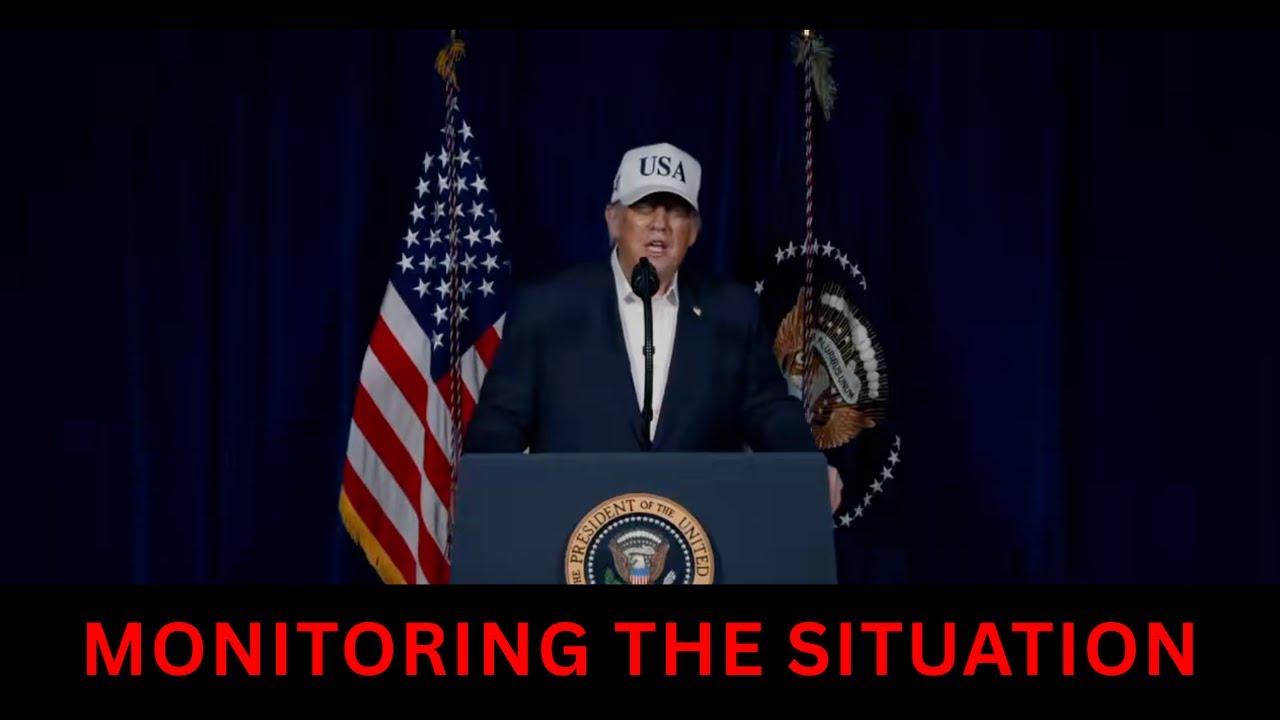
Aggregates real-time clips, maps, and summaries of US-Iran strikes and Gulf missile interceptions with explicit ties to closed-market monitoring strategies.
LIVE: U.S. Attacks Iran, AI Surveillance Clash & Tech Layoff...

Connects Strait of Hormuz blockade risks to specific impacts on China's oil/LNG imports, electricity prices, and AI inference costs in a real-time macro context.
Iran is a complete distraction…

Highlights undersea fiber optic cables' role in global internet/AI infrastructure amid Hormuz risks, a lesser-discussed vulnerability beyond oil.
Iran is playing a completely different game...
Provides granular details on Strait of Hormuz flows (oil, LNG, fertilizer, food) and immediate market reactions like Kuwait oil cuts, useful for commodity traders monitoring geopolitics.
LIVE: Will Oil Crisis Crash The Global Economy? - What's Nex...

The video provides a clear explanation of 'First Notice Day' and how physical delivery obligations function within the COMEX silver futures market.
Something Just Broke In The Silver Market

The video provides a concise summary of Stanley Druckenmiller's specific asset allocations (long copper/gold, short bonds) and connects them to current labor market trends.
The Moment You Realize The Dollar Is Done For Good
Persuasion Dimensions
Most Used Techniques
Strategic ambiguity
Leaving claims vague enough that different audiences each hear what they want. By never committing to a specific, falsifiable position, the speaker avoids accountability while supporters project their own preferred meaning.
Eisenberg (1984); dog whistling research (Mendelberg, 2001)
Urgency framing
Creating artificial time pressure to force a decision before you can think it through. 'Only 3 left!' 'Act now!' The technique works because genuine scarcity is a real signal, so the urgency feels rational even when it's manufactured.
Cialdini's Scarcity principle (1984); dark patterns research (Mathur et al., 2019)
Fear appeal
Presenting a vivid threat and then offering a specific action as the way to avoid it. Always structured as: "Something terrible will happen unless you do X." Most effective when the threat feels personal and the action feels achievable.
Witte's Extended Parallel Process Model (1992)
In-group/Out-group framing
Leveraging your tendency to automatically trust information from "our people" and distrust outsiders. Once groups are established, people apply different standards of evidence depending on who is speaking.
Social Identity Theory (Tajfel & Turner, 1979); Cialdini's Unity principle (2016)
Viewer Guidance
Information is consistently shaped from one angle. Seek out how other sources present the same facts.
Calls to action follow emotional buildup. Consider whether the ask would feel as urgent without the preceding framing.
This content frequently uses emotional appeal. Notice when feelings are being prioritized over evidence.