
Dave Smith
Executive Summary
Dave Smith and Robbie The Fire Bernstein bring you the latest in Politics three times a week, with the promise of bonus episodes! Libertarian Philosophy mixed with a sense of humor, POTP is one of the leading voices in libertarianism. Dave Smith is ...
Across 10 videos, this channel demonstrates moderate persuasion intensity, primarily through Anchoring. Recurring themes suggest consistent operative goals beyond stated content.
Key Metrics
Anchoring
Presenting an extreme number or claim first so everything after seems reasonable by comparison. The first piece of information becomes your reference point — even when it's arbitrary or deliberately inflated. Works even when you know the anchor is irrelevant.
Tversky & Kahneman's anchoring heuristic (1974)
Channel Rating
High-intensity persuasion, but relatively transparent about it. Strong opinions stated openly — evaluate the arguments on their merits.
Recurring Themes
The channel operates as a platform for paleolibertarian dissent, systematically dismantling the credibility of the U.S. government and mainstream conservative media. Regular viewers are conditioned to view foreign policy as a series of deceptive maneuvers by special interests and to adopt a posture of extreme skepticism toward all state institutions.
The channel consistently delegitimizes U.S. military involvement abroad by framing it as a betrayal of national interests driven by neoconservative and foreign influences.
The content seeks to erode trust in the Justice Department and both major political parties by highlighting perceived failures, deceptions, and systemic incompetence.
The host leverages political commentary to reinforce a specific libertarian identity while simultaneously driving commercial engagement through comedy tour and book promotions.
What's Valuable Here

Offers a specific critique of political consistency, holding a leader accountable to previous campaign promises from a non-interventionist perspective.
Dave Smith | Trump to Sell War at the SOTU | Part Of The Pro...

Provides a clear example of the 'dissident right' or libertarian critique of mainstream political figures and media polling.
Dave Smith | The Dems Are Still A Hot Mess | Part Of The Pro...

Provides a consistent application of libertarian non-interventionist principles to a high-stakes geopolitical event, offering a counter-narrative to mainstream media justifications for war.
Dave Smith | Trump Announces War With Iran | Part Of The Pro...

Provides a detailed breakdown of a specific public statement by a high-ranking official (Marco Rubio) and analyzes it through a consistent anti-interventionist lens.
Dave Smith | The Truth About War | Part Of The Problem 1368

Provides a detailed breakdown of the internal tensions within the American right regarding foreign policy and the role of religious ideology in diplomacy.
Dave Smith | Tucker Eviscerates Huckabee | Part Of The Probl...
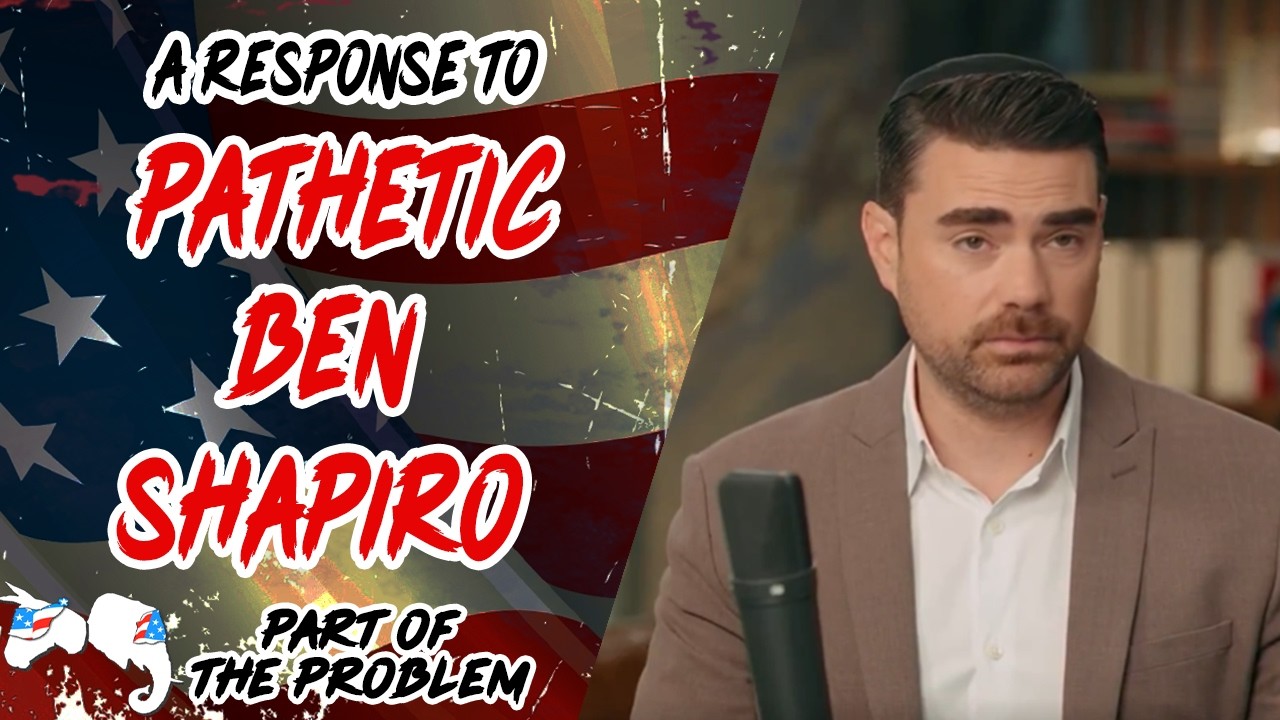
Provides a detailed breakdown of the rhetorical tactics used in mainstream media to justify military intervention and offers a counter-perspective on the costs of war.
Dave Smith | A Response to Pathetic Ben Shapiro | Part Of Th...
Persuasion Dimensions
Most Used Techniques
Anchoring
Presenting an extreme number or claim first so everything after seems reasonable by comparison. The first piece of information becomes your reference point — even when it's arbitrary or deliberately inflated. Works even when you know the anchor is irrelevant.
Tversky & Kahneman's anchoring heuristic (1974)
In-group/Out-group framing
Leveraging your tendency to automatically trust information from "our people" and distrust outsiders. Once groups are established, people apply different standards of evidence depending on who is speaking.
Social Identity Theory (Tajfel & Turner, 1979); Cialdini's Unity principle (2016)
Us vs. Them
Dividing the world into two camps — people like us (good, trustworthy) and people not like us (dangerous, wrong). It exploits a deep human tendency to favor our own group. Once you accept the division, information from "them" gets automatically discounted.
Tajfel's Social Identity Theory (1979); Minimal Group Paradigm
Viewer Guidance
Information is consistently shaped from one angle. Seek out how other sources present the same facts.
Arguments rely on assumptions treated as obvious. Ask what you'd need to already believe for the claims to land.
People or groups are reduced to types. Consider whether the characterization serves the argument more than the truth.