
Candace Owens
Executive Summary
The Candace podcast is back!
Across 11 videos, this channel demonstrates moderate persuasion intensity, primarily through Moral outrage. Recurring themes suggest consistent operative goals beyond stated content.
Key Metrics
Moral outrage
Provoking a sense that something is deeply unfair or wrong, activating a feeling that demands action — sharing, protesting, punishing — before you've fully evaluated the situation. It's one of the most viral emotions online because it combines anger with righteousness.
Haidt's Moral Foundations Theory (2004); Brady et al. (2017, PNAS)
Channel Rating
Moderate persuasion used transparently. The channel is upfront about its perspective — this is rhetoric, not manipulation.
Recurring Themes
The channel operates as a platform for radical institutional skepticism, shifting the viewer's perspective from traditional political discourse to a worldview defined by occult conspiracies and deep-state blackmail. Regular viewers are encouraged to abandon loyalty to mainstream conservative leaders and the US military in favor of a spiritualized 'awakening' against perceived Israeli and elitist control.
The channel actively works to delegitimize mainstream conservative figures and organizations like Turning Point USA and the Trump administration by framing them as compromised or corrupt.
A recurring effort to frame US foreign policy and domestic political actors as puppets of Israeli interests or participants in Israeli-linked conspiracies.
The content interprets political behavior through the lens of sexual blackmail, Epstein-linked pedophilia, and spiritual/demonic warfare rather than traditional policy analysis.
What's Valuable Here

Compiles specific instances of Erika Kirk's professional overlaps with Epstein-linked entities, providing searchable leads for viewers to investigate political appointments independently.
Did Erika Kirk Know Jeffrey Epstein? | Candace Ep 309
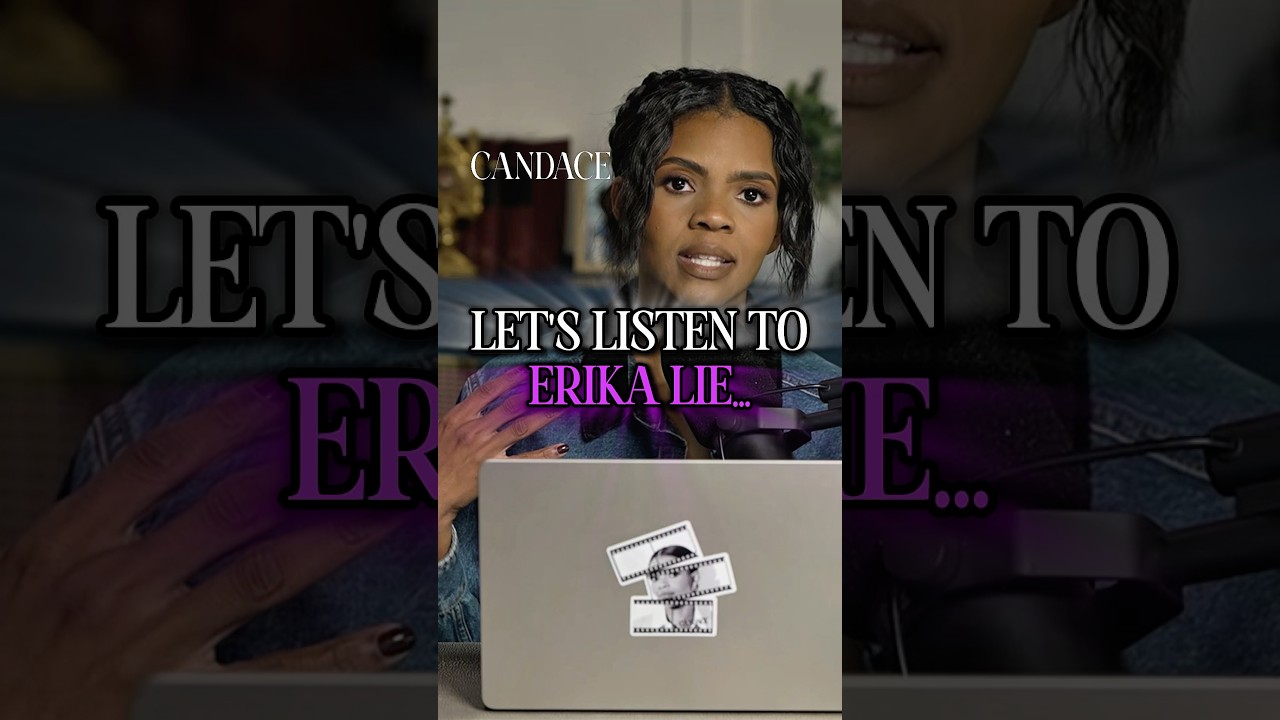
Details specific public fundraising amounts like Tucker Carlson's $5.4M raise and life insurance estimates, informing on financial support for the Kirk family.
Debunking Erika Kirk's "Sole Provider" Narrative...

Highlights specific clips of Lindsey Graham's statements on Israel, Saudi Arabia, and Trump for viewers interested in political inconsistencies.
Lindsey Graham Is COMPROMISED.

Highlights specific connections between Epstein files, the Alexander brothers' convictions, and Trump administration figures like Kushner, providing leads for further research into redactions.
Israeli Criminals Redacted in the Epstein Files?

Offers a provocative satirical take on geopolitical conspiracy narratives involving Israel and terrorism, highlighting perceived absurdities in under 30 seconds.
Israeli Interesting...

Offers granular details like eyewitness recollections of Erika Kirk as real estate contact at Next Model Management and specific addresses, potentially useful for further independent research on political figures' backgrounds.
EXPLOSIVE! What Erika Kirk Was Doing In Epstein's Orbit… | C...
Persuasion Dimensions
Most Used Techniques
Moral outrage
Provoking a sense that something is deeply unfair or wrong, activating a feeling that demands action — sharing, protesting, punishing — before you've fully evaluated the situation. It's one of the most viral emotions online because it combines anger with righteousness.
Haidt's Moral Foundations Theory (2004); Brady et al. (2017, PNAS)
Us vs. Them
Dividing the world into two camps — people like us (good, trustworthy) and people not like us (dangerous, wrong). It exploits a deep human tendency to favor our own group. Once you accept the division, information from "them" gets automatically discounted.
Tajfel's Social Identity Theory (1979); Minimal Group Paradigm
Character flattening
Reducing a complex person to one defining trait — hero, villain, genius, fool — stripping away nuance that would complicate the narrative. Once someone is labeled, everything they do gets interpreted through that lens.
Fundamental attribution error (Ross, 1977); Propp's narrative archetypes (1928)
In-group/Out-group framing
Leveraging your tendency to automatically trust information from "our people" and distrust outsiders. Once groups are established, people apply different standards of evidence depending on who is speaking.
Social Identity Theory (Tajfel & Turner, 1979); Cialdini's Unity principle (2016)
Loaded language
Using emotionally charged words where neutral ones would be more accurate. Calling the same policy 'reform' vs. 'gutting,' or the same people 'freedom fighters' vs. 'terrorists,' triggers different reactions to identical facts. The word choice does the persuading.
Hayakawa's Language in Thought and Action (1949); Lakoff's framing (2004)
Viewer Guidance
People or groups are reduced to types. Consider whether the characterization serves the argument more than the truth.
This content frequently uses emotional appeal. Notice when feelings are being prioritized over evidence.
Information is consistently shaped from one angle. Seek out how other sources present the same facts.