
Fatmir Sufa
Executive Summary
fatmirsufa94@gmail.com
Across 11 videos, this channel demonstrates low persuasion intensity, primarily through Curiosity gap. Recurring themes suggest consistent operative goals beyond stated content.
Key Metrics
Curiosity gap
Creating a deliberate gap between what you know and what you want to know, triggering curiosity as an almost physical itch. Headlines like "You won't believe..." are engineered to exploit this. The content rarely delivers on the promise.
Loewenstein's Information Gap Theory (1994)
Channel Rating
Low influence intensity with high transparency. This channel lets content speak for itself.
What's Valuable Here

Offers a quick, affectionate glimpse of Ivanka Trump for political fans seeking light positive content.
Ivanka Trump ❤️

Offers a raw, unedited clip of a tense political interaction between world leaders for quick context on Trump's style.
Trump tells the Prime Minister of Spain to sit down like a l...

Offers a timely snippet of political activity involving prominent figures for viewers following US politics.
Pete Hegseth rushes to the White House for an urgent meeting...
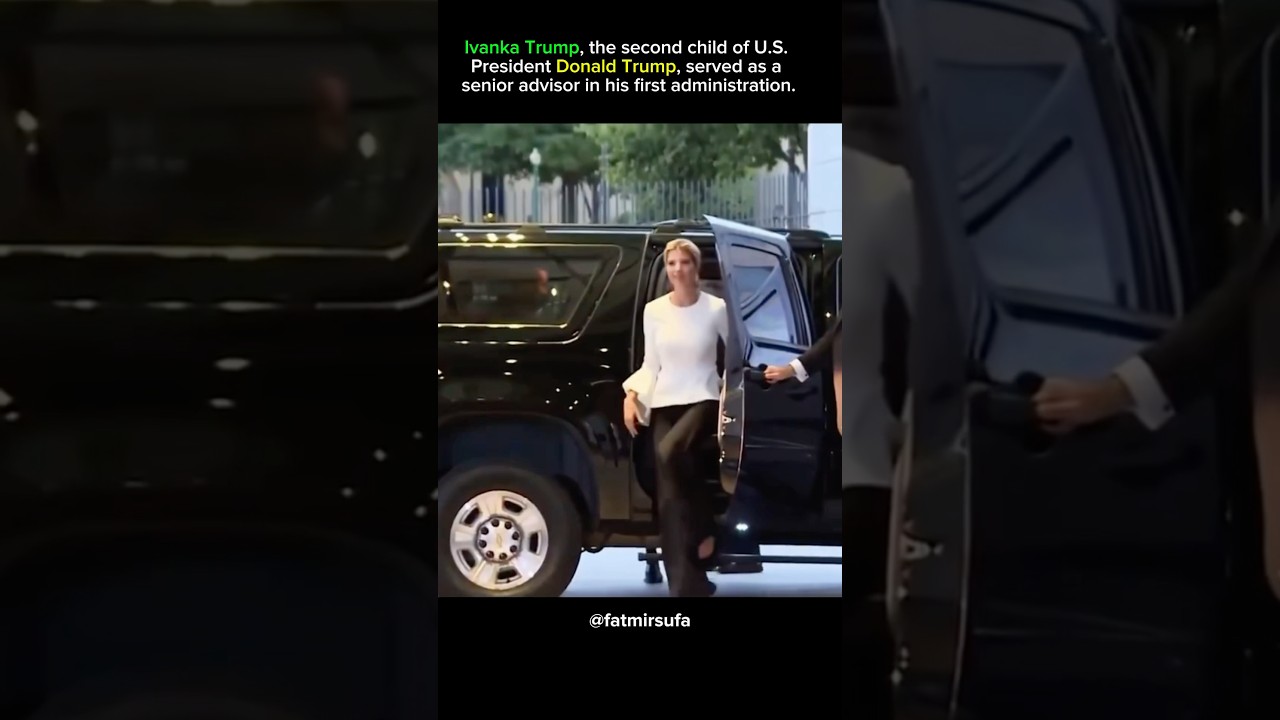
Provides a concise, factual identification of a specific historical political role.
Ivanka Trump, the second child of U.S. President Donald Trum...

Provides rare visual documentation of a high-profile interaction between Jeff Bezos and the SEC Chair at Blue Origin, potentially informative for space industry or regulatory watchers.
Jeff Bezos Personally Welcomes the U.S.Securities and Exchan...

Provides a concise look at the public-facing investment targets of major US tech firms like Apple, Google, and Microsoft.
Donald Trump Asks Mark Zuckerberg an Interesting Question 😳...
Persuasion Dimensions
Most Used Techniques
Curiosity gap
Creating a deliberate gap between what you know and what you want to know, triggering curiosity as an almost physical itch. Headlines like "You won't believe..." are engineered to exploit this. The content rarely delivers on the promise.
Loewenstein's Information Gap Theory (1994)
Loaded language
Using emotionally charged words where neutral ones would be more accurate. Calling the same policy 'reform' vs. 'gutting,' or the same people 'freedom fighters' vs. 'terrorists,' triggers different reactions to identical facts. The word choice does the persuading.
Hayakawa's Language in Thought and Action (1949); Lakoff's framing (2004)
Performed authenticity
The deliberate construction of "realness" — confessional tone, casual filming, strategic vulnerability — designed to lower your guard. When someone appears unpolished and honest, you evaluate their claims less critically. The spontaneity is rehearsed.
Goffman's dramaturgy (1959); Audrezet et al. (2020) on performed authenticity
Urgency framing
Creating artificial time pressure to force a decision before you can think it through. 'Only 3 left!' 'Act now!' The technique works because genuine scarcity is a real signal, so the urgency feels rational even when it's manufactured.
Cialdini's Scarcity principle (1984); dark patterns research (Mathur et al., 2019)
Viewer Guidance
Content structure prioritizes keeping you watching over informing you. Ask if the format serves understanding or attention.