
Fireship
Executive Summary
High-intensity ⚡ code tutorials and tech news to help you ship your app faster. New videos every week covering the topics every programmer should know. The original home of #100SecondsOfCode #TheCodeReport and #CodeThisNotThat. Created by Jeff Dela...
Across 16 videos, this channel demonstrates low persuasion intensity, primarily through Curiosity gap. Recurring themes suggest consistent operative goals beyond stated content.
Key Metrics
Curiosity gap
Creating a deliberate gap between what you know and what you want to know, triggering curiosity as an almost physical itch. Headlines like "You won't believe..." are engineered to exploit this. The content rarely delivers on the promise.
Loewenstein's Information Gap Theory (1994)
Channel Rating
Moderate persuasion used transparently. The channel is upfront about its perspective — this is rhetoric, not manipulation.
What's Valuable Here

Delivers a concise, high-energy breakdown of the P vs NP problem's definition, history (e.g., Stephen Cook, Clay Institute), mathematical concepts, and real-world uses, ideal for programmers seeking quick context on this foundational CS challenge.
The greatest unsolved problem in computer science...

Introduces specific niche open-source AI tools like PromptFoo for prompt testing, Impeccable for UI refinement, and Heretic for model uncensoring with practical commands and use cases.
7 new open source AI tools you need right now…

Offers a practical, hands-on Mac demo of Claude Computer Use tasks like emailing, coding, and meetings, highlighting real capabilities vs. OpenClaw.
Anthropic just released the real Claude Bot...
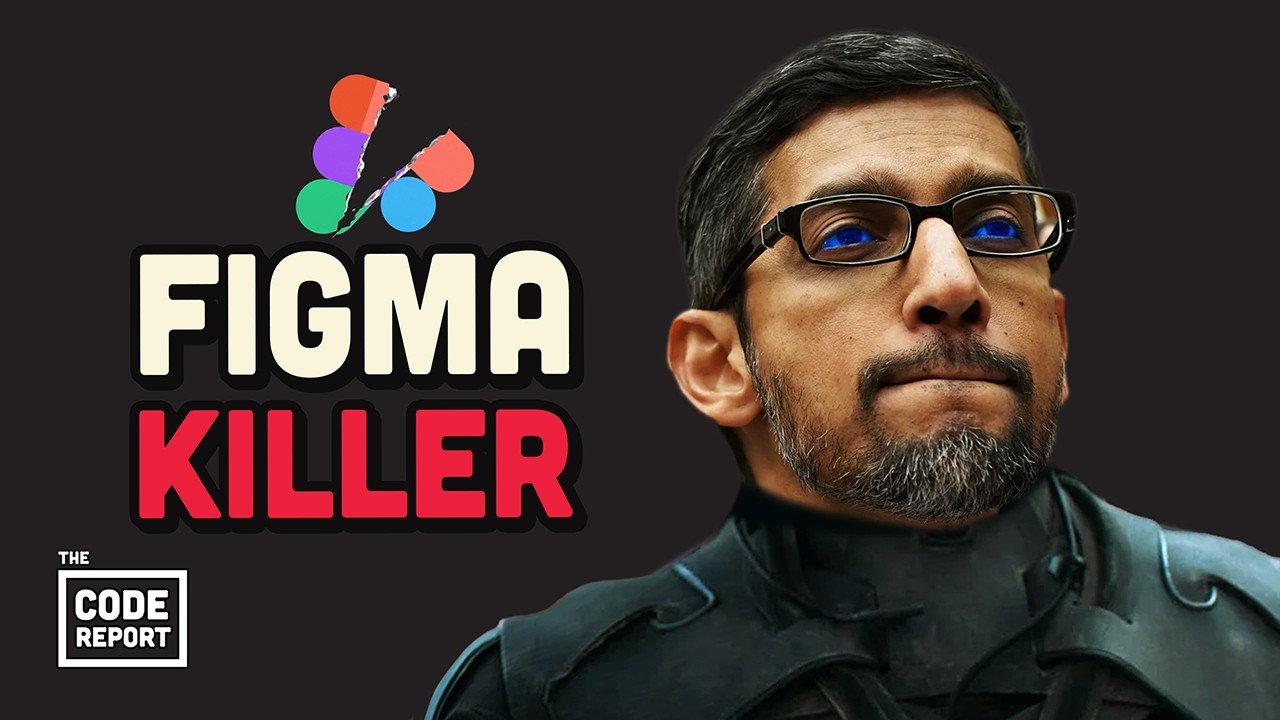
Practical walkthrough of Google Stitch's new features including vibe prompts, voice design with Gemini, responsive prototypes, and exportable design markdown for consistent use across projects.
Google just changed the future of UI/UX design...

Provides a clear tutorial on installing the ageless Linux script with legal context on AB1043, useful for Debian users interested in privacy resistance.
This new Linux distro is breaking the law, by design…

Provides a clear, accessible breakdown of a classified military AI system's likely tech stack using familiar open-source tools like Kafka, Neo4j, and AI agents, valuable for developers interested in real-world data pipelines.
Tech bros optimized war… and it’s working
Persuasion Dimensions
Most Used Techniques
Curiosity gap
Creating a deliberate gap between what you know and what you want to know, triggering curiosity as an almost physical itch. Headlines like "You won't believe..." are engineered to exploit this. The content rarely delivers on the promise.
Loewenstein's Information Gap Theory (1994)
Fear appeal
Presenting a vivid threat and then offering a specific action as the way to avoid it. Always structured as: "Something terrible will happen unless you do X." Most effective when the threat feels personal and the action feels achievable.
Witte's Extended Parallel Process Model (1992)
Loaded language
Using emotionally charged words where neutral ones would be more accurate. Calling the same policy 'reform' vs. 'gutting,' or the same people 'freedom fighters' vs. 'terrorists,' triggers different reactions to identical facts. The word choice does the persuading.
Hayakawa's Language in Thought and Action (1949); Lakoff's framing (2004)
Performed authenticity
The deliberate construction of "realness" — confessional tone, casual filming, strategic vulnerability — designed to lower your guard. When someone appears unpolished and honest, you evaluate their claims less critically. The spontaneity is rehearsed.
Goffman's dramaturgy (1959); Audrezet et al. (2020) on performed authenticity
Direct appeal
Explicitly telling you what to do — subscribe, donate, vote, share. Unlike subtler techniques, it works through clarity and urgency. Most effective when preceded by emotional buildup that makes the action feel like a natural next step.
Compliance literature (Cialdini & Goldstein, 2004); foot-in-the-door (Freedman & Fraser, 1966)