
CNN
Executive Summary
CNN is the world leader in news and information and seeks to inform, engage and empower the world. Staffed 24 hours, seven days a week by a dedicated team in CNN bureaus around the world, CNN delivers news from almost 4,000 journalists in every corne...
Across 15 videos, this channel demonstrates low persuasion intensity, primarily through Anchoring. Recurring themes suggest consistent operative goals beyond stated content.
Key Metrics
Anchoring
Presenting an extreme number or claim first so everything after seems reasonable by comparison. The first piece of information becomes your reference point — even when it's arbitrary or deliberately inflated. Works even when you know the anchor is irrelevant.
Tversky & Kahneman's anchoring heuristic (1974)
Channel Rating
Moderate persuasion used transparently. The channel is upfront about its perspective — this is rhetoric, not manipulation.
What's Valuable Here

Delivers a concise, timely summary of storm impacts including death toll and geographic scope for situational awareness.
Severe storms that spawned tornadoes leave 8 dead

Provides immediate, primary-source visual evidence of a significant geopolitical event that impacts global energy markets and regional stability.
Tehran’s Shahran oil depot on fire

Provides a clear example of how linguistic choices and name pronunciation have become significant flashpoints in modern American identity politics.
Professor gets upset with Nancy Mace after she mispronounces...

Provides a concise update on official Chinese state rhetoric regarding the Iran conflict and its impact on US-China relations.
China warns of spread of 'flames of war' from Iran
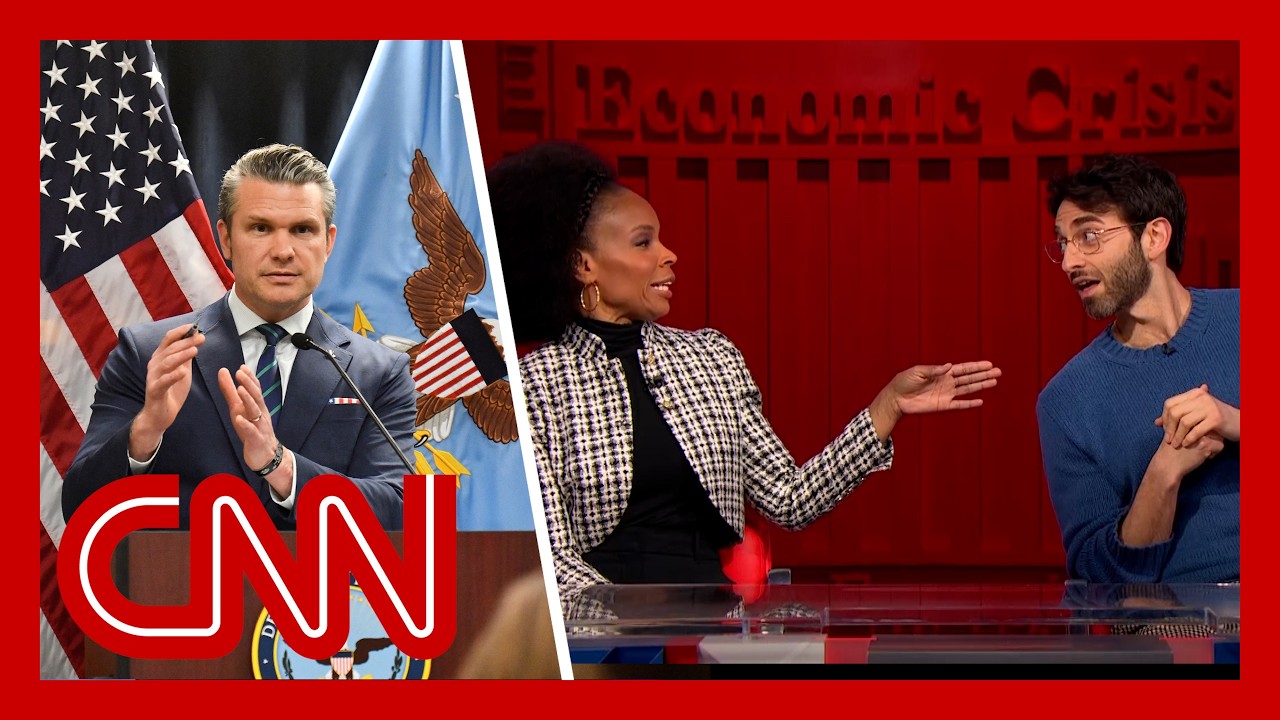
Provides a cultural snapshot of how Western media uses satire to process and critique confusing government rhetoric regarding military intervention.
Are we at war? Comedians try to figure it out | Have I Got N...

Provides a direct look at how different political factions interpret the same FBI crime datasets and how they weaponize specific timeframes (2021 vs. 2024) to support their narratives.
'You're lying!' Keith Boykin scolds Rep. Byron Donalds
Persuasion Dimensions
Most Used Techniques
Anchoring
Presenting an extreme number or claim first so everything after seems reasonable by comparison. The first piece of information becomes your reference point — even when it's arbitrary or deliberately inflated. Works even when you know the anchor is irrelevant.
Tversky & Kahneman's anchoring heuristic (1974)
In-group/Out-group framing
Leveraging your tendency to automatically trust information from "our people" and distrust outsiders. Once groups are established, people apply different standards of evidence depending on who is speaking.
Social Identity Theory (Tajfel & Turner, 1979); Cialdini's Unity principle (2016)
Moral outrage
Provoking a sense that something is deeply unfair or wrong, activating a feeling that demands action — sharing, protesting, punishing — before you've fully evaluated the situation. It's one of the most viral emotions online because it combines anger with righteousness.
Haidt's Moral Foundations Theory (2004); Brady et al. (2017, PNAS)
Performed authenticity
The deliberate construction of "realness" — confessional tone, casual filming, strategic vulnerability — designed to lower your guard. When someone appears unpolished and honest, you evaluate their claims less critically. The spontaneity is rehearsed.
Goffman's dramaturgy (1959); Audrezet et al. (2020) on performed authenticity
Viewer Guidance
Information is consistently shaped from one angle. Seek out how other sources present the same facts.