We can't find the internet
Attempting to reconnect
Something went wrong!
Attempting to reconnect
Analysis Summary
Performed authenticity
The deliberate construction of "realness" — confessional tone, casual filming, strategic vulnerability — designed to lower your guard. When someone appears unpolished and honest, you evaluate their claims less critically. The spontaneity is rehearsed.
Goffman's dramaturgy (1959); Audrezet et al. (2020) on performed authenticity
Worth Noting
Positive elements
- This video provides rare insight into the design philosophy and historical challenges of a major optics manufacturer, specifically regarding the Foveon sensor and lens line segmentation.
Be Aware
Cautionary elements
- The use of the 'Beautiful Foolishness' concept to preemptively shield a product from technical criticism by framing its flaws as intentional aesthetic choices.
Influence Dimensions
How are these scored?About this analysis
Knowing about these techniques makes them visible, not powerless. The ones that work best on you are the ones that match beliefs you already hold.
This analysis is a tool for your own thinking — what you do with it is up to you.
Related content covering similar topics.
Transcript
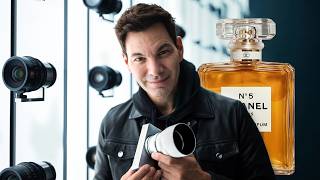
This past December, I had the opportunity to visit Sigma's headquarters outside of Tokyo, their factory in Aizu, Japan, and sit down with their CEO, Kazuto Yumaki. What Sigma is doing in the photography world right now is just it's exciting from the BF, the the 351.2 Mark II, 1351.4, 200 F2, and so many other lenses. So, we we chatted about all that, and I hope you guys enjoyed the conversation as much as I did. That enjoy. Well, this is a very a great honor to speak to you Yamaki. Thank you so much, CEO of Sigma. >> Thank you, M for having me. >> Thank you. And we had the opportunity of having a tour yesterday at your factory here initu. And one of the things that stood out to me was first off, you don't have an office. >> You just sit in the center of these engineers if I'm not mistaken. >> Exactly. >> So, I mean, and you travel all over the world. you're seeing, you're going to the US, you're going to China, you're going all over to to sort of spread the word of Sigma and your innovations in technology, but what's it like when you first come back to this factory? Like what's that feeling when you first walk through the doors after traveling around the world? >> I feel like know coming back home. Uh I'm very happy to see the faces of employees >> and I feel happy. >> Yeah. >> You started off as a young man in this company with your father, right? and you I guess from what I understand you've worked with the employees, you were right there on the floor with them. Now that's sometimes we would see that not everybody does does that kind of that step up. How has that sort of shaped Sigma today from your experience back then? >> My father started the company in 1961. Mhm. Uh the the name of sigma uh means the summation >> summation of the people's knowledge, experience, wisdom and power. >> Yeah. >> So from the beginning uh my father wanted to maximize the the the people's power and uh use it to for the growth of the company. So for us the the employees and also business partners are the most important uh asset for us. >> Okay. And with that said now that you've become you've taken over the company after your father passed on the iss that that journey as a young man being around all the employees but to today because you could see when people you walk into the room obviously there's respect but there's admiration as well. I mean do you think that's part of your philosophy when you're running this company that way? >> Well uh first of all um the my house I mean the our house parents house was on the top of the office building previous office uh in headquart at headquarters has a fifth has a fifth floor and the fifth floor was five floors and fifth floor was our home. So I went to the school through the office. Okay. So I knew everyone uh all the employees at the time. So since I was born, I've been living with the company and with the people who worked for for the company. >> So my life was always with uh those people. So it was quite natural uh decision uh from for me to take over my father's business and uh dedicate myself for the company. Now, with that said, obviously when you're a young man and you're seeing your father's innovations and his, you know, experience and everything he's achieved and then also you probably have your own dreams as well. >> Was there ever something that you thought to yourself, you go, you know, I love what we're doing here, but if I ever one day become the CEO, >> I would like to take Sigma in this direction. >> Well, first of all, I when I was a kid, I did not want to take over the business. >> Oh, really? because uh you know living on the uh top of the office building >> I could know the all the situations what's happening at the in the company >> and uh I knew that the the business is very tough and it's not easy to survive in in such a a difficult situation and um my father was a quite charismatic >> but I knew that I was not such a person I cannot I couldn't be such a person. So I was not confident at all in myself and I did not believe I can be the success of my father and I cannot land the company properly. But um when I was when I became a junior high school student or high school student, I realized that there there was no choice for me but taking over his business his business because it that was my father's uh wish. M >> so I since then I decided >> uh do my best >> to become a uh right uh president and CEO of the company. >> Okay. >> Mhm. >> And what was one of your first decisions that you made when you became the president and CEO that you thought okay I want to take Sigma this direction? First of all, my goal to learn the company is to make sure everyone uh who are reli related to the company are doing okay. I mean, first of all, I need to protect the uh employees job. Uh I don't want to fire anyone or uh lay off anyone. Uh and also I like to make sure all the business partners are doing okay. >> So this is uh the the most important mission for me. But uh if I can uh achieve it uh I like to I really wanted to make a innovative highquality products >> and provide the best services to anyone. I like to make the company that is respected by customers and the business partners. Um I really wanted to make the product that we can I can really recommend >> to the friends, my school friends and the family. So the size of the company didn't matter for me but making the best products and providing best service is the most important uh soul. Speaking of which, what was the one product that put you on the map that you felt like from your when you took over that said this is something I wanted to do and I got it done and this is it kind of brought Sigma forward. That is a very difficult question because uh uh all the products uh we make uh like um my baby. >> So I love all products but if I need to choose one uh I would say the first art lens uh 35mm f1.4 DG HSM art. >> Yeah that was a fantastic lens. It was the first odds and um there were uh at that time the no company had such a three lines which it has the clear concept and uh there was a risk uh that uh we may make failure and uh we may uh lose uh business. So it was quite uh risky decision. So I was really really nervous but I was very happy to know that the product was really well received by the market. >> Indeed it it was I mean to this day people still review that lens as one of their favorite Sigma lenses of all time. >> I quite often uh meet the photographer or professional cinematographers who bought uh 35mm f1.4 as a first serious professional lens. Yeah. uh I'm I'm quite happy to you know hear such kind of story. Now you brought as you mentioned the three lines art, contemporary and sports and that sort of redefined sigma. What has been your how would I say this when you go into like the say the sports line because obviously this is a very competitive when you're dealing with say the top three what were things that you wanted to bring to the sports line that was unique to Sigma that the others weren't able to really achieve. First of all, the reason why I wanted to uh I created the three lines which has a different concept was that to communicate well uh or better to the customers. Sometimes uh interchangeable lens uh is hard to understand uh in terms of the concept and uh quality, performance and price. Mhm. >> So uh by having the uh three lines which has a clear concept uh I believed uh we can communicate well >> what is the concept of the each product. >> Mhm. >> But also before I became CEO of the company I was I have been working with engineers quite a long time. >> I was a manager of the optical design division. I was a manager of the uh uh product design division. I was the manager of the intellectual property division and also I was the manager of the software development division. And through this career uh I realized that having a very clear concept for each product helps a lot engineers >> to do the best job. If we ask the engineers to implement this this this okay like a high uh quality up performance >> and uh cheapest cost lowest cost >> and uh the the lightweight uh then they they are confused right >> so uh if we have the clear concept for each product they do an excellent job that is what I learned from them >> so uh having such a uh clear concept uh we can do I believe we can do a really good job. >> Yeah. And rightfully so. You've done that. And speaking of which, because you've like you said, you're a manager of all these departments, right? >> I mean, how does it work when you're in the company? Do people just come with you with ideas or you giving them ideas all the time or is it a very cohesive environment or is it more like a top- down structure? >> I try to be kind of um approachable uh manager. Um uh as you said uh I don't have my own office so I've been working with engineers and others uh employees all the time and I try to uh listen to their opinions as as much as as possible. Of course as a manager my responsibility is to make a decision. So eventually I make a decision but before I make decision I try to listen to the opinions as as much as possible. >> Okay. Now, speaking of that, let's talk cameras because Sigma makes beautiful cameras and they're so unique and so different. And I want to ask you about your philosophy behind photography or cameras in a way that's so different from the industry. >> Where does this come from? >> Well, um, basically I like to create something innovative and something new rather than making the similar meto product. Yeah. >> So that's my motivation. Uh I like to create something different uh unique products. >> But uh also strategically it's important for Sigma to create something different because uh Sigma is a very small brand for as a camera manufacturer and we have very small market share. M >> so if we make the me to product like big company >> right >> uh I'm afraid people may not choose us choose our products at this uh stage I think uh it's uh makes more sense for us to make uh unique products >> but uh at the same time right now uh this market uh this industry >> Mhm. uh is being supported by the core users >> who love photography, who love cameras and who've been always interested in camera photography. >> But I see another opportunity for all manufacturers. The people uh there are so many people who are interested in camera and lenses and the photography outside such a the core community, >> right? like a artist such as musician or uh designer >> uh or architect. >> Yeah. >> They may not go to the camera store so often. They may not uh check the the old product review but they are quite interested in camera photography. So I think uh it's there's a great opportunity for all manufacturers to provide cameras. such people. >> Yeah, indeed. And that kind of brings us to your I mean your fauian line, your DP line and all that. It was so unique. And one thing I noticed about a lot of your cameras, you don't like a viewfinder as much. I mean, a lot of screens, I mean, you'll put an attachment like a modular system on some of them. And then some you do, but it seems to be more display and more like using it kind of like a an extension of a smartphone in a lot of ways. >> Where does that come from? Well, um the first of all that's your wrong impression that I don't like I like viewerind go >> but uh uh viewinder if we have the viewfinder it makes the camera body bigger and bulkier >> uh because the viewfinder unit is quite big. >> Sure. And also having a viewfinder um top of the the body especially in the center then the all the camera body looks quite similar each other. >> True. Very true. >> So for the the recent models like the Sigma FP and BF we removed the the the EVF uh in the camera uh and we offer the EVF as a U option. But as you said um I think these days that especially younger generation always uh started taking pictures without viewfinder especially the smartphone. So I think it makes sense every sense for them to use uh with this style without viewfinder. >> Yeah. And with that said, I mean obviously with smartphone technology coming in and so forth in the innovation in that space, how do you I mean it has affected photography, it has affected how people take photos as you mentioned, how people buy cameras or don't buy cameras. So what is your approach to sort of bring that group in? Is it the similar what you're doing with the BF and the FP to bring that group into photography or what you have a what's your thoughts on that? Well, um it's it's not us. Uh uh but it's them to choose how to choose camera and the lenses, but I'll be very happy if they choose our camera and lenses and if they >> agree with uh the concept of our products. >> Okay, >> I want to talk about the FP for a second cuz when you launched the FP, it really was I feel ahead of its time. It was this modular system >> in a way. It was so simple and had these top- end cinema features, great photography features, but there were some things that were left out that I think did I think affected some photography enthusiasts? >> Um, like say mechanical shutter or something like that. >> Was that something that was it a technology limitation at the time or was that a choice to go electronic shutter only? >> There are two things. First of all, uh it's our choice. uh we really wanted to make the the the most uh the smallest camera on the market at the time. So the first idea is to implement the mechanical shutter but uh it made the camera bigger uh than our target and we understood that uh we couldn't achieve that target size. Got >> so we decided remove the shutter mechanical shutter. Uh we knew uh we were aware of the drawbacks but um we believed the future will be the most of the camera will not have the mechanical shutter uh once the the performance of the the readout performance of the sensor has been is improved. >> Gotcha. We knew that uh there's some limitation but uh we also believed that there is some benefit uh making the camera body quite small and compact >> right very modular in it design. So you can make it rig it out to be like a cinema camera if you wanted to be or as small as a small photographers's camera or a lot of people even adapted manual focus lenses which was interesting. Did you think about that when you were making it that this would be a trend that people went to? >> Not at all. Not at all. I quite uh enjoy a lot uh checking such a camera styles the FP on on the the vintage lens on the internet. I always enjoy watching such kind of unique styles. >> Speaking of which, what was your biggest surprise that you learned from users after it launched >> FP? The biggest surprise for me is that we could reach out to the younger users. uh every time we have the the our camera uh event uh example for uh especially the FP event >> the the users the uh are quite young. Yeah, they are 20s 30s. Um, probably partly because uh of the the price point uh the the price of the FP is quite affordable compared to the other competitors. But still uh I'm very happy that younger users prefer uh the FP style and FPS concept. >> Yeah. Now we got to talk about the BF. Mhm. >> This is one of my personal favorite cameras that I have had hands on with in years. >> Thank you. >> It is beautiful. It is a piece of art. >> Where did this concept come from? Cuz we I mean something like this we would see in a drawing or a 3D rendering but never in person. Where did this come from? Uh first of all when we started the project uh I was thinking uh what's the what the meaning of the the camera body or res resonator of the camera body because >> uh nowadays uh you can take a quite nice good quality picture with smartphone >> so I was quite concerned about the future of the camera >> but still uh like we lovely photograph Raphy we do not believe uh camera disappears in the future. >> So I was thinking what is the the role of the camera. >> Mhm. >> And uh what I realized was that once you hold the camera in your hand we try to see the beautiful scene in the uh daily life >> like a beautiful light or beautiful shadow or beautiful color. uh so uh the camera triggers your ambition to create something beautiful images right sure and I don't believe a smartphone have similar inference to the human so I really wanted to make the camera that everybody can bring every day >> and uh use quite often uh so in this case uh I believe the camera must be compact >> and simple and elegant uh for that you can want you want to bring every day. >> Yeah. >> And uh during that process uh I was visiting the uh exhibition of the Gabriel Chanel the founder of the Chanel >> and I saw the the bottle of the Chanel number five perfume. >> Uh it was a bottle from 100 years ago but it's still beautiful. Mhm. >> And uh I thought uh the simple and elegant design last forever. The the the value of this simple and elegant product last forever. And uh then I asked our designer and engineers please make the most simp simplest and the most elegant uh camera ever. Wow. >> How long did it take from concept of that Chanel bottle concept to what we see today? It took quite a long time actually. Uh I think it took three years to develop the camera. Interesting. >> And the whole UI, the interface. Where does that come from? Because it is so different. >> Yeah. Yeah. >> You've you've kind of broken the mold. You've taken us out of this standard inated with menus and I mean it's it's so intuitive. I strongly believe our UI designer that's in-house designer uh did a great job to create a totally new user interface but I've been discussing that kind of matter uh quite a long time with that designer our in-house designer yeah >> as I said I don't have the office uh so I have one actually two desks uh in engineering for us >> and in front of my desk on the second floor of of our headquarters are product designers. They are working in front of me >> and we've been discussing the current uh user interface of the camera is too complicated >> and there are too many menus >> uh which normal users uh don't use or never uh never check. >> Yeah. And uh the reason and we discussed that the reason why the current U cameras user interface so complicated comp complex is that they've been you know uh taking over the the legacy user interface from the film camera. >> Mhm. >> And they added the bottom the dials uh which are required for digital camera. Right. >> So it's very complicated and um cluttered >> right. So we discussed uh we should uh create the user interface which is uh made for the created design developed for the digital camera >> from scratch >> and our designer did a great job. >> Yeah, they did. And also the haptics on it as well. The way that when you turn off the camera there's no feeling of the button. There's no buttons except but when you turn it on there's this haptic feeling. It was so intuitive that the first time I tried it, I it just blew my mind of the level of detail that's inside of it. But I want to talk about the image quality on the BF for a second cuz something I noticed, and correct me if I'm wrong here, but there seems to be this synergy between your lenses, your ier lenses especially, the optics and when you look at the image, even though it's a 24 megapixel sensor, I'm hoping there's a higher resolution in the picture. That's just a personal wish. But the image is so sharp, but at the same time there's a micro contrast. There's a level of detail that to me goes beyond what you normally see in a 24 megapixel image. >> Is that was that designed to be that way? >> Yes. Uh that's true. Uh but the the BF use the Bayer the regular Bayer sensor. So it's basically the image quality created from the Bayer sensor. But as you know uh we've been you know making the phobion sensor camera >> right >> and we knew we know that uh the the character of the phobion sensor and uh uh we've been our uh image processing uh engineers have been you know watching uh the the quality of the phobion sensor >> and we believe that's um the characters uh of sigma camera. So we try to recreate the kind of phobion sensor uh uh quality. Yeah. >> The phobion sensor camera can create a very fine micro detail. >> Yes. >> Uh which helps to create the the very organic and the very um realistic the feel in the image. >> Yeah. >> So image engineering team try to recreate the the feel of the Fiona camera. Now, speaking of faux gun, I not I don't want to go in because everybody keeps asking you when's the next phobon sensor camera coming out, but that when it'll come, when it will come. My I guess I want to ask you is why did you choose that route going with the Phobon? I'm kind of going back a little bit, but why that which was so unique and so different that nobody else was really tapping into? Why that direction? >> It was my my father's uh decision. Okay. Uh it was I think about 25 years ago. uh my father met the the the founder of the Fobian uh Dr. Kber at that time uh the pixel count of the image sensor has been increasing but still many people believed uh that uh digital camera cannot be better than the film. Mhm. >> So uh many people were skeptical and my father >> found Fobion technology and he believed this is direction of the image sensor technology should go and we decided to work with Fobion. >> Okay. >> I don't think everybody everyone at Sigma was uh very positive and believed in the technology but once we have the camera of course there are drawbacks. >> Yes. But if we shoot in the very good light condition, we could get the really good uh images out from sensor. >> So since then we you know we can't ignore uh the potential of the fobio sensor. >> You know I guess the the challenge would be is the increased let's say ISO range and lower light situation and maximize it. Yeah. So that's I'm guessing that's what probably taking more time with it than anything else. Let's talk a little bit more on the newer lenses here because I think obviously during the pandemic it kind of disrupted everything right markets were disrupted. I'm sure manufacturing also was disrupt disrupted as well but the last couple years Sigma's really in my and in my opinion and correct me if I'm wrong has really taken some very big leaps in terms of design innovation optics in a way that's redefining what Sigma is to a new generation of photographers. Was that something that you were planning to do as soon as the pandemic was over? Like, let's bring out the 1351.4 or the 28 105, these lenses, these 2845 1.8, these lenses that we've never really seen before at aperture ranges >> that are just phenomenally, they're optically beautiful. Was this something that you had planned like right after the pandemic, we have to do this? >> Well, yes and no. >> Okay. >> We really like to create something uh new and something innovative like I talked about the camera. uh we have the exactly the same philosophy for lens 2. >> Mhm. >> Uh so it's our great motivation uh source of motivation to make something different or something innovative. >> Yeah. >> Actually during the pandemic our business was quite good because government provided money the cash to customers and they couldn't go out or they couldn't dine out. So they spend money to buy products uh including camera and lenses. So our business was good but the camera industry has been shrinking quite long time. Uh actually uh the peak year was 2012 that is uh I mean in terms of the volume that is when uh I became the CEO of the company. >> So it was a big time right now it the the size of the the the market the camera and the lenses about onethird of that time. Sure. >> So uh after the pandemic I was quite concerned about the the future of the the market. Of course it >> does not uh disappear. It does not go to zero but uh uh we needed to survive in this type of situation and I needed to >> um protect the employees job. So I was I truly believed that unless we provide the innovative product that has a u true value we may not be able to survive. >> So we decided to challenge with our full power to create the innovative products. >> Yeah. >> I mean this last year alone >> with the 13514 which nobody's seen before which is a beautiful lens. Then of course you kind of brought back this resurgence of the 200 F2, but then you brought a lens out that I mean we've talked about this. This is one of my favorite lens, the 351.2 Mark II. >> This there's something special about this lens. And we're actually filming on it right now and I've been using a lot on my videos. Every time I put a video out using that lens, people ask me, "What are you filming with? What is that look?" Yes, it's a 35 and it's a 12. It's fast aperture, but there's something unique about the character, but yet the sharpness and the detail. Is this something that I mean, talk to me about this lens. Was this something that you're were planning? Was this a special lens or >> I would say that our engineers did a great job >> but um also uh our environment helped him actually the he is one of the uh best optical designer in our company. But the uh the our company's environment helps helped him uh to create such a great lens. >> As we talked, we make cameras. So making camera helps a lot what the lens performance should be. And also we do a senior lens business. Since we we enter that market, not only the marketing team but also engineering team has been ex have been exploring what's the needs of the cinematographers, what's the image quality not >> especially when it comes to the film. uh they of course they need um uh the very sharp modern look but also they need some kind of organic look right >> and this is very a difficult thing to understand but we've been always exploring uh what is the needs of the customers what what the lens performance need to uh should be yeah >> and I think such a environment uh helped our optical engineer to design that lens >> yeah it's it's really one of these I mean these lenses this year that I think is surprised and I think a lot of people that reviewed it have called it probably one of the best 35mm lenses, autofocus lenses they've used. Thank you. >> ever. You know, I mean it's it's I think what you did with the 3514, the art lens. This is that generation right there. >> Yeah, that's also true. Uh we've been making many 35 mm F1.4, F1.2 or F2. >> So such experience, accumulation of the experience also helps to create such a great lens. Now, speaking of that, let's talk about cinema lenses for a second because you've obviously been doing cinema lenses for quite some time and you have the IU primes, you have the autofocus cinema lenses. Walk us through that. Are you taking this experience from this new generation of lenses and bring it into the cinema world or is it vice versa? How does that work? I think it's a vice versa. The the basic technology can be used both for photo lens and senior lens. The needs of the customers are >> similar but different. >> So uh we can learn from both sides and we can implement uh what we learned from them into each lens categories. >> So autofocus cinema lenses why decide to go autofocus with that. We learned uh that uh unfortunately the film industry is not in a good situation uh after pandemic >> and uh we learned that the budget for each project is becoming uh smaller. >> Yeah. >> So sometimes uh they need to shoot with a minimum stuff. >> Yeah. I assumed that having autofocus in similar lens may help >> which are seem to be more of what we're seeing being made now with creators hybrid photographers and videographers YouTube like what we're doing here but also out there they're using a mixture of lenses right yeah >> yeah yeah oh by the way I remember that uh it's actually we also got such a request from uh the cinematographers >> oh yeah >> interesting we organize um maybe once or twice a here uh we I organize the business trip with engineers and we visit several countries >> and ask for the opinion uh from the professional photographers and the cinematographers. >> We call it the engineering round table. Yeah. >> So we we just sit on the table and just listen to the the the professional opinion. Okay. >> And one of the cinematographers um you know suggested to make a autofocus snail lens. >> Interesting. Interesting. I guess it is the future now. A lot of what the cameras are coming to be. >> I hope so. >> Yeah. Yeah. >> There's another trend going on in the world of cinema and I want to ask you about your opinions on this anamorphic. >> What are your thoughts on it? I mean do you think Sigma you think this is an area that Sigma might venture into? >> So even today so many people ask me to make anamorphic lenses. Uh although there are already many anamorphic lenses on the market today but still many people ask us to make uh anamorphic lenses. >> Yeah. >> But right now um we don't have the plan to make anamorphic but I'm quite interested in it. >> Okay. >> The reason why we don't have the plan is that it's quite difficult to understand the needs of the timatographers. >> Sometimes they don't like a clean modern look anamorphic lenses. They prefer the so of vintage look anamorphic lens. >> Yeah. >> But it's quite difficult for me to translate such demand into engineering uh you know uh term. >> So we are still you know uh uh exploring what's the needs of the customers. >> Understand it's almost like going back in time versus innovating forward. I know what you mean by that. Yeah. is there is this trend where every lens is so sharp and it's so they're almost perfect that people want that they want to regress a little bit. It's like having vinyl versus CD or MP3. You know what I mean? I guess >> you know we launched the new uh regular S lens which is called the eyes prime. >> This is the our first C lens we developed from scratch just for cine. >> Okay. So uh our previous other line use the same optics as photo lens but the is prime is developed for just for cine. >> I see. >> So uh when we were developed the s eyes prime lenses we >> uh checked the optical performance or characteristics of the vintage lenses actually we bought a lot of vintage lenses. Uh-huh. >> The eyes prime uh have a basically ice prime is basically the modern look lens, but we put input a little bit of the vintage >> flavor into the image quality. >> Okay. So, if you with that said, um if you have the i2 primes, then you could actually possibly do something anamorphic as well. Possibly. >> Maybe. >> Maybe. >> Okay. Kazuto son, I want to say thank you so much for this. I know you're really busy today. One last question for you. In 20 years from now, where would you like the people to see Sigma as a brand? >> If Sigma become the most beloved brand in this industry, I'll be very happy. So uh in uh in other words >> in order to be beloved supported by the many users >> uh we just work very hard every day >> and uh >> in order to provide the best quality product. >> Okay. Thank you so much. >> Thank you very much. >> Appreciate it. Thank you very much. I do.
Video description
#sigma #kazutoyamaki #SigmaBF #sigmafp #sigmaart35mm Special thanks to Sigma Singapore, Sigma Japan for arranging this experience. I flew to Japan to sit down with one of the most innovative figures in the world of Optics and Photography: Sigma CEO Kazuto Yamaki. In this exclusive interview, we go beyond the spec sheets. Yamaki-san reveals the untold story behind the new Sigma BF ("Beautiful Foolishness") camera and how a 100-year-old bottle of Chanel perfume inspired its design. We also discuss the "World's First" 135mm f/1.4, the truth about the Foveon sensor delay, and why he finally put autofocus into cinema lenses. If you care about the future of photography, you need to hear this. Topics Covered: The BF "Beautiful Foolishness" Design Philosophy Why the Camera Market is Shrinking (And Sigma’s Plan) The Truth About Anamorphic Lenses The 35mm f/1.2 Mark II & 135mm f/1.4 Timestamps (Chapter Markers) 00:00 - Intro 00:52 - Why the CEO Has No Office (Sitting with Engineers) 01:59 - The Sigma Legacy: Employees First 04:06 - "I Didn't Want to be CEO" 05:38 - The Crisis: Protecting Jobs in a Dying Market 06:55 - The Lens That Saved The Company (35mm f/1.4 Art) 08:26 - Why Sigma Had to Split (Art, Sports, Contemporary) 11:22 - The Strategy: "Don't Make Me-Too Products" 14:08 - The Viewfinder Debate: Why Remove It? 15:57 - The Sigma fp Story: Size vs. Mechanical Shutter 18:45 - The Sigma BF: "Beautiful Foolishness" Explained 20:35 - The Secret Inspiration: Chanel No. 5 21:58 - Re-inventing the Camera UI from Scratch 23:40 - Getting the "Foveon Look" on a Bayer Sensor 25:19 - The Truth About the Foveon Sensor Delay 27:04 - Surviving the Market Crash (1/3rd the Size) 29:36 - The "Magic" of the 135mm f/1.4 & 35mm f/1.2 Mark II 32:03 - Putting Autofocus in Cinema Lenses 34:16 - Will Sigma Make Anamorphic Lenses? ("Maybe...") 35:40 - Why Modern Lenses are Too Perfect (The Vintage Look) 36:33 - The 20-Year Goal for Sigma