We can't find the internet
Attempting to reconnect
Something went wrong!
Attempting to reconnect
Chris Koerner on The Koerner Office Podcast · 66.5K views · 2.4K likes
Analysis Summary
Performed authenticity
The deliberate construction of "realness" — confessional tone, casual filming, strategic vulnerability — designed to lower your guard. When someone appears unpolished and honest, you evaluate their claims less critically. The spontaneity is rehearsed.
Goffman's dramaturgy (1959); Audrezet et al. (2020) on performed authenticity
Worth Noting
Positive elements
- The video provides a useful reality check on the gap between tech-enthusiast circles and actual corporate implementation of AI tools.
Be Aware
Cautionary elements
- The use of 'revelation' language to describe public benchmarks (like ARC-AGI) can make standard information feel like 'forbidden knowledge' to less technical viewers.
Influence Dimensions
How are these scored?About this analysis
Knowing about these techniques makes them visible, not powerless. The ones that work best on you are the ones that match beliefs you already hold.
This analysis is a tool for your own thinking — what you do with it is up to you.
Related content covering similar topics.

Transcript
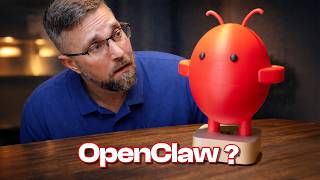
I'm here to report back. The state of corporate America is worse than you're assuming. It's worse than the echo chamber that Twitter is paints it to be. They know nothing. You get in there really quickly, you're going to see, holy crap, they don't even know how to like Google something, let alone use AI. To most people who are sitting there that want to be entrepreneurs that want to figure out how do I do something with AI? I'm going to say something. But I think it's going to shock you. I think it's going to shock your audience. >> How do we make money here, Nick? >> Chris, I promise you we are going to get there. My friend Nick is an AI genius. If you are an OG to this channel, you've probably seen him on these episodes we call Hold Cobros that you'll see right here. Well, he's been gone for 4 months. He quit everything for 4 months, went underground, and spent hours per day, 10 plus hours every day learning AI and AI agents and how to monetize AI agents. And so I had him back on for the first time in months today to explain, Nick, what have you been learning and how can we make money from it? I made sure that he broke everything down in a user-friendly, easy to understand way. So, if you've ever wanted an AI agent or assistant to run your life or to be able to charge a lot of money so an AI agent can run someone else's life, this is the episode for you. A warning to our viewers, your brain might explode. I want you to prove this tweet wrong. That's the purpose of this episode. Okay. >> Really? I'm in. >> Yeah. All right. I'm going to read this out loud to you. You ready? >> 100%. >> Dude, I have 10 agents running while I sleep. No one is prepared for AGI in 2 years. So, what are you building, bro? All my smartest friends are vibe coding until 3:00 a.m. every night. It's all about agency. Intelligence is a commodity, man. So, what are you building? Do you even study exponentials? Have you seen the latest METR chart? You're going to be stuck in permanent underclass, bro. So, what are you building? Did you even set up OpenClaw? I'm maxing out my token budget every day, man. So, what are you building? I promise you, I'm 10x more productive, bro. You just don't understand. Please, bro. Just I know you use this stuff every day, too, but you must not be prompting right. Jeez, bro. 1.3 million views, >> dude. >> Prove me wrong. >> Go to my profile. Swipe right. Swipe right. Swipe right. >> That's That's That's my profile. >> That's mine. >> All right. Scroll down there. >> There. Click on that one. >> Okay, >> dude. So, I can keep the lights on and I just like read all night. It's insane, bro. So, what are you even building, though, bro? You don't understand. My smartest friends are running copper wire through the walls and can ring a bell on the other side. Yeah, but what are you even building? Didn't you see they're throwing lights, like actual lights on a Christmas tree at the Edison office? They just freaking decorations, bro. But what are you building, dude? They're projecting pictures onto a wall and people are paying money to watch that. Like, this technology runs everything. Everything. That was my response to this freaking dude's tweet. >> I didn't know you responded to this. I'm completely surprised. I never saw this tweet. This is amazing. Okay. >> Yeah. Because it's like it's like, okay. Yeah. 99% of the things that people are messing around with don't have a use case and they won't have a use case. But how are people supposed to build the skill? >> Muhammad, edit out Nick reading that tweet because it makes me look bad. Sorry, keep going. >> No, dude. But you you know what I mean? Like the original tweet has a point. What are you building? What have you built? Right? Cuz who's that guy? Alex Finn, I think, who's like every single day coming on to Twitter and he's like, "Bro, this freaking changed my life my life." Like he what has he really built? I don't even know what he's actually built. But the flip side is this technology is changing so quickly. People are learning it so quickly. By the time you actually start seeing results, it's game over, bro. It's so soon in the cycle to be pulling out the what are you even building? What are you even done with that? We don't know. We don't know what it's going to look like yet. And the reason I pulled up the analogy of electricity and Thomas Edison is because there was a big lag. Like it was a novelty for a long period of time. Like what are you going to do with electricity? Oh, oh, you can light your house, are you? you're gonna read books after hours, are you? You know what I mean? Like people just didn't get it until all of a sudden people got used to the new technology and creative people were like, "Huh, I think I could use this for, you know, whatever it is." And pretty soon we've got our modern technology. So, I just think it's a a pretty dumb way to approach it. What do you think? >> I'm convinced you sold me. I'm that easily influenced. >> Yes. Yes. I'm an influencer. >> You're an influencer of influencers. >> Can I show you something >> real quick before we pivot? I just want to add an analogy to your analogy of electricity. So last night I went to Chipotle with some kids at church that are starting a business. They bought this printer. It's not a 3D printer. It's not a normal printer. It's it's a printer that can print anything on anything. Okay? So like if you want to like engrave your Tumblr, you know, and it has a rounded surface or make a t-shirt or whatever or make like a 30- foot long banner, you can print it. And so they wanted business ideas from me. And where we finished the conversation was like, dude, you need to put this in your backpack, take it to school, plug it in, and print stuff on demand. Like, you need to use this as your vehicle for rapid testing and prototyping because there's an endless amount of things you can print. You can print anything on anything. Like, you could print the the wrestling team's weight classes on their shirts. Cool. You could print like they're on the track and field team. A lot of the track and field runners, they customize their spikes, right, on their shoes. You could print something on that like their PR on the spike. Like we could sit here for 10 hours and just scratch the surface of all the ways you could make money with this thing, but don't try to go down those rabbit holes. Just use this as your rapid testing machine and just learn where's the demand. How much will people pay? What colors do they like? Do they want tumblers? Do they want their phone cases engraved? Stickers, whatever. That's what you should do with this. And leave your options open and then just chase the energy. And what we're talking about here is like use claude, use AI, use LLMs, use agents as your rapid testing vehicles. Like use it to have fun and to learn, but to don't don't get married to anything just yet. Just be ready to pounce. And when something comes up, you're going to have all the skills necessary to execute on that thing. >> I'm going to say something right now that I think is going to shock you. I think it's going to shock your audience. To most people who are sitting there that want to be entrepreneurs, that want to figure out how do I do something with AI, I'm going to say something. Go get a job. 100%. go get a job and I'm going to prove to you right now why I think it's I I think it's the best thing that you can do if you're earlier in your career especially to work for a company. So, first thing I'm going to show you this is nuts. Chris is like I'm going to hold it in. I'm I'm going to give him some rope. I'm going to give him some latitude here. I just love that you're speaking in like Steven Bartlett clips. You're like I'm going to say something that's shocking to everyone in the sound of my voice. Clip it. >> Oh my gosh. >> Send it. >> If you're on Twitter, you've seen this. This is a graph or >> explain to our audio listeners. >> Yeah. So this is a chart or a graph with 200 dots. Each dot represents 3.2 million people. So effectively what we're doing is we're showing the entire population of the world. 8.1 is in there. Yeah. 8.1 billion people. Most of the dots are gray and then you've got kind of like maybe a tenth of the dots that are green and then you've got some yellow dots and some red dots. So the gray dots are people in the world who have never interacted with AI. They've never heard of AI and that is like let's just say 80% of the world. Then you've got this green band which is 10% of the world who have used a free chatbot. So they've gone and sat down with Chat GPT or they've used Gem Gemini or whatever and they maybe asked a question like how do I cook a pot roast if I ain't got no pot and I ain't got no roast, you know. And then there's like the yellow part which are now 1 2 3 4 5 6 7. So 7* 3.2 we're talking about 24 million people who pay $20 a month for AI. And then there's one little tiny dot. dot here of people who actually use coding scaffolding. So what we're talking about here is codecs from OpenAI. We're talking about cloud code. We're talking about Replet lovable cursor. Anyways, so when you look at this, you're like, "Holy crap, there's a lot of people who >> have no idea what's going on." And if you just lived in the Twitter bubble, which is basically the yellow people, you would think it's ubiquitous at this point, but it's not. We're very early in the use cases. And as we're early in the use cases, we're also early in the way that the technology is advancing. So I'm going to show this chart real quick. This is Gemini. They just released a model. And if you look at this, nobody's going to know what ARC AGI is, but effectively what it is, it's measuring reasoning and knowledge. And you're like, "Holy crap, 84.6%." Oh, and there's Claude Opus 4.6, which just released. That's at 68.8%. Wo, it's way higher than that. But there's not really any context for what this means, right? You don't really know. But when I look here, this was released in December. This was measuring the models that were out at that point, how many tasks they could do in human time in basically one output. And so in December, we had >> this is like an AI version of horsepower. It's like a way to measure it. >> Sure. Yeah. So GPT5 in December in like one iteration, I ask it a question to to code something and then it codes something. It could do about two hours of human work in sort of one output of a prompt with 50% accuracy. Now, forget that for a second, but that's just the measurement that we're using. Claude Opus 4.5 in December, this is December, could do about 5 hours. So, like, dude, that's pretty good. And at that point, it was doubling every four months. So, you would expect December, April, okay, by April, we should be able to have these models doing 10 human hours in one output. Well, this is what actually happened because cloud opus 4.6 just released. This is where that 4.5 was on that graph. >> And now if you look way up here, >> whoa, >> 15 hours in one output. So if I ask it something now, I'm like, hey, code this blah blah blah, its output would do the same amount of work of 15 human hours in one output. So it didn't double. >> So from 5 to 15 in a month or two. >> A month and a half. Yeah. So it tripled in a month and a half when it had been doubling every four months. What's the accuracy difference? It's >> the same. It's 50%. So 50% is the bar, is the threshold, basically. >> Fun fact, 80% of the people that watch my YouTube videos are not subscribed to me. And most of them think they are. They see them in the feed, but they're not subscribed to me. So please, it'll take half a second. Just click subscribe and it would mean a ton to me. So it's not necessarily saying like, oh great, it's going to replace everything. But that's just the best metric that we have to measure how well it's actually accomplishing human tasks in a specific period of time. This when I saw this for the first time was mind-blowing because I'm like, "Okay, this isn't just a gradual. We're getting into the exponential territory. Who knows what the what the coming models are looking at." So, in December, you know, this I had a house fire. That's why I'm sitting in this house right now. I haven't podcasted for a little while. And I did a lot of thinking like, "All right, if I believe that AI is the future, there's no better use of my time than to invest in and leverage something in AI, but what is that?" And I I looked at starting other businesses. I looked at investing in businesses and I wanted to have the biggest impact possible. And a friend of mine who works for a large publicly traded company reached out to me and he was like, "Hey, would you ever think about coming back and for whatever reason it was just like, yeah, I want to see if all this stuff that I've been working on actually works at a company." Like >> you need It's like you became a Formula 1 racer and you have no car to drive. >> That's exactly right. It's like I live in a retirement community and I need a golf cart, but someone gave me a Ferrari and I'm like, "I'm sorry, guys. I I got to go. I gotta I gotta go drive this thing. I can't have this thing cooped up in my garage all day long. And so I was like like I didn't want to you know this we talked about it. It's like I don't I don't want to like get a job. But there was no other opportunity where I felt like I could have a bigger impact and see if these things actually work, right? I'm here to report back the state of corporate America is worse than you're assuming. It's worse than the echo chamber that Twitter is paints it to be. They know nothing. They know nothing. I went to an offsite with the executive leadership team. I had a conversation with them. All of a sudden, a like 15-inute conversation ballooned into a 5-hour conversation because they were just asking me questions. How do you do that? You can do that right now. And by the end of that conversation that the CEO said to me, "This is the first time I actually realized it's happening." Like, I have an insane amount of urgency because I finally get it. I thought it was talk. I finally get it. And the stuff that I've been showing them is not anything mind-blowing to people who are listening to this right now, right? But to people who like have real jobs that actually have to like do something on a daily basis, like they're doing accounting or they're doing caregiving, they don't have time to go play around with this stuff. They don't know what it actually looks like. And so when you come and show them like, "Oh, that's interesting. We just had a conversation. I recorded it. Let me upload the transcript. It's going to spit out a PDF of what we talked about and it'll be a presentation form." It's like I just came from the future and showed them the Jetsons. And like >> Mhm. >> what I've done now is I've manipulated time. You're still living in a cave 300 years ago. >> 10x that. Nobody was a toy. >> But seriously, because for so long it's been viewed as a toy that now they're like, "Oh crap, it's kind of here." Like the promise of it is kind of here. And so if you can go and work at a company, do it for a year. Who cares? And just get an idea of what are their pain points? What are they struggling with? These are billion multi-billion dollar corporations that have real problems. you get in there really quickly, you're going to see, holy crap, they don't they don't even know how to like Google something, let alone use AI. In my opinion, there's this huge gap to bring the current state to the future by individuals who are humble enough to say, "Yeah, I'd rather start something." But I think if I went and actually worked at a company, I'll learn their pain points and then I can do whatever the freak I want whenever I want because people will think that I'm a magician. >> Cool. But how do we make money on this, Nick? >> Dude, we're going to get there. We're going to get there. Chill out. Okay. Okay. Okay. Okay. You are a magician in the context of what they know to be true, right? >> 100%. >> I could go learn an easy magic trick on YouTube and show it to a three-year-old and they'd think I'm amazing. A 30-year-old would not. So, in that kid's eyes, I'm a magician. You are a magician in their eyes. Therefore, you are a magician. One of the members of the team was like, when I started showing them all the stuff that I was using, they were like, I'm glad you showed I'm just going to say something. I think I speak for everybody. I was intimidated by you. like I thought that you were a genius's genius. She's like, but I'm not saying that you're not, but now I get it. Like I get how you were able to do so much in such a short period of time, like capture information, synthesize it, create things, and I'm not working, you know, 80 hours a week. This is pretty simple stuff. Like I'm synthesizing data. So, I have a couple use cases and I like legitimately think this is the template that could make somebody. You're not going to make a million dollars tomorrow, but this will set you up, I think, for the rest of your life just to be a professional bringing people into the future. Why are you smirking? >> I'm drooling. >> I'm on the edge of my seat right now. You're still talking in Steven Bartlett clips. And I'm just loving all of this. >> Oh, Chris, can I show you to answer that question? What have you built? Can I show you some of the stuff I built? >> Mhm. >> All right, here we go. I guess it's go time. I'll show you this. This was I just wanted to see competitors in this space and so I literally went it's all publicly available. >> What space are we talking about? >> Thank you. Home health and hospice senior living and I get curious. So I'm like I wonder what everybody else is doing. Oh this publicly traded company is they publicly report things. I want to go and see what they're doing. And so I just went and pulled their 10Ks and 10 QS which are quarterly or yearly earnings calls. And I scraped all of their transcripts because I wanted to see like uh so honestly I went to Gary and I said, "Gary, tell me how to do this." And Gary was like, "Oh, hello. This is my little British gentleman. So this is Gary. Gary is my cloud." >> Explain to us what we're looking at. >> Yep. So Gary is my cla bot that I set up. I set it up a couple of weeks ago in the beginning of February. And I'll I'll explain in more detail what the CloudBot is cuz I have a whole thing on it, but effectively what it is is it's like the first window into mass adopted usage of agents. So you bring you bring Gary on and well not it's not Gary, it's OpenClaw, but I call him Gary. I brought Gary on and I gave him access to my emails and my texts and um my Google accounts and online and everything that I have. And now I just go through him and I ask him questions. And so the first thing we just started iterating was like, "How could I get these?" I like, "Oh, let me go look." Goes and searches online. >> This is locally hosted, right? >> Yeah. I don't host it on the web at this point. That scares me. Um, so this is locally hosted on my Mac. I will probably turn another one of my Macs just into this so that it's running all of the time. But right now, it's locally hosted on the Mac that I use. There's a couple different ways that you can do Gary or not Gary, but Claw. You can run a model locally on your computer. And there are models that have been created that are open source for free. Okay. But if you want to use a model like Gemini or Opus or Okay. Okay. >> Catch GPT. I've got to pay for that inference. >> Of course. Yeah. So every time I use it, I'm paying for that token usage. >> Sorry. Could you build like a cloudbot with DeepSeek and have it essentially be free because it's open source and then you're essentially you essentially have all the security features you need because it's it's locally hosted on your computer. Like how complicated is it for the average listener or watcher right now, someone ages 20 to 50 that's internet native, internet literate, how complicated is something like this for them to set up just as you've done it? It's complicated, but it's not impossible. Like I would say the hard part is it does take a lot of time because it's not just downloading the software and putting it on your computer and running it. And I I'll show this later. Like you you've got to have a plan for how you're going to use it. That's what people miss with AI. Dude, I remember us talking about this a year and a half ago where we were like, if you can prepare and just think, what would I use an employee for? Now, you're going to use AI for that. That's how you should use AI. >> Y >> and and people still understand that concept. So, if you understand like, oh, I know exactly what I would use them for. Here's the training material. Here's how I'm going to oversee them. Then it becomes a lot easier. But if you don't, then there's this like this messy iterative process. So, so downloading it and putting it on your computer fairly simple, but like getting the mileage out of it, that's where I feel like people are falling short because they're buying a Ferrari when all they needed was a golf cart. And so, like, of course, they're like, "So, what do I do now?" Well, like, dude, you you live in like south southern Florida's retirement communities. You can't go faster than 15 mph. So, buying the Ferrari was kind of a waste. The cool thing, though, is like, so this is a model that came out, I don't know, a couple of weeks ago. I mean, the model itself hasn't come out, but it's the update came out a couple of weeks ago, and you can see how it's benchmarked against OpenAI, Gemini, and Claude, right? It's about as good. And the thing about this model is it's an open model. So, Claude, Gemini, all those, those are closed models. They're proprietary models. They sell you the ability to use those models. This model, this Miniax, is open. Anybody could go and download it, and they could adjust the weights on it, and they could kind of make it their own little LLM. So this you could download and run locally on your computer and if that was the case then you're not using any inference from Anthropic or OpenAI or Gemini >> what inference means. So, so if I've got something that I want to do on my computer, if I want AI to go and do something on my behalf, that costs money and it costs money in the form of compute from one of these companies because I'm using their I'm effectively renting their model to do something, search the web, scrape databases, send an email campaign, whatever it is, but I'm I have to pay something in order to do that. For models like Gemini, you're paying like $5 per million tokens. For a model like OpenAI's newest model, you're probably paying $10 per million tokens. For Claude's Opus 4.6, you're paying $25 per million tokens. >> But it's so good. >> But it's so good. It's so good. I mean, that's why I mean, that's why it's >> You get it? Anyways, so yes, theoretically you could download this, run this locally, and then you're not paying for any of that inference and you're running Cloudbot on a on a local server, >> but it's not going to be as good. Depends on your use case. You might not need >> good 100%. It may it may not be as good depending on what you need it for. And back to the analogy, like you think you need a Ferrari, you probably just need a golf cart. Like you just just be real with yourself. >> Thinking calendar events or >> Yeah, dude. >> responding to emails. >> You're you're not lighting the world on fire. you're you're sending a cold email campaign, okay? Like, let's let's be real with it. So, I went and I said, I want to know what the other publicly traded companies are doing. And so, I asked Gary, I said, Gary, how would I find this information? It was like, this information is available on the internet. And it went and it found an API. So, I went to Ninja AP or API ninjas, which I didn't know was a website. And it was like, oh, buy this $20 a month, you get access to all these other APIs. I'm like, cool. So, I go there, I get all of the uh 10Ks, and then I'm like, well, I want to display it. And so, it starts telling me how to display it. And I end up building this site where I can see when the next public reporting from these companies are, how they've done over the last quarter, where the revenue is, how they look. I can I can go all the way and see just the themes, you know, how are things looking this quarter. I can see what questions analysts have been asking. And so, from this, like I I showed some of the people at my company like, "Hey, this is pretty cool." And they're like, "Actually, did you know how long it takes to prepare for quarterly earnings calls?" I was like, "No." And they started telling me about their quarterly earnings calls. So he gave me this idea. I'm like, "I wonder if I could help people prepare for quarterly earnings calls cuz what you have to do is you have to take all the data." >> Oh, how much could you charge for something like that? >> My broki, you're about to see. So these people, they have to report. It's an SEC filing requirement, right? Because they're publicly traded. They got to do it on a quarterly basis. They got all the stuff that they got to report, the financials, whatever. >> And their time is worth their time. So they get together and they spend like a couple days a quarter every quarter the whole executive team like talking about should we use great or should we use amazing should we use the word wonderful or should we use the word exceptional you know what I like they're just they're debating these words back and forth and like so my mind just starts going I'm like dude all I have to do is look at your past transcripts easy peasy I create a voice for you I know exactly what the template's going to be you dump the data in I'll give you a first draft I'll save you a day and so I went and sure enough I created this earnings pipeline. Stop scrambling before earnings. Start running a pipeline. And it's literally intake. Here's your strategy. It's a workshop, script, refinement, and export. And this walks you through exactly what you need to do if you're a publicly traded company to get the output that you want. >> Sorry. Why do you not own earningspipeline.com? It's available. You need to take that. >> You do it. You're better. Just don't pay it. I'll vote you. >> I honestly didn't know. I don't do anything unless Gary tells me now. My wife's like, "Did your best friend Gary tell you that?" I'm like, "Yeah, he's a really good guy." So, like, this is the landing page for it, but you could go scrape all of the publicly reported 10Ks, 10 Q's, build profiles for each one of the executives, build a template for what exactly they talk about and when they talk about it, and then an ingestion pipeline like I've done to be like, just dump all of your data in here, and I'll populate this for you. And then you have a first draft because that's all this is. You populate it. Then you go through like this strategy session of AI making some recommendations. Then you workshop it. Then you actually generate the first script. Then you refine it. And then you export it. And like again the thing that people miss here is they think AI just does everything. It doesn't. It's a good help but like you still have to work shop things. You still have to massage the messaging. And so this is an actual representation of me working a call. Yeah. I spent 12 hours like this is to the point I could sell it Chris. It's kind of like for me, you know me, I don't finish stuff. Like this is finished. This is this I like I could take this to market. It's pretty it's pretty bonkers. And so when I show this to people and they're like, "Holy crap." As an executive, like you just got the four highest paid people in the entire company 10 hours a year back in their time. That's that's high leverage. That's high value. Right. Real quick, guys, I want to tell you how I made money within an hour of having an idea. This is an idea I got during a half marathon. And all it took to launch this idea was one email to my list. That email brought in almost $3,000 in the first 24 hours with no ads, no social media, and no algorithm. So, what happened is that Meta, aka Facebook, banned my Facebook page out of nowhere. All of my followers, content, everything gone overnight. And Facebook is also where most of my newsletter subscribers come from. So, I've been pretty mad to say the least. But nothing can touch my beehive email list. over a quarter million people I can reach whenever I want directly with nothing standing between me and their inbox. So what did I do? I ran home at mile 8, opened Beehive and started selling a digital product to my subscribers that exact same day. You see, Beehive lets you sell right on the platform with no separate storefront, no extra tools, and they take zero commission on any of it. Every dollar is yours. Social media can disappear overnight, but your email list will not. So go to beehive.com/chris and use code chris30 for 30% off your first three months. That's beehiv.com/chris. This was a fun one. Took me like 12 hours. But these are toys. I what I really want to show is what I think is the most amazing thing and that's Gary. So open claw is really cool. It's got some protocols built into it. It's pretty plugandplay in the way that it remembers things. People talk about it's got infinite in memory. It doesn't have infinite memory. It like takes time to learn things. But as it learns you, it adds things to different files so that every time it loads, it remembers, oh, Chris doesn't like it when I spit out this output or Chris doesn't like it when I do X, Y, and Z. I was already in the process of like creating something that was my second brain and then Open Claw came out and I just adapted it to it. But we get bombarded with stuff, especially if you're an executive and this is just like whatever. Tons of messages per week. There's literally no way for you to process all of this information. The only way for you though to get out of AI what the promise is is if you have clean data that it can extract, analyze, and then spit out actionable information to you. If the data >> garbage out. >> Exactly. If the data is not clean, you don't get anything good. So, a lot of these companies have data, but they're not they're not cleaning it. So, like I'm looking at this. >> Give me an example of clean data in, clean data out, or vice versa. >> Okay. So, here's dirty data. Dirty data. Boom. Boom. You're a company. You have tens of thousands of contracts, okay? But they're all saved in different folders. And all of your DME contracts are saved in like >> what's >> durable medical equipment contracts are saved in Some of them are saved in a DME contract folder. Some of them are saved in a durable medical equipment folder. Some of them are saved in a hospital equipment folder. Some of them are saved in a skilled nursing facility equipment folder. The data is just in a bunch of different places. There's no rhyme or reason to it. second layer that could be the problem is you've got data laying around that is in PDF, it's in Word, it's in HTML, it's in JPEG. And so AI looks at that and they're like, "Oh, I I don't know how to extract all of those at the same time." Or the naming conventions are off. Maybe you're like, "Oh, I'm going to save all of the ABC Co information in this folder. I'm going to call it ABC Co." But you accidentally name it ABD one time or or you accidentally name it B CD one time, right? just common mistakes. >> So, how does AI find all that stuff? It can't if the data is not clean. Now, clean data would be clear taxonomy, which a taxonomy would just be a hierarchical way for you to to uh identify information. >> And everybody stays with kind of the same saving file naming structure, right? So, for me, what I did is I was like, I want to create Gary, I want to create my own AI bot that like knows me. So, I went and I exported all of my chat GPT data, all of my cloud data, all of my uh texts because I can connect to my iMessage through an >> MC. You never deleted any text. >> Never. Never. Uh through an MC MCP server. >> This is going to haunt me, isn't it? You're about to cancel. >> Dude, my boy right now. Right now, I just pull up the most disgusting tweet. >> No, there's nothing. Anyway, there's nothing in there. So, it took all of that data and I was just like, I want you to take that and standardize it for me. And so, it did. I mean, it took some time and some prompting, but it did. It standardized it for me. And then I was like, all right, we got to structure it. And so, we started structuring it and putting it in a way where it's easily retrievable so that I can go and search and then I can create automations on top of it and then eventually you can create agents. But if the data is dirty, you can't get good outputs. So that would be like the first thing I would say is just helping companies get clean data is a multi-million dollar business. Just going in there and being like, I'll help you organize this and helping them clean up. >> How can that be automated or is that just like the handheld messy process that it is >> the cleanup? >> Yeah, >> it can be automated until you've built the system for it. You can get 80% of it done, but that last 20% takes a long time. So, for example, if you've got a company that's got tens of thousands of files, I could probably run AI on it and categorize everything to 80% confidence, but there's still, let's say, 20,000 files in there that you don't know where they go. How do you then figure out how to clean that stuff up? And that that's where somebody who has a lot of experience can come and be like, "Oh, that's simple. >> Just do X, Y, and Z." But even beyond that, putting in a format where it can query and use the data is something in and of itself. So you know this Gemini, well, let me back up. These models, these LLMs have what's called a context window. So think of it like this. If I wanted to buy a business, I'd go talk to Chris, right? Chris knows everything about businesses. He's like done every business, seen every business under the sun. But in order to get him up to speed, I've got to spend a couple of hours with him to tell him like, hey, look, this is how much the business costs. This is the market. This is the industry. This is the demand. this is how much money I have. And then by the end of that hour or so, Chris can give me an actual response. He can say like, "Oh, you should do X, Y, and Z." So Chris, he's the model. He's Claude. He's Gemini. He's been trained on all this data and he's just knowledgeable. That hour of me spending time to get him up to speed, that's the context window. That context window is pretty finite. And for a long time, it only went up to like 200,000 tokens. It finally just hit a million tokens. But even with a million tokens, if we're talking about tens of thousands of documents, we're talking about billions of tokens. it can it literally cannot it's not physically possible for it to query all of that data and return things and so you've got to organize this data in a way where you parse it >> more efficient >> you chunk it and you clean it and you tag it and you embed it whatever and then you set up these systems so I've been doing some of this stuff and I was like I want to build this for myself so I exported all my chat GPT conversations export all my claude all my emails everything and I implemented openclaw so openclaw has access to everything this is just like a these are the seven files in openclaw so openclaw has a soul because you want if you want to give it a personality the user MD is just like what you want open claw to know about you if you want any agents run this is where you would put instructions for agents the memory this is long-term memory these are things that you want openclaw to sort of always remember I work at xyz company I have xyz skill set tools you can go and research what agents and tools are the heartbeat this is just like jobs that come every hour two hours that continue to run and then if you want to give it an identity so those are like the seven basic files that it builds over time and like the beauty of open clause the more you use it the more openclaw builds these automatically. So what I built was like I had already had this. I added this. I had a people framework. So I asked it and like I had a whole set of prompts to do this where it was like how do I manage relationships? How do I manage failure? Like it knows if I showed you some of this stuff right now you'd be like that's pretty spot on. >> The response was just two words. You don't >> you don't Yeah. You don't. So when I'm talking to it now like literally Gary will be like Nick it kind of feels like you're spiraling here. Or like Nick it kind of feels like you need to get back to this person. Oh, Nick, you probably see I know you said you should take that on, but that's not a good idea because you take on too much stuff. It's incredibly helpful to have from from the get-go. It also build like a taxonomy for me. It also created a bunch of projects. So, I like I was going into this job and I was like, I just want to be organized and make sure that I'm not letting stuff fall through the cracks. And so, it just created all the projects, all the people. It took all the conversations that I had and it synthesized them into these documents. And so, when I started, I had OpenCloud that was already working. And then I layered Gary on top of it. And now literally I can say, "Hey, what do I have outstanding to so- and so? What did I say I was going to do?" It will remind me because I've got jobs set up for it to come and remind me and say like, "Hey, remember at the end of the day you're supposed to get XYZ thing to so- and so." It will preemptively give me a spreadsheet based on what I said I was going to do. I was like, "Hey, does this look good?" Or like, "Just give me a first draft of this stuff." But it's because I went through and spent the time so that I had the context to understand my people framework commitments, the decision framework, my personal context, the taxonomy, the extraction methodology, all that stuff. And so you can see like this is all the crap that obviously it's spit out. Anyways, and the way that it's built is like literally queryable. I can query just about anything that I want to know. So if I'm like, "Hey, what did Chris and I talk about the last time?" If I'm getting ready for a meeting, if I'm getting ready to give a presentation, like I can't tell you how many times in the last few weeks people have asked me to do something and I'll like come prepared to a meeting with a presentation and people are like, "Huh?" Well, you did what now? Oh my >> Yeah. >> Right. Cuz like the old paradigm is this took you five hours. The new paradigm is it took me like five minutes. All the setup took me a long time, but now I'm just able >> I'm able to access it. So anyways, I'm going to I'm going to stop talking because I feel like I'm just on a heater. >> Okay. So with everything that you built for yourself, how much of your context window did you use up? >> It depends on how it's being used and when I'm utilizing it. So if I'm asking it specific questions about people, it will go then and look at the people file and pull it. So it's not loading in the context every single time, but it is loading into the context when I'm asking about specific. >> And is that what the rag is? >> So no, >> explain what rag is. >> All right. So, remember how we were talking about how you've got all of this data? So, if I've got tens of millions of tokens of data, but I can only ever ingest 100,000 tokens, how do you make things queryable? Well, there's this rag approach, which is retrieval augmented generation. And so, what you do is you tag all of that data with metadata. So, for example, think of it like a library. If there's a book that's written on ancient Rome, >> like a dewy decimal system, >> a dewy decimal system. Yeah. It's going to be like it's in row 8, column B categorize with the rest of these things, right? So if you search a word, it's going to pull up where that might be located and then allow you to access that stuff. The >> Gary and open clause is a little bit different. It's it's on this thing called QMD, which is quick markdown. It's not a vector data. This is like way too technical. The gist is it allows for semantic searches and the results are much more accurate. So >> everything that that I would have are semantic searches because they're meetings. They're being transcribed. Right. If I had a big database with numbers like the, you know, maybe maybe I'm using more of a vector. >> You're using it like Chad GPT, not like a coder would use it to search it. >> Exactly. Exactly. >> A code database. >> The reason though that it's important is because now it unlocks all of that data that I've had sitting there, all of that context. I don't get to the middle of a conversation with Gary and all of a sudden he's like, "You can't use me anymore. I've run out of memory because it's constantly updating itself. I don't get stuck in the middle of a conversation with him. Like the memory is persistent. It's very helpful. It's it's fantastic." So, if I were to say the lowest hanging fruit though that I've seen, it's so dumb because I can show all of this stuff and there's like agents and skills and oh, MD files, whatever. I'll tell you right now, here's the 8020. If you want to unlock the most value, record your meetings. Period. Record your meetings, transcribe them, have a vehicle or a way for you to actually get a summary and a synopsis of that and then build in yourself some type of an accountability mechanism for you to then say, "Hey, this was a doo out that you committed to that will make you millions of dollars." >> I've seen it. No, >> because right now the traditional way within companies is like what are they doing? They're writing something down or they're like they're trying to remember it or maybe they use co-pilot which sucks. There is no way for them to capture what was done in that meeting, save it to some type of a archival system that you can then access and query later and then follow up with individuals. Like that's that's always been the hardest part, right? Follow up. Follow up and follow through. I said I was going to do one thing and I didn't do it. Why didn't I do it? Well, maybe you forgot. Maybe something slipped through the cracks. But if you just record meetings, document what was said, and then put it in a place where you can go and get back to later or build something that reminds you, you're ahead of 95% of people because they're not using it for that right now. People get so tripped up on like, I'm going to build this agent or I'm going to build this skill. No, literally record a meeting, summarize it, put in a transcript, put it somewhere that you're going to check in, and then all of a sudden you've got this superpower because you've got this massive database that you can go back to. How can people make money learning how to do this and then doing it for individuals or for companies? Is that a viable opportunity right now? Like I picture if if I'm an executive watching this video right now, I'm like trying to find your contact info, >> right? Cuz I'm like seeing this and I'm overwhelmed and it's like h and this isn't a sales pitch. Like Nick has nothing to sell us, but it's like I feel like I wish I did >> people could learn how to do what you've done and and charge for it. So, the first thing I would say is you and I are so freaking lucky. Like, we're so lucky that over the last two years, we just been able to like dabble, you know, like how does that work? Well, that's interesting. And we just start learning about it. So, just devoting the time to this, you're ahead of 95% of people because they don't they don't have the time and they don't want to make the time. And by the time they get home from work from doing all the things that they're supposed to be doing, they don't have the time to like ingest this information and then figure out a way that makes it applicable. So, the first thing I would say is just learn. Just learn, bro. The second thing that I would say is anytime that you've been within an organization where they're like, I wish there was a better way to do this. That's an opportunity. If someone's using a spreadsheet, that's an opportunity. If you're on a meeting that could have been an email, that's an opportunity. >> But like, how do we make money here, Nick? >> Chris, I promise you, we are going to get there. >> Okay. >> Give me a minute to finish this thought. >> Yes, sir. >> If you're on a meeting that could have been an email, that's an opportunity. If somebody let something slip through the cracks, that's an opportunity. I think that now the cost of building custom code, I didn't even show you all the other stuff. I have like little uh survey software or tracking things. The cost of custom code is so low that you can build customized tools that save people 80% of their time and it doesn't have to be like on the mass corporate scale. It can be on the small scale. So anyways, first one would be learn. The second thing is I think there's huge demand for corporations just to be in the know. If you get educated and you just cold call, literally, you could set up a cloudbot to be like, "Here are all the publicly traded companies because I can go and scrape all of that data." Cold email, go and find the executive information because all that information is also public. Cold email every single one of those executives and say, "Hi, I'm Nick. Um, I've been deep into AI in the last year and a half. I know what's coming around the corner and 95% of your competitors don't. I'd love to have five minutes with you so that I can update you on what's coming down the pike." you're probably going to get rejected by most people and you can probably perfect that sales pitch month, but like you you would do amazing with this cold outreach. But if you can get on their calendar and just have like what I had with that executive team, like within a couple of minutes, they're going to be like, "Oh, I get it. I get it. I want this guy every single week just giving me an update." You may have heard, but Facebook just banned me completely. So on any platform, just like YouTube right here, that could happen at any given moment. So, if you want to keep getting business plans for me or business ideas once a week for free, check out my newsletter, tkopod.com. It's literally one long email per week that's very tactical about how to start specific businesses. tkopod.com. They've asked me to like, hey, would you just would you do a course for the next 12 weeks, 1 hour a week for the executive team? They want to know. They just they don't know how to use it. They're kept from the truth because they know not where to find it, Chris. And so, oh, I can't wait for like the few people to be like, "Oh, brother Alder." But just putting yourself in a position where you can relay yourself as a subject matter expert. And again, this is like 2010 social media where it's like, "Oh, you have a Facebook account. Will you run social for us?" That's that's what it's like in AI right now. Oh, you kind of use Claude. Can you run AI for us? Once a week, you could come in and and pay consulting services. Like, do you remember when you went and met with that unnamed billionaire and he was just asking you questions? He like just extracting information from you. I think just doing that session alone, you could charge a couple thousand dollars just to give these executives a taste of kind of what's coming around the corner cuz they they don't know. They don't have the time to do it. And that that's kind of where I was is like, of course you don't know. Of course, all of your day is spent managing people. The second you meet somebody like me, you're like, okay, I get it. Holy crap, the train is coming. I'm about to get hit. So, I think an executive boot camp, I think weekly roundtables, I think a fractional AI officer is 100% in the offering. It is more of a newsletter, but some type of a briefing service. You don't even have to be an expert in in vibe coding. Just like, hey, I'm going to keep you up to date. I do think custom vibecoded tools are massive. You and I have talked about that for an AI agency for an, you know, a very long period of time. Probably the biggest unlock though is if you can figure out how to get proprietary data sets within an organization accessible to that organization. Massive unlock. Because right now they have no way to do it. They're like, well, I can get PowerBI and I can do a SQL database. Like they that's hard. Somebody has to have a skill set to do that. If you can get a AI UI on top of that data so that people can just search, hey, show me where we have the largest deficiency in labor costs in the company right now. If that would return an answer, that blows people's minds and you can do that right now. It's not like you have to build a you know the SQL language in place. You can you can AI UI on top of this data. So if you can unlock the data, it becomes really valuable. I was talking to somebody about this. It's almost like fracking. Remember how fracking was this new way to extract oil out of the ground? So you're no longer just going deep, but you're going like spreading out. To me, that's what AI is. It's like you you're fracking, you're leveraging that data that was unaccessible before and doing it in a way that is much cheaper and much more accessible than it's ever been. >> So I think that piece in just coming into an organization, you could just do it with one. Like are you a healthcare expert like I am? Cool. Hey, I will show you how to get every single one of your quality reports for every one of your locations in the next 6 weeks. I wouldn't say like in a weekend, you know, give a reasonable time period, but then you have an opportunity to actually learn and implement it. Does that make sense? >> Yes. >> I can't tell if you're quiet cuz this sucks or if you're quiet cuz like you're thinking about or >> No, I already told you it's a banger, Nick. What do you want? I have a headache. This is good. This is really good. I'm just thinking all these things. I'm like, what will the audience think? What should I do right after this? Like how quickly can I implement this on my computer? I'm just thinking my mind is just going nuts. >> Like for you cold like I was talking to somebody about this cuz I was at this executive off site and one of the kids I was I mentioned you and they're like is that guy on TikTok? I was like yeah I like is that the Kerner office? Anyways, I think for somebody like you, if you have OpenClaw, you could be sending cold email campaigns 24/7 because there's this window of time right now where people aren't sick of too much AI. They're getting there, but like pretty soon everybody's going to catch up. Everybody's going to be doing the same cold email outreach and all of a sudden that channel is going to be flooded and you have no longer have arbitrage in that channel. Right now, you have arbitrage in those channels. If you set up a clawbot, you're very clear with who your customer is and you know the distribution channels and then hit it there arbitrage. You are going to find people in the next six months. Once everybody kind of figures that out, those channels are flooded and there's going to be a new opportunity. I don't know what that is, but like right now there is leverage if you know something. So in my mind, it's like what is your secret sauce? And now with Clawbot, I can unlock it because I could hire like two or three people to be my minions. Go all in on it. Go learn. Just go play. You will figure something out and it will be incredibly valuable. >> When you're talking to Gary, what model do you normally use? >> Opus 4.6. >> It's so good. >> It's really good. >> Is it time to leave Chad GP behind, >> dude? Yeah. So, like I use chat GPT for what I would call like the Honda Accord things. >> You're running to the grocery store. >> It's amazing at what it does and it's reliable and I know what I'm going to get every single time. And so if I have large data sets that I need to extract stuff from, I'm going with chat GPT. But Frontier models like Claude, it's pretty incredible. Gemini's new 3.1 model, it's pretty incredible. Like it's weird to say because it doesn't feel like it was that long ago that there's like weirdness with some of these models, but Claude feels like I have an expert in every topic known to man at my fingertips all the time. It costs a lot, but I yeah, I I use Claude all the time. Here's my stack, though. I'll tell you my stack. So I use Claude to plan 4.6 And when I'm building software now, I'm like, "Okay, this is my idea. Help me write sort of my PRD, my product product requirement document. There we go." So, it writes my PRD of like what I'm hoping to accomplish, but then I will send it out to like Gemini and Codeex to say I tell it, "Go do an adversarial audit. Have them tell us what we're missing." And I go through like four rounds of that. And then after those four rounds, I've got something that's pretty good. And I start now the planning phase. All right, let's plan something. Go do another adversarial audit on the plan implementation, not just like the build spec, but the plan implementation. And it goes, you know, it goes through all those steps. So, I'll use other models as a way to sort of glean other insights that I might have missed. But once I have all of the data and I just need good analysis, opus. I mean, I just that opus is the one that's like incredible when it comes to analysis. >> I'm at max capacity in my brain right now. You got to call it. >> I love All right. Love you, too. Where can people find you, Nick? >> Twitter. Co-founders, Nick. Uh, I have a YouTube channel called Nickconomics. I'm firing it back up. I'm uh I'm back in the game. This was nice. Thank you. >> That's the most resigned thing I've ever heard you say. Twitter. You knew that. Like it was the lowest worst value of your call to action. You're like, "Oh, Twitter." Cuz what else is there nowadays? >> Um, you can find me at Nick Consulting. $5,000 an hour. Uh, I probably should actually. >> I mean, seriously. >> All right. All right. What you think? Please share it with a friend.
Video description
beehiiv is the newsletter platform I’ve used for over a year and a half because their data shows you exactly what’s working. Get 30% off three months at http://www.beehiiv.com/chris-koerner?utm_campaign=chris-koerner-2026-Partnership&utm_medium=YouTube-ads&utm_source=chris-koerner&utm_term=2026-2-28&stripe_campaign_code=CHRIS30 ━ Check out my newsletter at https://TKOPOD.com and join my new community at https://TKOwners.com ━ HoldCo Bros are back! In this episode, @NikonomicsPodcast and I reconnect after he spent four months deep in the AI world building agents with OpenClaw and testing Claude Opus 4.6 inside a real public company. We react to the viral “what are you building?” tweet and break down why corporate America is way further behind on AI than people think. Nik shares why he believes working inside a company right now might be the smartest move for ambitious entrepreneurs, how to spot AI consulting opportunities, and why cleaning company data and recording meetings could be massive unlocks. We also talk through building custom AI tools, cold outreach to executives, and where the real money is in this wave. If you want practical ways to profit from AI, this one’s packed. Learn more about Nik here: https://www.nikonomicspod.com/ Enjoy! ⸻ Disclosure: Beehiiv is a sponsor of this video, and I am also an investor in the company. This means I may benefit financially from their success. All opinions are my own, and I only promote products I genuinely use and believe in. This video is for educational and entertainment purposes only. It does not constitute financial, business, or legal advice. Any business examples, tools, or strategies shown are for demonstration only and may not produce the same results for you. We do not guarantee earnings, outcomes, or success. Always conduct your own due diligence, comply with applicable laws, and use these ideas responsibly. We do not encourage duplication of copyrighted material or existing business assets. Always ensure your use complies with copyright and intellectual-property laws. Some links may be affiliate links, meaning I may earn a commission at no extra cost to you. --- Audio podcast on all podcast platforms: https://toolkit.tkopod.com/podcast Free weekly business ideas newsletter: https://tkopod.com Private community where we build cool businesses together: https://TKOwners.com Learn more about me: https://www.chrisjkoerner.com/ Business ideas shorts channel: @thekoernerofficeideas The Koerner Office highlights: @thekoernerofficesegments AI-enabled accounting software, because Quickbooks SUCKS: https://lazybooks.com/ --- #AI #ArtificialIntelligence #AIAgents #OpenClaw #ClaudeAI #ChatGPT #GeminiAI #AIConsulting #AIAutomation #MakeMoneyWithAI #AIForBusiness #BusinessIdeas #Entrepreneurship #StartABusiness #SideHustle #OnlineBusiness #TechTrends #FutureOfWork #CorporateAmerica #ProductivityHacks #AutomationTools #ColdEmail #ExecutiveLeadership #AIForExecutives #LLMs #VibeCoding #NoCodeTools #BuildWithAI #AIOpportunity #BusinessGrowth #ConsultingBusiness #DigitalLeverage #PassiveIncomeIdeas #InternetBusiness #AIRevolution #WorkSmarter #StartupAdvice #BusinessStrategy #AIStack #MonetizeAI