We can't find the internet
Attempting to reconnect
Something went wrong!
Attempting to reconnect

VANNtastic!
@vanntasticfinances · 441.0K subscribers · 2.2K videos · 10 analyzed
Share Influence ReportCommunication Profile (across 10 videos)
Stated Purpose
Welcome to my channel! WE ARE SHIFTING TO GREATER HEIGHTS! On this channel, I teach a foreign concept to American finances. I make suggestions of how to use VELOCITY BANKING to possibly make your fi...
Operative Pattern
Across 10 videos, this channel demonstrates low persuasion intensity, primarily through Fear Appeal. Recurring themes suggest consistent operative goals beyond stated content.
Avg Intensity
Avg Transparency
Top Technique
Fear appeal
Presenting a vivid threat and then offering a specific action as the way to avoid it. Always structured as: "Something terrible will happen unless you do X." Most effective when the threat feels personal and the action feels achievable.
Witte's Extended Parallel Process Model (1992)
Persuasion Dimensions
Intensity Over Time
Recurring Themes — AI-clustered from individual video analyses
The channel operates as a comprehensive sales funnel that converts financial anxiety into high-ticket coaching leads and software subscriptions. Regular viewers are conditioned to believe that traditional banking is predatory and that 'Velocity Banking'—facilitated specifically through the creator's proprietary tools and affiliate lenders—is the only path to spiritual and financial prosperity.
The channel consistently positions 'The Vault' and 'Debt Blaster' software as essential operating systems for financial success, converting viewers into recurring paying users.
The content frames complex financial maneuvers as simple mathematical certainties that require personalized 'VANNtastic' coaching and analysis to execute safely.
The channel acts as a lead generation engine for specific financial products, including First Lien HELOCs and Infinite Banking life insurance policies, through affiliate partnerships.
The content uses high-arousal emotional triggers and spiritual alignment narratives to drive viewers toward the creator's ecosystem as a miraculous solution to debt.
Per-Video Operative Goals — detected in individual analyses

The content aims to funnel viewers into a specific financial ecosystem involving 'Velocity Banking' coaching, proprietary software, and affiliate lending services.

The video aims to funnel viewers into the creator's paid coaching, software, and affiliate financial products by establishing the necessity of a financial 'analysis.'

The video aims to convert viewers into clients for First Lien HELOC products and Christy Vann's coaching services by presenting 'Velocity Banking' as a superior alternative to traditional mortgages.
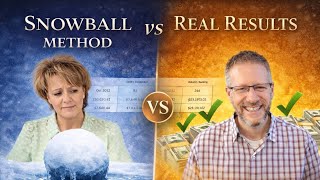
To promote and drive sales/access to The Vault software (Debt Blaster), Christy AI, coaching sessions, and affiliated infinite banking services by demonstrating their use in debt elimination scenarios.

To sell the debtBlaster (Vault) software, coaching sessions, webinars, and affiliated financial products by demonstrating their use as the optimal debt payoff solution.
What's Valuable Here

Clearly illustrates how early mortgage payments are dominated by interest via amortization, a key financial literacy point for debt-aware viewers.
Stop Drowning in Debt Interest

Offers concrete math example (e.g., $8600/month on $629k debt = 76 months payoff) illustrating velocity banking potential.
High Income But STILL Negative Cashflow

Offers detailed, real-number illustrations from the guest's own Mass Mutual policy showing cash value growth, loan access, and compounding mechanics over 5-year periods.
Save Money WHILE Killing Debt

Provides a guest expert breakdown of amortization schedules and interest dynamics, useful for understanding debt mechanics from a velocity banking perspective.
Beat Bad Credit

Provides a practical software walkthrough for comparing debt payoff strategies (snowball, avalanche, cash flow index) integrated with velocity banking examples, useful for users exploring these methods.
PROOF - The Snowball Has Melted! Debt...
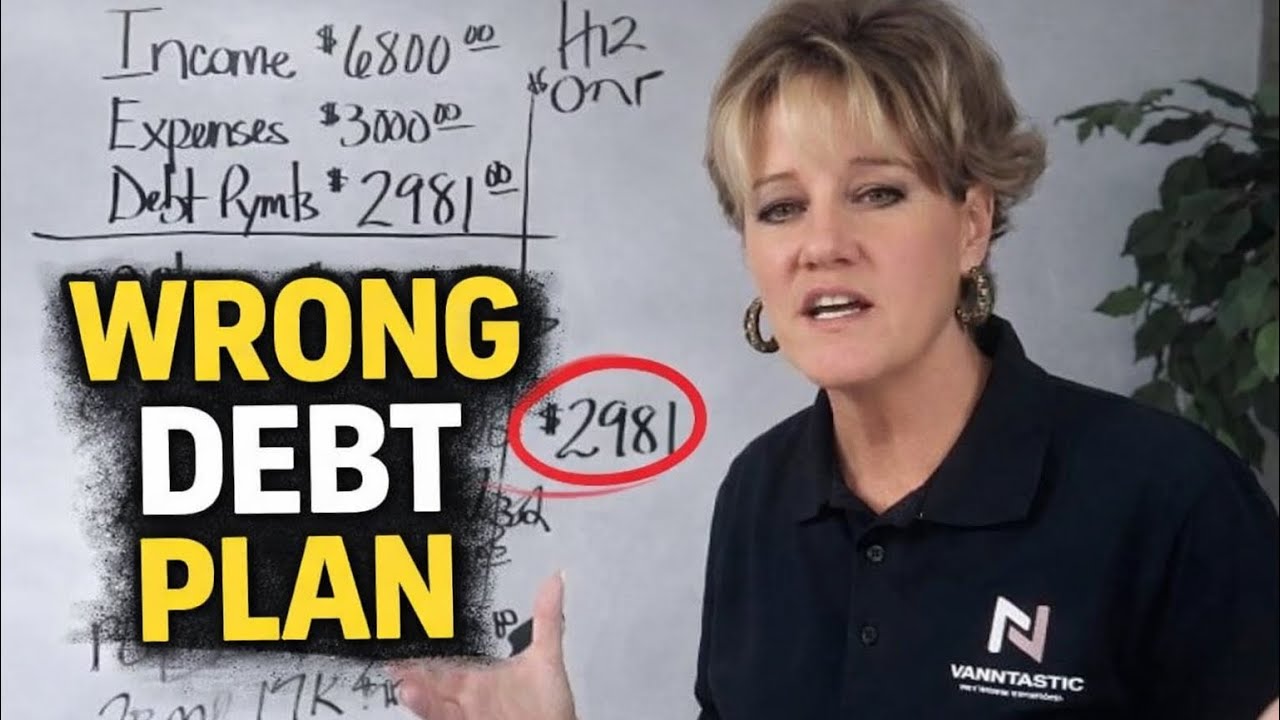
Provides a specific, spreadsheet-based numerical walkthrough of applying Velocity Banking to a $92k multi-debt scenario, contrasting payoff timelines versus traditional loans.
If I Had $92,000 in Debt - Here’s Exa...
Viewer Guidance (2 tips)
Evaluate the ask
Calls to action follow emotional buildup. Consider whether the ask would feel as urgent without the preceding framing.
Consider alternative frames
Information is consistently shaped from one angle. Seek out how other sources present the same facts.
Technique Fingerprint (from knowledge graph)
Fear appeal
AI detected as: Agitation Through Catastrophic Framing
Presenting a vivid threat and then offering a specific action as the way to avoid it. Always structured as: "Something terrible will happen unless you do X." Most effective when the threat feels personal and the action feels achievable.
Witte's Extended Parallel Process Model (1992)
Lead Qualification
This technique was detected by AI but doesn't yet map to our curated glossary. We're tracking its usage patterns.
Fear appeal
AI detected as: Omission Of Risk
Presenting a vivid threat and then offering a specific action as the way to avoid it. Always structured as: "Something terrible will happen unless you do X." Most effective when the threat feels personal and the action feels achievable.
Witte's Extended Parallel Process Model (1992)
Artificial Categorization (the Four Family Stages)
This technique was detected by AI but doesn't yet map to our curated glossary. We're tracking its usage patterns.
In-group/Out-group framing
AI detected as: Mystical Framing Of Commercial Products
Leveraging your tendency to automatically trust information from "our people" and distrust outsiders. Once groups are established, people apply different standards of evidence depending on who is speaking.
Social Identity Theory (Tajfel & Turner, 1979); Cialdini's Unity principle (2016)
Fear appeal
AI detected as: Fear-based Agitation Followed By Proprietary Solution Positioning.
Presenting a vivid threat and then offering a specific action as the way to avoid it. Always structured as: "Something terrible will happen unless you do X." Most effective when the threat feels personal and the action feels achievable.
Witte's Extended Parallel Process Model (1992)
Moral framing
AI detected as: Divine Validation Narrative
Presenting a complex issue with genuine tradeoffs as a simple choice between right and wrong. Once something is framed as a moral issue, compromise feels like complicity and disagreement feels immoral rather than reasonable.
Haidt's Moral Foundations Theory; Lakoff's framing research (2004)
Omission Of Systemic Risk Through 'simple Math' Framing.
This technique was detected by AI but doesn't yet map to our curated glossary. We're tracking its usage patterns.
Oversimplified Mathematical Framing To Induce A 'logic Trap' Where The Viewer Feels Compelled To Seek The Creator's Specific Solution.
This technique was detected by AI but doesn't yet map to our curated glossary. We're tracking its usage patterns.
Fear appeal
AI detected as: Omission Of Risk
Presenting a vivid threat and then offering a specific action as the way to avoid it. Always structured as: "Something terrible will happen unless you do X." Most effective when the threat feels personal and the action feels achievable.
Witte's Extended Parallel Process Model (1992)
Problem-solution Funneling
This technique was detected by AI but doesn't yet map to our curated glossary. We're tracking its usage patterns.
Divine Validation (framing Commercial Products As Answers To Prayer To Discourage Skepticism).
This technique was detected by AI but doesn't yet map to our curated glossary. We're tracking its usage patterns.
Responsibility reframing
AI detected as: Semantic Reframing
Reframing a situation so the person who caused harm appears to be the real victim, and the actual victim appears responsible. It forces observers to reconsider who deserves sympathy, distracting from the original wrongdoing.
Freyd's DARVO framework (1997) — Deny, Attack, Reverse Victim and Offender
Mathematical Obfuscation And The 'double Dip' Fallacy.
This technique was detected by AI but doesn't yet map to our curated glossary. We're tracking its usage patterns.
In-group/Out-group framing
AI detected as: Oversimplified Mathematical Framing
Leveraging your tendency to automatically trust information from "our people" and distrust outsiders. Once groups are established, people apply different standards of evidence depending on who is speaking.
Social Identity Theory (Tajfel & Turner, 1979); Cialdini's Unity principle (2016)
Artificial Categorization
This technique was detected by AI but doesn't yet map to our curated glossary. We're tracking its usage patterns.
Manufactured Financial Victimization
This technique was detected by AI but doesn't yet map to our curated glossary. We're tracking its usage patterns.
Moral framing
AI detected as: Divine Sanction Framing
Presenting a complex issue with genuine tradeoffs as a simple choice between right and wrong. Once something is framed as a moral issue, compromise feels like complicity and disagreement feels immoral rather than reasonable.
Haidt's Moral Foundations Theory; Lakoff's framing research (2004)
False Mathematical Certainty
This technique was detected by AI but doesn't yet map to our curated glossary. We're tracking its usage patterns.
In-group/Out-group framing
AI detected as: Exclusive Knowledge Framing
Leveraging your tendency to automatically trust information from "our people" and distrust outsiders. Once groups are established, people apply different standards of evidence depending on who is speaking.
Social Identity Theory (Tajfel & Turner, 1979); Cialdini's Unity principle (2016)
Fear appeal
AI detected as: Manufactured Urgency Through Catastrophic Framing
Presenting a vivid threat and then offering a specific action as the way to avoid it. Always structured as: "Something terrible will happen unless you do X." Most effective when the threat feels personal and the action feels achievable.
Witte's Extended Parallel Process Model (1992)
Fear appeal
AI detected as: Fear-based Problem/solution Priming
Presenting a vivid threat and then offering a specific action as the way to avoid it. Always structured as: "Something terrible will happen unless you do X." Most effective when the threat feels personal and the action feels achievable.
Witte's Extended Parallel Process Model (1992)
Urgency framing
AI detected as: Manufactured Urgency Through Victimization
Creating artificial time pressure to force a decision before you can think it through. 'Only 3 left!' 'Act now!' The technique works because genuine scarcity is a real signal, so the urgency feels rational even when it's manufactured.
Cialdini's Scarcity principle (1984); dark patterns research (Mathur et al., 2019)
Artificial Categorization
This technique was detected by AI but doesn't yet map to our curated glossary. We're tracking its usage patterns.
Social pressure
AI detected as: Gamified Progression Framing
Threatening exclusion or disapproval if you don't conform. Unlike social proof ("everyone is doing it"), social pressure adds a consequence: "and if you don't, you'll be left out." It exploits the deep human need for belonging.
Asch conformity (1951); normative social influence (Deutsch & Gerard, 1955)
Financial Oversimplification Combined With 'enemy Creation' (the Banks) To Build Unearned Trust In The Creator's Proprietary Solutions.
This technique was detected by AI but doesn't yet map to our curated glossary. We're tracking its usage patterns.
Financial Mysticism & Risk Erasure
This technique was detected by AI but doesn't yet map to our curated glossary. We're tracking its usage patterns.
Omission Of Risk In Complex Financial Modeling
This technique was detected by AI but doesn't yet map to our curated glossary. We're tracking its usage patterns.
Financial Complexity As A Barrier To Critical Analysis.
This technique was detected by AI but doesn't yet map to our curated glossary. We're tracking its usage patterns.
Manufactured Victimization Through The Framing Of Standard Amortization As 'robbery'.
This technique was detected by AI but doesn't yet map to our curated glossary. We're tracking its usage patterns.
Risk Obfuscation Through Oversimplification
This technique was detected by AI but doesn't yet map to our curated glossary. We're tracking its usage patterns.
Anchoring
Presenting an extreme number or claim first so everything after seems reasonable by comparison. The first piece of information becomes your reference point — even when it's arbitrary or deliberately inflated. Works even when you know the anchor is irrelevant.
Tversky & Kahneman's anchoring heuristic (1974)
Responsibility reframing
Reframing a situation so the person who caused harm appears to be the real victim, and the actual victim appears responsible. It forces observers to reconsider who deserves sympathy, distracting from the original wrongdoing.
Freyd's DARVO framework (1997) — Deny, Attack, Reverse Victim and Offender
Moral framing
Presenting a complex issue with genuine tradeoffs as a simple choice between right and wrong. Once something is framed as a moral issue, compromise feels like complicity and disagreement feels immoral rather than reasonable.
Haidt's Moral Foundations Theory; Lakoff's framing research (2004)
In-group/Out-group framing
Leveraging your tendency to automatically trust information from "our people" and distrust outsiders. Once groups are established, people apply different standards of evidence depending on who is speaking.
Social Identity Theory (Tajfel & Turner, 1979); Cialdini's Unity principle (2016)
Urgency framing
Creating artificial time pressure to force a decision before you can think it through. 'Only 3 left!' 'Act now!' The technique works because genuine scarcity is a real signal, so the urgency feels rational even when it's manufactured.
Cialdini's Scarcity principle (1984); dark patterns research (Mathur et al., 2019)
Pathos
Appealing to your emotions — fear, joy, anger, sadness — to make an argument feel compelling. Rather than persuading through evidence, it works by putting you in an emotional state where you're more receptive. The emotion becomes the proof.
Aristotle's Rhetoric; Kahneman's System 1 processing
Curiosity gap
Creating a deliberate gap between what you know and what you want to know, triggering curiosity as an almost physical itch. Headlines like "You won't believe..." are engineered to exploit this. The content rarely delivers on the promise.
Loewenstein's Information Gap Theory (1994)
Direct appeal
Explicitly telling you what to do — subscribe, donate, vote, share. Unlike subtler techniques, it works through clarity and urgency. Most effective when preceded by emotional buildup that makes the action feel like a natural next step.
Compliance literature (Cialdini & Goldstein, 2004); foot-in-the-door (Freedman & Fraser, 1966)
Fear appeal
Presenting a vivid threat and then offering a specific action as the way to avoid it. Always structured as: "Something terrible will happen unless you do X." Most effective when the threat feels personal and the action feels achievable.
Witte's Extended Parallel Process Model (1992)
Similar Channels (shared influence techniques)
Featured People
Analyzed Videos (10)
If I Had $92,000 in Debt - Here’s Exactly What I Would Do
3.0K views
Can You Pay Off A Mortgage With A Retirement Income? Replay…
1.5K views

High Income But STILL Negative Cashflow
1.1K views
Know Your Spending
963 views
Save Money WHILE Killing Debt
1.4K views
First Lien HELOC - The Basics - Replay
2.8K views
PROOF - The Snowball Has Melted! Debt Gone! Feat. Craig Yenni
2.3K views
Stop Drowning in Debt Interest
2.2K views
Beat Bad Credit
1.8K views
Get Rid of Debt FASTER… KNOW Where to Start Today #debtBlaster
4.7K views