
Stefan Mischook
Executive Summary
Contact: stefan@studioweb.com Entrepreneur | Educator | Tech Mentor I’ve been an entrepreneur since 18, launching my first business in the pet industry before shifting into tech. By 1994, I was building commercial websites, and in 2002, I released ...
Across 11 videos, this channel demonstrates low persuasion intensity, primarily through Performed authenticity. Recurring themes suggest consistent operative goals beyond stated content.
Key Metrics
Performed authenticity
The deliberate construction of "realness" — confessional tone, casual filming, strategic vulnerability — designed to lower your guard. When someone appears unpolished and honest, you evaluate their claims less critically. The spontaneity is rehearsed.
Goffman's dramaturgy (1959); Audrezet et al. (2020) on performed authenticity
Channel Rating
Moderate persuasion used transparently. The channel is upfront about its perspective — this is rhetoric, not manipulation.
Recurring Themes
The channel operates as a comprehensive sales funnel that converts tech industry anxiety into enrollment for the creator's diverse coaching products. By positioning himself as a veteran 'Lizard Wizard' mentor, the host leads viewers to believe that traditional coding skills are failing and that his specific blend of mindset training and AI-integrated development is the only way to remain employable.
The channel leverages industry shifts and AI-driven job insecurity to frame the creator's mentoring programs and bootcamps as the only viable path to professional survival.
The creator discourages the study of traditional or low-level languages like C++ to position his own modern, AI-centric curriculum as the superior alternative for the current market.
Career stagnation and technical challenges are reframed as failures of psychology and health to drive sales for the 'Lizard Wizard' and 'Fit Over 50' programs.
The content emphasizes the creator's long-term industry experience to build trust with junior developers, specifically to convert them into paid bootcamp students.
What's Valuable Here
Provides timely insights into developer job market trends like rehiring, relevant for juniors seeking entry-level roles in tech.
Companies are Rehiring Developers, what about Juniors?

The video correctly identifies that AI is shifting the developer's role from syntax writing to system architecture and high-level design.
All programming languages will be one.
The video offers a pragmatic, high-level view of how AI acts as a productivity multiplier rather than a replacement for developers.
Should Frontend Developers Learn Backend Now? (AI Changed th...

The video offers practical, grounded advice on becoming a 'system thinker' and focusing on software fundamentals rather than just syntax.
From Frontend to Backend ... in 2026
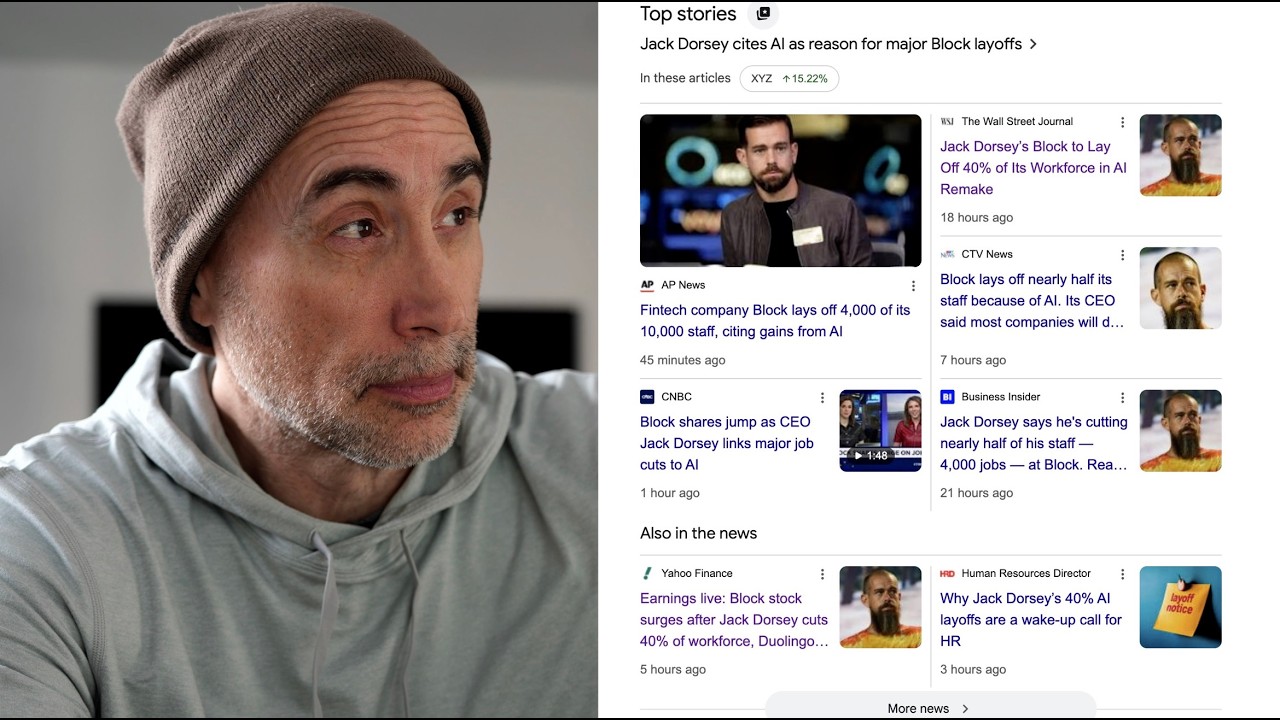
The video provides a historical perspective on tech shifts (VB6 to Web) that helps contextualize current AI anxiety within a broader cycle of industry evolution.
Block Just Cut 40% of Its Developers Because of AI - what do...

The video provides a practical demonstration of how Replit's 'Agents' can simplify the workflow for building landing pages and connecting external services compared to manual coding.
Most Developers Are Using AI Wrong (Replit Shows Why)
Persuasion Dimensions
Most Used Techniques
Performed authenticity
The deliberate construction of "realness" — confessional tone, casual filming, strategic vulnerability — designed to lower your guard. When someone appears unpolished and honest, you evaluate their claims less critically. The spontaneity is rehearsed.
Goffman's dramaturgy (1959); Audrezet et al. (2020) on performed authenticity
Direct appeal
Explicitly telling you what to do — subscribe, donate, vote, share. Unlike subtler techniques, it works through clarity and urgency. Most effective when preceded by emotional buildup that makes the action feel like a natural next step.
Compliance literature (Cialdini & Goldstein, 2004); foot-in-the-door (Freedman & Fraser, 1966)
Viewer Guidance
Calls to action follow emotional buildup. Consider whether the ask would feel as urgent without the preceding framing.
Information is consistently shaped from one angle. Seek out how other sources present the same facts.
Arguments rely on assumptions treated as obvious. Ask what you'd need to already believe for the claims to land.