We can't find the internet
Attempting to reconnect
Something went wrong!
Attempting to reconnect
Bloomberg Podcasts · 320 views · 6 likes
Analysis Summary
Worth Noting
Positive elements
- This video provides a clear technical distinction between temporary price shocks and structural stagflation, helping viewers understand how professional analysts categorize market cycles.
Be Aware
Cautionary elements
- The framing of the U.S. dollar and tech stocks as the 'only safe' options reinforces a US-centric investment bias that may overlook emerging risks in domestic markets.
Influence Dimensions
How are these scored?About this analysis
Knowing about these techniques makes them visible, not powerless. The ones that work best on you are the ones that match beliefs you already hold.
This analysis is a tool for your own thinking — what you do with it is up to you.
Related content covering similar topics.

Good Morning America Full Broadcast — Sunday, March 8, 2026
ABC News
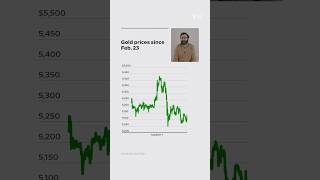
Why Safe Haven Assets Like Gold and Bonds Sold Off Amid Iran Conflict
The Wall Street Journal
How the Iran War Is Affecting the Markets
The New York Times
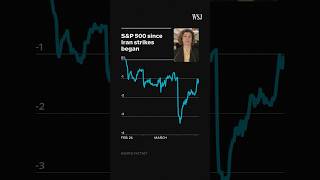
How Wall Street Strategists Plan to Navigate Markets Amid U.S.-Iran Conflict
The Wall Street Journal
Trump Just Flipped The Stock Market
Minority Mindset
Transcript
Let's start with good news. I have daffodils coming up all over my yard right now, and they're beautiful. Q So stagflation is one of those things that you have to have lived through it for a while, for it to actually make sense, for us to call it that. I don't think we're there right now. So in terms of slow growth, we don't really have slow growth in the aggregate. US economy is still very resilient. Even if it's a k-shaped economy, it's actually growing at a pretty decent clip. The unemployment rate that we got and the jobs report we got on Friday, I think that's an anomaly just as the month before is a great employment report was also an anomaly. So I think that has more to do with volatility in the data rather than volatility in the labor market. And lastly, inflation is one of those things that can also creep in. I don't think the Fed is looking for a price shock related to inflation. I think they're looking for more of a self-propelled type of inflation. So I think it's too early to be talking about stagflation at this time. Maybe a year from now, if we're still in this condition, I think that would be fair. What is self-propelled inflation? Talk to us about that. Yeah, So that's that's the type of inflation where the economy itself is generating the price hikes. So, you know, if you remember a few years ago, the Fed was very concerned about wage increases going up. And that's because if prices of goods and services are going up and the wage increases going up, then that wage increase then leads to more price goods increase and then that leads to more. So it's self-perpetuating. And that kind of inflation, it can be taken care of by monetary policy. And sometimes with fiscal policy or oil price shock, that can be temporary. And frankly, with the war going on, it's really one day at a time. So I think they'll be patient on an injustice. Quickly as the oil prices went up, if this thing ends, it could also come down. So that's a wait and see. Yeah, drivers are certainly hoping for that. You look at the average daily gas price, it is now approaching $3.50 when it was below $3 prior to the start of this war. So on as we look for some of this to kind of settle down, what's interesting, of course, is that the havens, the traditional havens are not working. Bond prices are down, yields are higher, gold prices are lower this morning as well. And that may just be a kneejerk reaction to the stronger U.S. dollar. But why are havens not behaving the way they should? Well, let's talk about that U.S. dollar. Right? So, yes, I think a lot of it is reacting to the US dollar. But the question is, why are assets going into the US dollar and US dollar right now and oil futures? Those are the two safe havens and oil futures. That makes sense. U.S. dollar in the narrative of Saudi America, it does not make any sense. So I think the on the Treasury side, you've got inflation. That is a worry right now and certainly the stagflation trade. So the longer end of the curve is going up. It's going against a traditional narrative of safe haven. I think the gold part of it, I think it's just there's a fatigue in buying at this time and there's a lot of uncertainty. So I think gold has it's not like it's dropped all of a sudden, but it has been the safe haven for the last several years. So I think it's taking a pause. So a lot of the correlations that we're used to are not working right now. The only thing that is safe seems to be the U.S. dollar. And frankly, if you talk about the global equity markets, U.S. assets are also safe haven. It's losing less. You know, when you think about when investors are going to have the appetite, again for U.S. risk assets, when do you think that's going to be? Because when you think about big tech and investing in AI, you have to be in the U.S. market, do you not? Yeah. No, I've been waiting for that. So. Part of the rotation that we've seen in the last month or two, I think that is, is just kind of expected in the markets. I mean, you expect the markets to rotate, but in the end, long term investors like institutional investors, if they want to be in the air space, then to develop and really catch it early because we are still in the early stages, they have to come back into the US market. So at some point we're going to get to a point where it's too cheap and investors will come back in and that is what I'm waiting for.
Video description
Anna Rathbun, CEO and Founder at Grenadilla Advisory, discusses her outlook on the markets as traders' hopes for a quick resolution of Mideast conflict fades. Last week’s wait-and-see stance has changed into something more decisive: markets are pricing in a deeper and longer-lasting supply shock — one that could squeeze growth and revive inflation. “Investors have had to increase their probability of the worst-case scenario,” said Rajeev de Mello, a global macro portfolio manager at Gama Asset Management. “The challenge is the stagflationary nature of the shock.” US Treasury yields are up almost a quarter percentage point since the war in Iran started, while about about $6 trillion in global equity-market value has been wiped out. Traders have pushed back bets on the timing of the Federal Reserve’s next interest-rate cut and hikes from the European Central Bank and Bank of England are now priced in. As crude surged toward $120 a barrel at the start of the day, it became clear the market no longer expects a short confrontation. Brent crude spiked as much as 29% intraday — its biggest swing in almost six years — while measures of equity volatility jumped and trading volumes across Asian exchanges ran well above monthly averages. The shift gathered pace after President Donald Trump said the US will consider striking areas of Iran that were not previously targets, while the leadership in Tehran vowed not to back down. Trump also said that $100 crude was “a very small price to pay” for “Safety and Peace,” undercutting hopes the conflict would be relatively contained. And feeding into fears of a prolonged war, Iran named the son of the late Ayatollah Ali Khamenei as its new supreme leader, a defiant move by the Islamic Republic. Key technical levels fell in quick succession in equities, bonds and major currencies as markets opened across time zones on Monday. The latest events lifted the dollar, while energy shares advanced. At one point, Asian equities tumbled about 5.6%, their steepest drop since April. Bond Swoon The tandem selloff in stocks and bonds moved from Asia and into Europe as the trading day wore on. Europe, which is particularly sensitive to rising energy prices, has been at the heart of the rout, with blue-chip stocks sinking as much as 3.1% on Monday. In the US, the drop was more muted, with the S&P 500 down by about 0.6%. READ: Global Bond Selloff Deepens as Oil Jump Stokes Stagflation Fear “The market is selling off across the board today, regardless of size or style,” said Taku Ito, chief portfolio manager at Nissay Asset Management. “If inflation persists while labor demand weakens, a US recession would become inevitable. For equity markets, that would mean the game is up.” With traders focused on the risks of an economic slowdown, the cost of protection against defaults on high-grade corporate bonds hit the highest level since May in both Europe and Asia. Even before the war began, parts of the credit market were showing signs of strain, as concerns over AI-driven disruption weighed on areas such as private credit and leveraged loans. “When markets encounter a black swan, everything could fall at the same time,” said Anna Wu, a cross-asset investment strategist at Van Eck Associates in Sydney. “That’s what we’re seeing today — selling across every corner from equities to bonds and currencies, except for oil and dollar.” -------- Watch Bloomberg Radio LIVE on YouTube Weekdays 7am-6pm ET WATCH HERE: http://bit.ly/3vTiACF Follow us on X: https://twitter.com/BloombergRadio Subscribe to our Podcasts: Bloomberg Daybreak: http://bit.ly/3DWYoAN Bloomberg Surveillance: http://bit.ly/3OPtReI Bloomberg Intelligence: http://bit.ly/3YrBfOi Balance of Power: http://bit.ly/3OO8eLC Bloomberg Businessweek: http://bit.ly/3IPl60i Listen on Apple CarPlay and Android Auto with the Bloomberg Business app: Apple CarPlay: https://apple.co/486mghI Android Auto: https://bit.ly/49benZy Visit our YouTube channels: Bloomberg Podcasts: https://www.youtube.com/bloombergpodcasts Bloomberg Television: https://www.youtube.com/@markets Bloomberg Originals: https://www.youtube.com/bloomberg Quicktake: https://www.youtube.com/@BloombergQuicktake