We can't find the internet
Attempting to reconnect
Something went wrong!
Attempting to reconnect
Analysis Summary
Ask yourself: “Whose perspective is missing here, and would the story change if they were included?”
Single-cause framing
Attributing a complex outcome to a single cause, ignoring the web of contributing factors. A clean explanation is more satisfying and easier to act on than a complicated one. Especially effective when the proposed cause is something you already dislike.
Fallacy of the single cause; Kahneman's WYSIATI principle
Worth Noting
Positive elements
- Provides granular investor insights from a 30+ year macro veteran on AI's role in current market concentration, jobs data nuances, and geopolitical oil/rare earth intersections.
Be Aware
Cautionary elements
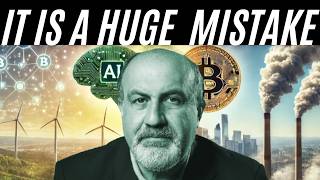
- Single-cause framing that attributes all market dynamics to AI and positions Bitcoin as the definitive response.
Influence Dimensions
How are these scored?About this analysis
Knowing about these techniques makes them visible, not powerless. The ones that work best on you are the ones that match beliefs you already hold.
This analysis is a tool for your own thinking — what you do with it is up to you.
Related content covering similar topics.
Transcript
Elon's telling you fast and powerful. That's what AI is. And so the capital structure is not built for that. The capital structure of this economy is built for slow. I think people have to be prepared that we're at the beginning of what is going to be an incredibly volatile period that has no historical precedent. The truest AI trade is Bitcoin. And the reason is because eventually What's going on guys? Today we got a great conversation with Jordy Visser. In this conversation, we talk about what's going on in the US economy, the jobs report, what the Fed is likely to do in the coming months, how the Iran conflict, Venezuela, Cuba, and much more should impact your portfolio, and then we talk about AI, software, hardware, and how exactly is all of the tectonic shifts going on in financial markets going to impact your portfolio. This conversation we cover a lot. Jordy and I have a lot of fun. We even throw in some book recommendations that you may enjoy picking up at your local bookstore. Here's my latest conversation with Jordy Visser. All right, Jordy, I thought a great place to start the conversation this week is uh the US economy right now is in a very weird place. It's very confusing to a lot of investors. Uh you have a jobs report that just came out this week that shows the US has pretty much not gained any jobs according to the official data since April of last year. You also have the Iran conflict that's going on and I think people thought that oil was going to explode higher, that the stock market was going to be very volatile and those things haven't really happened in the way that people thought they were going to happen. You've got a Fed who's not cutting rates and you also have I think investors who are trying to figure out what is the value of these software companies in the public market and how to think about the S&P 500. When we just kind of zoom out for a second, what is the current state of the US economy and like do you think that the economy is strong or do you think that the economy is like teetering on a lot of problems? I'm going to tell you when we start this normally, you know, there's there's a few things to talk about. You just threw like a lot in there. There's a lot for people to think about and talk about. And there's some statements like oil hasn't gone up higher, but gas at the pump is up 55 cents in less than uh two less than two months and it's up for the week I think 33 cents. So, all this is happening fast. Here's the thing. about the economy. It has been a an economy that has had two parts now for really since 2022. Once we raised rates significantly um and the housing market died and then we had Silicon Valley Bank, the commercial real estate market died because there was so much money thrown into long duration assets in 2021, particularly software because of COVID um and crypto. Think about 2021, 2022, and just how much money flew in. Then the Fed raised rates. Then we've seen long duration assets. It's not just commercial real estate. It's not just the housing market. It is private equity. We're going through the private credit. It's VC. So, I think that part of the economy, if you ask anyone that's in those areas, I mean, you know, a lot of crypto entrepreneurs, it's been a bloodbath. Um, housing market, bloodbath. I mean, we're still sitting at at at all-time lows in terms of or close to all-time lows in terms of house purchases and things have been on one side of the economy bad. We've had auto lenders going out like the the private credit world has seen a lot of defaults. It's now it's seen a lot of fraud. When the tide of liquidity goes out, you get to see who's naked. And we've been going through that. So, on that front, everything's been horrible. The problem with the economy and what's driving it now, it's all AI. A 100% of everything going on is artificial intelligence. If it wasn't for artificial intelligence, I doubt the stock market would be at the level it is because we wouldn't be having the earnings. The earnings have been driven, at least until very recently, predominantly by Nvidia and the Mag 7. That's how we ended up with so much concentration. So, it's a very very strange uh market and economy that has really no historical comparison. But I think people have to realize that behind everything that's going on right now. And so when the Fed paused or when they pivoted in October of 2022, a month later is when Chat GPT was released. So you have these two forces of the overhang of rates being higher hurting all of these businesses. But now you have AI which has gone from a stupid 100 IQ problem, meaning hallucinations everywhere to 130 IQ where Opus 4.6 comes out. And so, as I said when we were in in at your event, I think people have to be prepared that we're at the beginning of what is going to be an incredibly volatile period that has no historical precedent. And the paper I'm going to write for next week for for 22V and my subscribers is this reminds me of LTCM and this reminds me of the quantquake. Now in both of those cases the S&P I think in 98 the S&P finished up for the year and if it didn't it finished pretty close to it but there was a lot of breakdown of historical relationships and that's what you're seeing is that the historical relationships. We have a great economy jobs will be good. All right we're not having jobs be good with a great economy. All of those historical relationships are breaking down right now. >> So, let's focus on the jobs report first and then we'll go to the AI stuff. On the jobs report side, um I mean there's it was bad jobs report. I I don't know if there's any other way to to kind of really uh describe it. Um does that just force the Fed's hand now and then they have to be aggressive. we're getting a new Fed chairman and so like we should just expect significant rate cuts maybe even you know as much as like a 100 basis points over 2026 or how are you thinking about what the Fed should do and how that'll impact the market? >> Well, first of all when you say it's a a bad jobs report um what happened in the jobs report which is new. So last month we had what 130,000 jobs created >> allegedly >> 137,000 of them were in healthcare. So x healthcare it was a negative number this month. The reason that we're in negative territory is because healthcare was negative this month. >> Now that's not going to happen going forward. This was a one-mon thing. But >> why do you think that it was negative? >> There was some strikes and some other issues that were oneoff. And remember you you had bad weather. You had a whole bunch of things which could have impacted the survey and everything along those lines. So I I'm going to say that we're still tracking in the same way we have been. I'm I'm a statistics geek. We have not created any jobs now for over a year if you strip out healthare. And the reason I keep saying healthcare healthcare is a different kind of job and it's very hard to be displaced from AI right now. Eventually it will, but it's very hard to do that. All the other jobs, accountants, legal, all that can be disrupted. AI is definitely killing businesses and bankruptcies there. We're seeing more bankruptcies and I think we're going to see more of them which means there's job losses. We still have companies. I mean last week we went through XYZ this week. You've had Morgan Stanley announced that they're laying off people. Oracle slashing jobs. This is not the normal thing at a time. So I still hear too many people saying well the normal job creation because we don't have immigration and because of demographics is is not that far above zero. BS. Like this is just complete garbage. And if you listen to people like that, AI is disrupting jobs. It's not going to create mass firing in my opinion, but we also know that it's going to get worse. So, it wasn't as bad a number as I think people are going, but it does show that if you're not creating jobs and you have gas at the pump going higher, which means we're going to see a huge inflation print in the next month because gas is a major part of the headline inflation number. It may not filter all the way through core, but you're going to see an inflation number that I'm sure based on what we've seen at gas at the pump is going to be at 1% or higher. So that's for one month. That's an annualized number of 12. We're going to be back in kind of the oh my god, we're in 2022 period again, and that's coming in the next month. So I think it's just a period of uncertainty both in the labor market but this is going to add uncertainty on the inflation side because the one thing I will say is on on the Iran situation when you go to poly market and things this is the betting market does not think this is going to be a short thing and it's much more difficult to have an off-ramp like we did for liberation day where you just reverse course and an offramp for AI and an off-ramp for a situation with Iran. So on the Iran situation, um I think I am on record, well I know I'm on record as saying uh the triple parlay of the century would be Venezuela, Iran, and Cuba. Uh Venezuela, what appears to have happened there is we pretty much went down there, we grabbed Maduro, put a bag over his head, took him back to New York, sitting in MDC with Sam Bankman Freed, uh and then we said, "Okay, well uh Deli, who was second in command, uh you can now be the leader of this country, but uh we're going to be friends. we're we're going to have some uh um you know much closer relationship, much more friendly relationship than uh than your predecessor. And so the US seems to have uh gotten some control and access to Venezuelan oil. There's now this gold deal that recently was struck. Uh but Trump in talking about Iran has explicitly said that he was involved and blessed Deli taking over as the second in command. He's saying that because he's saying in Iran he wants to be involved in the process of selecting whoever the leader there is going to be. And then in the last 48 hours he has said that Cuba is likely to fall soon as well. They really want to do a deal etc. Who know you know who knows how true that is as much as if we do see Venezuela, Iran and Cuba this like Donro doctrine if you will where they are going and driving a lot of um adversaries to become much more friendly to the United States. Do we just like at some point say okay cool we accomplished our goals and like that's it. or do you have to keep being the like aggressor, the the kind of, you know, forward- facing we're spending money in these countries and and doing this like like how does this end? I I I guess. Well, I I'll connect everything you just said back to one thing last year. The trade war ended. Why? Because China told the world they have the world's rare earth. What is the connection between Greenland, Venezuela, Iran, Cuba? When you go into the China, Iran, Russia proxy, and you get into the hey, we control rare earth. All right, let's make sure with Greenland, which has a lot of rare earth, that we have at least the possibility when we do a deal with the Ukraine, let's make sure rare earth is involved. In terms of China, China gets I think 20% of their oil either from Iran or and or Venezuela. >> So there's a China connection to this whole thing. And remember there's a she meeting coming up in April, I think. So when you get into kind of the the intersection of things, I think the rare earth card was played. I think the oil slash let's make sure that you don't have control over these areas the way that you did that if you're going to shut off rare earth. Well, now we can have more control over what goes on in oil and the world. Whether or not that's the true side of it, there's absolutely no doubt that behind all of this is AI. You had the anthropic fight with the defense department, the Maduro situation. You left out the Mexican cartel. our involvement in using artificial intelligence in in moments like this and the ability to do things that we've never seen before like Venezuela. I think people just have to realize that this is a new world of again artificial intelligence that will only intensify as we get into humanoids. Right now we're just dealing with autonomous drones and we're seeing that that also means that it's not just Iran. If people haven't looked up, go look at what the Mexican cartel has with drones. like we're fighting battles with people that actually have advanced military and I think having the the ability of having an advantage in artificial intelligence is something that this administration is very focused on whether or not when the midterms come that'll continue to be there because I think these are all going to be major issues with the midterm especially now with gas going up and the jobs market going down but then when you fast forward it to the next presidential cycle I think it's absolutely going to be there because in three years we will be talking more about humanoids being really that's why whenever we do the show and I meet people either on it and in particular right now financial adviserss are kind of the place I'm spending a lot of my time because they're the voice to investors investors that are day traders they may not have a financial adviser but you know with Sylvia and these things like there are a lot of people that tune into the show to hear what's going on these things are unprecedented most importantly they are not going away so my job with raas and financial adviserss is hopefully to provide them some kind of a calm backdrop as to what's going on. Give them some tools and AI to deal with this. But I think everyone just has to realize that no matter how many questions you ask me today, artificial intelligence is involved in some way and so is China. >> It's funny you bring up the uh financial adviserss. Um we've had a lot of inbound interest at Sylvia from the financial adviserss and uh I've been telling them there's basically two reactions. I have uh a group of financial adviserss on the internet who think that I am like the second coming of the devil and you know we're trying to automate their jobs. Uh, and then you have a lot of RAAS that are saying, "Wait a second, this is a tool that can augment our humans and make us more productive, help us make more money, increase the number of clients we can serve per advisor, you know, all this stuff." And what I find that's very interesting is the people who are running towards the technology, whether it's Sylvio or just other AI type tools, they tend to have the growing better, more profitable companies. Like this is just the mentality they have. like let's find things that make us better versus there's like kind of a a pessimistic, you know, contractive type uh mindset and they're the ones who, you know, are upset about this stuff. Um, one other aspect that I do think is uh maybe feeding some of the activity, it feels like our memories are so short. So, we've talked in the past about like we went, we got Maduro, within 3 weeks, no one was talking about anymore. >> Mhm. this week. I didn't realize this because I'm just so terminally online, but I was talking to a a real life friend who isn't on the internet. And I said to him, "Yeah, did you see what we did in Ecuador?" And he was like, "What?" And I was like, "Oh yeah, we were just bombing uh, you know, a narco terrorist group in Ecuador as like a and I saw somebody called a side quest, right, while we're doing the Iran thing. Hey, let's go down here and get these guys." He had no clue. He's like, "Dude, I never saw this in the news. I never, you know what I mean?" And so it almost feels like the military, you know, complex can get aggressive because there is this like amnesia. I don't know if that's a positive thing long term or not, but it does feel like the rapid speed of this is changing the way that people are able to operate. Businesses are doing it, but also governments and militaries as well, right? >> Yeah. And again, it's the speed. Um, I will tell you that like in the Ecuador situation, the problem with finding it on X is that it's not the most talked about thing and there's so many things that are talked about right now. Uh, it's just impossible. And this gets down to like things you're seeing now about the app store and the competition and software. It's like we're creating so many things every single day and that stuff is getting sent out. I'm a person that's trying to keep people up on the most important news stories for the markets related to AI and all the things we're talking about. It's getting harder and harder for me to actually extract the information, which is what I use my OpenClaw agents for, which is to go surf through Reddit and to go surf through X and each morning give me the news based on what's trending as opposed to the news that would be in the FT or the Wall Street Journal, which arguably is news from a long time ago. Today's episode is brought to you by Figure. If you believe in Bitcoin long-term, the worst move you can make is selling it just to access liquidity. That's why you should check out Figure. Right now, Figure offers cryptoback loans at 8.9% interest with 50% LTV. And so, you can unlock capital without creating a taxable event or giving up your Bitcoin exposure. Figure is the largest non-bank mortgage lender in the United States. They've got over $19 billion unlocked on their lending platform, and now they're letting Bitcoin holders borrow against their Bitcoin instead of selling it. Security matters here. So, Figure uses decentralized MPC custody, meaning your Bitcoin stays in a segregated wallet. It's not rehypothecated. It's not pulled, and it's not sitting on an exchange balance sheet. They've also rolled out liquidation protection to help borrowers during sharp market drawdowns. And if you're stacking sats, but also want yield. Democratized Prime lets retail investors earn up to 8.5% APY. Paid hourly, backed by realworld assets, not yield gains or token inflation. Hold your Bitcoin, unlock liquidity, or put capital to work. Check out Figure using my link in the description or go to figurearkets.co/pump. Figuremarkets.co/pom. I'm going to say this from a very good place to the mainstream media. I married a journalist. A lot of my friends are journalists, etc. Um, this is a generalization, but I do think that the mainstream media has become somewhat uh documentarians of the internet. If you go through most of the stories outside of maybe politics, >> most of the stories are talking about things that happened on the internet or were announced on the internet or went viral on the internet, etc. And in a very weird way, they are now an amplification of the internet more so than they are like they're creating the news at the mainstream media and then the internet is talking about it. It's kind of reversed. And so financial markets may be one of the areas where this is, you know, accelerating more so than anywhere. You see people uh are going and Robin Hood is streaming their announcements directly to the internet or to YouTube or whatever. And then both the, you know, Twitter crowd and the mainstream journalists go and race to who can write stories, who can go and cover what's happening. >> But the people on the internet, they just clip the video, post it, and they're viral before the articles ever hit. So, it's like a very fascinating way this is happening, right? >> Yeah. Uh I'll add one more thing into it and this is something that I hope as people get to know me both here and on on my weekly there's too much focusing on the tales of things. So last week we talked about the Catrini report and what everyone wanted to debate and this is what happens the you know X becomes half the people believe it's going to happen and half the people say it's not going to happen when the reality is jobs are going to be displaced. It's not >> No it's not Jordy. No it's not. Prove it. Prove it. >> But here's the thing. To say that it's going to be at 12% unemployment is an extreme. To say that it's going to do nothing is another extreme. Jobs will be displaced and if nothing else because of the trends we're seeing which we've already seen it has a huge impact psychologically. So maybe there's some intelligence and nuance. Software they're all dead. Don't be don't be rational. Don't be r don't bring that rationale in here. >> Well I I'll give everyone you know an important one for everyone to focus on is what's happening in private credit. And the reason is this. I've been around many of these scenarios like private credit where retail is trapped. Retail's trapped in products and they don't know what's going on. >> So, just so people because many people are probably not following this story, explain a little bit as to some of the data points that we've gotten. Blue Owl, I think it's Blackstone, etc. in terms of what's happening. Yeah, you you've you've had a situation with Blue Owl that's really been in play for a couple months now where you know they were getting more redemptions and the way these things were structured these funds a certain amount could be taken out and this is something that people have to understand is everyone wants to get a higher yield than what they can get on money market funds. So if you can get an extra 500 basis points, so you know and right now most these funds were producing eight to 10% returns really since 2020. So to be able to get those types of returns, they took in a lot of money because they're also don't have many down months because these things don't trade that much. So if you don't have to mark things to market, the returns look great until they don't. And when they don't is when there's a combination of losses and defaults and things happening. So you had tricolor, you had first brands which we talked about in October and you got some crack showing up but then you've had more and when software collapsed and people realize that anywhere from 13 to 25% in some of these funds was in technology software. Well then those bonds go down and then people want their money back. And when they want their money back, then these places have to go sell bonds down. And Blue had to sell some stuff to the marketplace that a cap a captive insurer bought and a whole bunch. So that came 99.7%. >> And then this week, Blackstone had a scenario that they had about 1.7 billion net come out. The partners there put up some money and the firm put up some money to make sure that they could get their money back. Even though there's a restriction on how much, they wanted to give enough so it still stayed in that level. And then today we have Black Rockck. So what is happening and I've seen this too many times. Retail wants their money and unlike SVB where you could just go on your phone and get rid of it. There's a run happening and is it justified? They don't want to sit for the losses that are probably going to happen. I >> Is it a like contagion type thing where okay, I see, you know, kind of uh one crack, I see a second crack, I see a third crack. I'm actually not even going to go do the work to figure out whether I'm safe or not. just give me my money back. And I'm like, I'm running for the hills just out of an abundance of caution, which then creates so much of this pressure. >> It does, but I don't think we'd be in this position if it wasn't for the software stocks. So, what people have to realize, um, and again, this week, Black Rockck, and this freaked everyone out yesterday. >> They had a bond in their private credit fund that was marked at par 100 a few months ago, and then they announced yesterday it's a zero. That doesn't happen usually unless there's fraud. So, we don't know the details behind it or at least I haven't read the details on how you could go from 100 to zero. But when that kind of stuff is happening, it makes people scared justifiably. Now, the private credit market is large. It's estimated to be 2 to4 trillion. There's interval funds which are starting to get stories on X as well. These are going to be in the same type of situation. So, here's the thing I'll say that's positive. Is this going to take the economy down? No. Does this have a bigger impact than people realize? Yes, because it is tied very very closely to the insurance industry and the insurance industry has a tremendous amount of leverage. The companies were mentioning Blue Owl, there was an insurance company involved. Apollo has a theme. Blackstone is in the insurance. Like all of these places, some of them have captive insurance companies >> and they've got they've been selling stuff to retail. A lot of the big hedge funds just changed their liquidity terms in the last few years to five years. This will be a story in my opinion this year as well. So I think the private credit thing that people are reading about is something that should be on the the front of their mind is again another one of these situations where in a world where things are moving so fast, not just the news. The news impacts this in two ways. One is everyone now knows private credit is an issue because all they have to do is see how fast it's spreading. The networks get a lot of their news now from X because something that would have taken weeks to be a story is now out there the second it goes viral because we're all looking at viral stuff. So again, go back to it's a Wonderful Life. The way you found out there was a run on a bank is seeing everyone run to the bank. That's where the phrase came from. Well, now we're having these virtual runs and I think the private credit market is mispriced and all credit spreads are mispriced for what software went through. So remember software fell and stocks started getting volatile and I talked about my turbulence model which I sent the big thing out this week to people. You started getting these shakes in early February and the reason was software was falling so fast. And the reason it was falling fast and then started to impact all these other industries was people don't know what three years from now is going to look like with when you're lending people money for 10 years. If you don't know what the world's going to look like in three years, how can credit spreads be tight? because that means the probability of me getting paid back over the 10 years is 100%. I think what they're discounting now is that it is in and that means credit should continue to go up and volatility should go up and I think that's going to be the nature of this year. So people should just buckle up. Um if you've got FAS and if there's FAS watching, reach out. Uh some all of this stuff is there and I think using AI to help be be able to give you more details on this and provide your investors with some things. I'm trying to help them, but I think at a minimum you also need to be on top of how to use artificial intelligence. >> Private credit is going through, you know, turbulence and pressure. Are you someone who thinks that people who are sophisticated and understand this should be running into the fire and there's going to be lots of opportunity in these distressed assets and and all this uh chaos or is this something where you'd be running away from it and saying, you know, the people who are leaving are are intelligent and stay away from this stuff? >> I I don't think it's um something anyone should be getting involved in yet. >> And >> we're at the start of the crisis, not near the bottom of a crisis. >> Yeah. with with assets. I I think they're just going through the place. If you if you listen to one thing I'm saying all of the capital structure of the world is adjusting to a world where there is no certainty three years from now. That means volatility's got to be higher. Number two, multiples have to compress in the equity markets. I'm a deleveraging person. That's the reason why I'm in Bitcoin. >> Explain this uh concept because I've heard you say this a couple times. I do not think that most people uh are paying attention nor do they understand when you talk about the equity market deleveraging or the fiat system deleveraging what does that mean if over the next decade the economy grew by 6% nominally a year but the S&P 500 was unchanged right now we're at 220% of S&P market cap to GDP that number is double d what was considered dangerous before. We've financialized the entire market. This is the reason why back last year when the government was trying to do what it was going to do. I was on here saying this is not going to work. You eventually are going to have to throw in the towel on these plans because if you let the stock market fall 50% then we will go into a recession because we financialized it. The only way you can exit the leverage in the system is slow moving. wealthy people get hurt not in losing money in consumption because they're driving a lot of consumption, but if the S&P is unchanged over a 10-year period, and most of the economic growth from a dollar perspective goes to private entrepreneurs, and this is the thing, if you take the GDP of the country, $30 trillion, and you say the market cap of the S&P is 65 trillion, that's how we get to 220%. What if the S&P 500 in uh in 10 years is still 65 trillion, but GDP is now 60 trillion? Well, we've lowered that. Nobody lost money. They were just the base, right? On the other side, if the revenues left the S&P and went into these private companies, these little entrepreneurs making lots of money, well, we got the redistribution without a tax and it happened through debasement. Now, if that occurs, this is where I believe Bitcoin will sore because the money will be moving away. Now, I can give you a lot of reasons why I believe this is going to happen, but instead of it being viewed as bearish, which I am not, I just believe this is a debasement tax on the wealthy that is going to the entrepreneurs driven by the democratization of intelligence and the democratization of the financial rails, opening up the ability for the middleman to be extracted. That is the whole nature of crypto is if the middleman can't make the money and if AI disrupts the wealthy people because now a single person can build a business worth a billion dollars and it would be a business that Google would own in the past and that's not the case then everything is shifting away and I believe that is going to happen and I believe it's the healthiest way for this to actually end as opposed to a revolution and a war. The revolution is happening where the openclaw people are winning. If your kids aren't using Open Claw yet, they should be. Sponsor it. Get involved in it. Get them a Mac Mini. Get them a MacBook Pro. Get them using this stuff and let them start building stuff with AI agents. When we think about um this deleveraging, if I'm an individual, I've had a financial adviser or something and they told me be 6040, you know, maybe I've got uh half of my equity portfolio in the S&P, maybe uh some in NASDAQ, maybe I've got a couple of individual stocks that I decided to to pick because I, you know, enjoyed or intellectually stimulated. 40% is in, you know, some sort of fixed income, mostly treasuries, but maybe some other stuff. >> What should I expect to happen in my portfolio over the next decade? Like, am I dead in the water? Am I going to keep seeing it grow just not at a rate that I'll be excited about? What what happens? >> Now, this is where so everything still gets back to um the connection between driving revenues and driving GDP because at the end of the day GDP is just a representation of all the transactions. So if you invest in foreign markets in my opinion as an overweight position and you're underweight the S&P 500 which has worked significantly since Netscape I mean we own technology. So if for the next decade the S&P is flat but a private business is doing phenomenal and then foreign markets are doing well. I think the way to make money is to be invested outside of these companies. I think commodities are going to do great because we have to build out everything that we need to power the AI. Um, tokenization is going to come and allow you to invest in all of these private companies that are there. They're going to trade like prediction markets. That's why prediction markets are real because a startup business that never becomes monetized, never goes public because they don't need the capital and they just grow rapidly and they get to a billion dollars like a cursor, maybe cursor is done. But if it if you could have traded it and they grew to that level and then you got out of it, you don't care if it goes back down. Axi Infinity existed and then it was gone. The crypto world, you get used to things pop up, they go down. I I think people have to get used to the speed of AI and the monetization of a great idea that people want right now into something that grows and then it stops. And I think we're just moving time. I keep saying it time and time again. when I use the supersonic uh tsunami thing at at I don't think people listen like he really Elon's telling you fast and powerful that's what AI is and so the capital structure is not built for that the capital structure of this economy is built for slow the risk models of a large quant hedge fund or a multistrat hedge fund is based on kovar which is the historical relationship between volatility and the correlation of assets that's why I say this reminds me of LTCM in slow motion. It reminds me of the quantquake in August of 2007 and I do believe that this is going to play out this way this year, but it's not a bearish thing. It is a up and down thing. If you're a day trader, it's a phenomenal period. So, I have tons of names that I hope the market sells off 10% so I can go in. Last night, we had Marll report. Marll is a big part of the AS6 explosion that's going to happen. I love finding companies like that. So, I think you can stockpick. I think you can day trade. I still love Palunteer relative to Microsoft. I still love Bitcoin relative to the software sector. I actually think it's a more enjoyable time for people that are doing their homework in AI. I think for people that have been passive and just sitting in things, which is what private credit was about, and it's what the S&P 500 or the passive indices are, it's a more active environment. And I think everyone knows that because they watch their kids. Why don't you like baseball? It's boring. Why don't you want to play golf? It's too slow. Everything is about speed now. And I don't think the older generation tends to want speed. >> Bloom Energy is a company that uh seems to be getting a lot of attention. It's up a lot, but um we've seen uh Liupole and a couple of other uh fund managers who have come out and they own, you know, significant stakes in in this company. We haven't talked that much today about like energy infrastructure and and the things that I think we've spent a lot of time talking about over the last year or so. Are you still bullish on that stuff or or do you think that there are maybe other areas that that deserve more attention? >> Uh well, I'm still bullish on anything related to powering um and let me rephrase this and so you guys will we'll start to have a a little lesson here. So I think what everyone needs to start doing is separating and some of this is because of of Iran which I'll talk about but I I brought it up last week um the cloud which is where these massive GPU clusters are training the IQ of the brain. So those continually need to be built out because we need to solve fusion we need to solve longevity. We need that is what those are going to be. We're going to have Einstein times a thousand and then a billion of those solving problems. So everyone should just remember that when you hear a data center and these massive things being built, they are really to create a massive brain to do everything. At the same time, companies are going to use the cloud because that's where they are. So when you're on your your phone or your laptop and you're using the app, you're going to the cloud to do all that work. where I have all my Mac hardware is my own little world where I don't want it dealing with the dangers involved in my own files the important stuff the stuff I don't want >> you have two systems you have like a human driven system and then you have an automated system including hardware software etc >> everyone knows what the human system is because they have one >> describe in this um kind of agent driven system you have open claw like what is like stack. What is the hardware? Does it have a phone number or an email address? Like kind of walk through what that setup is. >> So, it it is on I have two separate ones. So, I have a Mac Mini setup. That was the first one I bought, but then I bought a MacBook Pro. The reason I wanted two things is I want one to be able to carry around with me. Um, basically, not I I'm running out of space in my apartment, so and I'm not in Maine enough right now because I'm too busy. Um, but these things are there to help me with the content finding. I create these structures to say, "Hey, go out and find this. Go run your job every day is to go into Reddit, go into X, go through the internet and give me the stories that are the most important so I can stay on top of showing people what's going on." At the same time, every now and then, I want to tweak my turbulence model. And what I used to do was I'd have three to five data scientists that would do that for me. These are my data scientists. I give them the code and I go, "Hey, I'm using this in production." So, what I want to make sure people realize, my computer, my ThinkPad and my my Mac, the two I use for both work and for kind of my videos and stuff, no open claw on them. I won't allow AI agents to run free because I don't want things that I built that I use destroyed. >> So, your human system is insulated from the agent system >> and then on the side is the place where I let them run wild. And if it destroys something, there's nothing on there but the internet and all these things. So, it's doesn't have my Gmail, doesn't have my work, it just doesn't have anything that has me associated with it. What I do is I take the output from that and then I bring it over to this computer when it's ready. >> How how do you send the output between the two? >> At that point, I will send it either in an email or I'll do it on Google Drive or something like that. Um, just to be able to not connect the two. But this is the way that I just exchange it between it. And that's the way companies in my opinion are going to end up. And this week, a lot of the podcasts that I'm gonna be showing people, there's a lot of people in Silicon Valley that are now finally starting to talk openly about how important Open Claw was as just a thing. This is why software fell this much because Silicon Valley is like, "Oh my god, this is a different world. AI agents are here, which means it's no longer humans building software. It's them building software." So if I say to them, come up with 10 different versions of this model addressing something that I haven't thought about, they just run off and do it. And then I get in the morning, I'm like, "Oh, that's a great idea. I didn't think about that." So I know a turbulence model is important. And so people if people understand turbulence model for me is the representation of the daily volatility of these big massive hedge funds. That's what it stands for. Uh if things are shaking like what happened during LTCM and I was in Brazil and then was was part of the the shutdown in terms of being used and I got to interview all of the people that worked at LTCM. I just want to see what's happening. It's does not mean they're losing money. It just means it's moving a lot every day. So, they could all make money. It's but I they're gonna have to take their leverage down because this means that it's moving too much and they have a set volatility that they want to be at. So, I have it just figure out what to show me. So, I think all companies are going to have this set up part off the cloud, >> Azure, all that stuff, but then part of this stuff is going to be on premise off to the side, their own data centers that are built there. And those data centers that are built there are not going to be on the same hardware as what the clouds are. Heavy GPU, heavy blackwell, heavy big clusters. These are going to be AS6 and this is going to be different and that buildout is going to be much bigger than the data centers. That's when Jensen Yuang says we're going to have AI factories and they're going to be $85 trillion around the globe. This is not the $6 trillion you're hearing in terms of the spending. This is something much much bigger important. Today's episode is brought to you by Abra, the secure way to grow crypto wealth. Abra offers individuals and institutions end-to-end crypto wealth management solutions, including custody, trading, yield, and cryptobacked loans through a unique, separately managed account structure where title is retained by you, the client. In other words, your assets stay your assets. Abra's been partnering with crypto holders for 8 years and has processed over $2.5 billion in loans to date. With Abber's loan product, you can access up to 50% of the current value of your collateral. There's no minimum or maximum loan sizes, and Abberra can handle 9 figure plus loans. Rates are extremely competitive in the 4.5 to 6.5% APY range. Loans are open term, meaning you can keep borrowing against your collateral without closing a loan as the price appreciates. Buy a house, take a trip, make a large purchase, or diversify your investments without selling your Bitcoin. All deposits are held in secure MPC wallets and there is no rehypothecation. Find out more at abra.com and tell them Pomp sent you. Again, that's abra.com and tell them big pump sent you. Today's episode is brought to you by BitGet. Bit is the world's first universal exchange serving over 125 million users with access to over 2 million crypto tokens and trady markets such as 100 plus tokenized stocks, ETFs, commodities, FX, and precious metals like gold and silver. They officially opened its Trady trading suite on January 5th, 2026, and has already hit the milestone of $4 billion of daily volume just days later. Users can now trade 79 instruments across global macro assets such as forex, precious metals, indices, and commodities directly with USDT, all within their existing BetGate account. This experience is designed to feel familiar to cryptonative traders while opening the door to macro-driven strategies without the need to switch platforms. Users can also enjoy high liquidity and low slippage while trading these assets with up to 500x leverage. The BitGet ecosystem is committed to helping users trade smarter with its AI agent to execute trade orders as a co-pilot. Bit is driving crypto adoption through strategic partnerships with La Liga and Moto GP. Aligned with its global impact strategy, Bit has joined hands with UNICEF to support blockchain education for 1.1 million people by 2027. Bit currently leads in tokenized tread by market, providing the industry's lowest fees and highest liquidity across 150 regions worldwide. Check them out at bitgget.com today. That's bit t.com today. So your human system and your AI system, which one's more productive? Uh, so the tasks that it's doing for me are freeing up time that to me is ridiculous time that I have to spend. the cutting and pasting of all this, the putting it into notion, it really is a productivity thing. It it doesn't come up with novel ideas. So, I listen to one of the the podcasts and as I show every week, when I get the transcript and I go, "What are the most important insights out of this that I can make money off of?" There's nothing. And that's why I have to listen to the podcast. So, this one in particular was with a guy named uh Jerry Murdoch uh Insights Partners. It's a great one. I'll send it to you. Um, but he just talks about how much the world is changing. And then you had Josh Wolf send out something to his LPs on the fact that he's worried about all startups right now. And the reason is because of the speed. So he's Lux Capital. All of a sudden now a lot of people with inside Silicon Valley are talking not about software is dead. This is going. It's more the nuances involved which this is an important thing and this is changing who the winners and losers will be but more importantly the architecture that fits into a firm what I didn't bring up with the Iran thing which I kind of teased if you're a company and your sensitive information is going through chatbt enterprise and up to the cloud and you think you're safe. I I I think we're at a point with the Mexican hacking at the government that all companies and large enterprises, Iran is a very sophisticated country when it comes to cyber. I don't know what's going to happen, but I do know this. More and more people both in Washington and the banks are warning about an attack. And the reason they warn people is because they want to be able to go back and say, "I told you this was going to happen." There were plenty of warnings before 911 when before 911 occurred in terms of people knowing that, hey, we don't have enough protection. we're we're letting things happen that shouldn't happen. I think cyber security is going to be a major issue and this is where you get into the thing of I want to do some work in the sandbox that is protected and anything can go wrong there. But for my stuff, I don't want you guys being involved in it. I don't want to be exposed to cyber. And that's where I say when that cyber attack occurs, Bitcoin and cryptography all of a sudden is going to be another important thing because as much as the RSA work that Crowd Strike and all these guys go through, I think the blockchain and Bitcoin is going to be another thing that people think about, oh my god, we need to have thing onchain because of the cyber risks. one um one area that um I'm thinking a lot about just given that you know we've got a bunch of different businesses and a lot of our businesses benefit from uh content right the content is the distribution and then we put the businesses kind of through that >> um the rise of synthetic media >> and uh kind of AI generated content a couple of examples um there are these Instagram accounts uh that are rabbis I don't know if we've talked about this before But uh basically they are uh I think they're ones like Rabbi Finance, Rabbi, you know, whatever. And it's very clearly AI. >> Yep. >> But the content is good. And so it'll be, you know, hey, here's what uh rich people do with their money. Here's how, you know, uh good parents raise their kids. Here's how whatever. And I watch a lot of them, right? And I and I find myself and I'm like I know this is AI but it is still valuable to me because it doesn't actually matter whether a human is telling me this idea or the AI avatar is telling me the idea. It is cut in a way it is structured in a way etc where one it's entertaining but two is I'm actually getting value out of the information. Mhm. >> Then um I shared with you and maybe we can even play uh uh for folks a video of Glenn Beck, who I haven't heard his name in a in a while, but he's got a very large, you know, podcast media, interviewing George Washington. And when he interviews George Washington, they they put George Washington in a t-shirt, which I thought was pretty funny. But in this again, you now have synthetic media with a human and it's edited in a way where it looks like they're sitting at the same table, right? Like you you're kind of shooting over Glenn's shoulder and you see George Washington there, etc. We've talked about, you know, there's a podcast now uh called Epstein Files and it's all AI made. You start to see this and you're like, wait a minute, that we are headed towards a world where people are just going to create this content. There's still going to be global competition on like what content is good and what is not, but we're getting desensitized, right? At first it was novel. It was cool. And now we're just like, yeah, it's just it's all content. >> Yeah. I So, you know, one of the unique things about me that I've never said I that I can't remember saying publicly. So, I I don't read fiction. >> I don't either. >> Okay. Well, the joy that's why we like each other. >> Maybe that is why I So, I love you know why do you Yeah. Why do you not uh read fiction? >> I I I just for some reason I like collecting data to use and like when I watch the George Washington thing, there's nothing in there that's factual. >> Yeah. >> I mean, it's it's it's a madeup thing. I I I laugh when, you know, every now and then I get sucked into reading a couple posts by people and I write a lot and people will inevitably say, "That's AI written." I'm like, "Fuck you. It is. It like the accusations now are crazy. I mean, I spend so much time doing what everyone does when they write, which is when you go to school and you have to write a paper. You go to the library. And you know what you get from the library? Information that you then turn into a paper. >> AI is no different than that. >> I come up with the concept. I come up with my I add my personal anecdotes and parts into almost everything I write. Like we I'm the one I mentioned today about comparing this to LTCM and the Quantquake. I was involved in both of those. I'm doing it from a place of being there. Am I doing research to add value into it because I don't remember everything with LTCM? Of course. Is AI helping with that? Of course it is. Why would I go to the library and go waste time? So for all you people out there, this is AI written fiction and AI generated. I can tell because it's just there's no personal anecdotes and it's just like blah that comes out. I write a Substack that gets a lot of people to read it. I think it's because I'm coming up with ideas. >> Uniqueness. >> Yeah. Uniqueness that goes and I think that is what will separate good content from bad content going forward. But I don't AI as I've seen it right now. It can't create good content because it doesn't have the context the context that people want to hear. writing a story about LTCM and the quantquake wouldn't matter last year during during the liberation day right now what I what we talked about there is no doubt that jobs are not being created while the economy is growing inflation's going higher but job rates are going down it puts the Fed in difficult position AI is creating an environment where for people to fully I think be able to accept the chaos that's happening part of that's going to happen with time and just getting used to all these things. But part of it is feeling like you're expecting them. And there was one thing in there um and I can't remember the exact line, but I'm going to use something from that. So there was one fact in there. What he said in there, George Washington, um he said a quote that I said was um to be prepared for war basically is the insurance for Well, that's the theme with AI. I think to prepare for the disruption that's coming, you have to basically open your mind to humanoids coming in five years. This is not the end. This is the beginning. Most people don't accept it. They freak out when we talk about humanoids. That's not going to happen. It is going to happen. Autonomous vehicles are going to happen. Job losses are going to happen. >> Like you have to accept that and not say it's a bubble. It's going to happen. And then that's preparing for the disruption. Part of it is just letting it be part of your brain. And the only way to make that happen truly is to stay up with how fast it's moving because that gives you a stage on how close it is. So the reason I feel comfortable talking to some of the smartest people in the world from an investment standpoint who I've known for years and feel like I have an edge in one thing that they don't have, I use it so much that I know the difference between Opus 4.5 and Opus 4.6 and Sonics 4.6 and Open Claw. They don't know because they're not allowed to use it and they don't have the time. So partially this is that George Washington thing in the preparation for AI the insurance of being able to survive this not only for yourself for your kids you have to stay on top of what's going on expect that the next four years are going to happen so you have to read more about just the the future of it and then the second thing is to make sure that you're involved in it so you see the real-time change happening >> one of the aspects that I do find um very fascinating is uh AI is amazing when it's given direction go and and find this information. just like the quote as uh maybe one thing we know that understanding history is really important and so people who read a lot people who you know like all of that is generally associated with oh you are wise you have wisdom you are you know able to weather the storm you don't get too excited you don't get too down whatever what I don't know is what is it going to take for society to be normalized where you are essentially now having the digital employee the dig digital partner, the digital assistant, and it is the human plus the digital assistant. So, for example, when you were talking about the writer, if you hired a human >> and they did a bunch of research for you and then you wrote and even if you copy and pasted some of the research right in, didn't change a single word. >> Yep. >> No one would care, >> right? >> Yep. >> But when you automate that person with technology, now all of a sudden it becomes this whole thing. >> Same thing as if you know, we talked about financial advisors earlier. One of the ways that we've talked to financial advisors is, hey, just think about you're hiring somebody who could be the first line of defense to answering every single question from every single client. >> Y >> how much would that make you more productive? Right? All this kind of stuff. You go and you look at some of these companies. Open Claw, you know, maybe is another good example. People are just automating the digital workers, which then ties it back to like the jobs report is not looking great, but companies are still producing profits. Why? because you're automating away all these tasks. I have I'll leave you with this one thing. I have a friend with a very uh kind of hot you know Silicon Valley uh startup and he recently told me that he is doing I think it was twice a day demos of people in the company have to show him what they're building with AI and he's like it is pervasive our finance team or this team our growth team whatever and he walked me through a couple of different you know I'll call them kind of divisions but like uh their ads team running paid ads >> he's like they had eight people. Now it's down to like I think it was one or two and he's like and we're making more money off the ads. So he's like so we cut cost but it's we're better at doing it now. >> Y >> and so when you hear that you're just like of course every single executive is going to be like how do I do that? >> And so I think that there is just a lot of change happening now. And so maybe you can leave us with um we're doing this in March of 2026. Mhm. >> As an investor, are you excited or are you scared and nervous about your portfolio and everyone else's portfolio over the, you know, the rest of the year? >> All right, let me let me answer that after I I I fill in something because what you just said, >> what a hook. What a hook. >> No, no, no. I I I will do it because I do have a view on that. But I think this part might be more important to people. So the change that we're going through and all the things we're talking about is unprecedented, but it's because of the time. It's not unprecedented. Humanoids coming in to me is no different of a a a shock to people than going back 2,000 years and telling people you'll be flying in the sky when they thought the earth was flat. So it's the time. It's not it's not the innovation. But here's the thing I will tell you that has not changed. And the reason history is important. So I have studied Buddhism and I meditate every day and I've studied stoicism and when I you know did my podcast in search of green marbles G3 who was the host one day he you know we had a conversation and he literally said no you're you're you're more of a stoic really I feel I'm more Buddhist he went no you got to spend more time on stoicism and I did and this is what I want everyone to think about if you go buy a book called the daily stoic you have it >> I have read it yes Okay. Um, >> Ryan Holidayiday, right? >> Yes. >> Yeah. >> It's it's not a book, in my opinion, that you read. It's a book you just have there and you read a passage from it every day. >> The reason it's important is because you get to read Marcus Aurelius talking about things 2,000 years ago that are the exact same things today, >> but there's no talk. It's not the innovation. So, in 2,000 years, we will all be fine. Like, this is a moment in time regardless of how many humanoids and how many people come into our life. Buddhism is more of a nature philosophical thing. While I like stoicism because it's in your head and I think it's a great thing for all kids to read and parents just a passage every day to make you realize what you're seeing in X Iran. We're all going to die. We're we're not going to die. This has literally been going on. It's just happening faster than it ever has. So in the portfolio, the reason I bring that up is that speed is the way you have to think about things. I know I said it here. I said it in a webinar. I did for the subscribers on on my website last week. I told people to go buy VIX. I still believe volatility is mispriced. And so I bought a bunch of UIX UVIX as a hedge against my portfolio because I don't want to get out of my silver and my Bitcoin and my um uh my uh semiconductors and all these trades. And I want to be in a position as the chaos happens and we repric volatility and we repric credit spreads and we repric the multiple of the S&P. That's what I believe is happening. And I do believe the Fed is or whether or not it's not the Fed, the Treasury, I do think the private credit situation is going to need a solution at some point. And when that solution comes in, we all know who the fastest horse in the race is when you come out, which is Bitcoin. So right now I'm adding things into my portfolio for volatility to keep the structural positions I want. And then when I think the coast is clear and the six contract of VIX gets up to 30, which is where I think it needs to go. We're only at 23. So I think we have months of this left. When it gets up there, I'll get out of my volatility and I'll probably be adding Bitcoin and stuff into that, especially as the private credit situation gets worse. The worse the private credit situation gets, the better it is for Bitcoin. And the reason is you're connecting the two things that I think need to happen. Number one, there is no more cutting rates to make the economy grow because we're already growing. So this is not the Jeff Booth thesis that we have to come in during a deflationary period. But what it is is what I always believe would happen. The truest AI trade is Bitcoin. And the reason is because eventually AI destroys everything as Joseph Shumpert said because capitalism gets swallowed up by the exponential innovation. And when that happens, you don't have a moat around your business anymore. So what is the best asset that has no story or narrative or anything? It isn't there. It's just a place to go put your money for appreciation. And I think Bitcoin represents the fiat system demise at the same time as being the money. So I think that's the way people should deal with this and get the daily stoic. And trust me, everything will be fine. >> You ever play uh hide-and-seek when you were a kid? Probably. Right. If I didn't, I'd be in really be a weirdo, right? All right. So, you know, like uh let's say you play at your house, uh maybe play in your neighborhood, wherever >> for a very long time, there's a spot that no one ever finds you, right? That's what Bitcoin is to me in financial markets. It's it's the hiding place. >> All the chaos is happening, right? It's kind of like a barren hibernation. Like, no one has any clue what's going on in the world. Just hangs out there. And then at some point, it emerges later and everyone's like, "Oh, okay. We're we're all good on your >> remember remember uh one thing when people say I don't get Bitcoin I always turn around and go what do you get >> okay software software was the easiest trade in the world for the last 15 years why to fall 50%. Why did that happen? Because it has a story. So I I just believe that when people go through this and they're going to go through this with the hyperscalers who are going to be nationalized and all this stuff is going to happen as we get closer and closer. What have you spent all your money on? AI. Well, that's a nuclear weapon. We need to own that. You're not a public company anymore. Are you a public company? What's the valuation of utility company? This is all going to be a story at some point over the course of the next three years. So if you're overweight that go to countries that don't have AI in terms of going through it and only have commodities manufacturing. So that mindset of just opening up your eyes that the world over the next three years is going to change dramatically. And if you're sitting on things that you thought were certain, go to something that you actually don't get. It's the age of not getting what's going on because what you think you know, you don't know anymore. >> You know what I tell people when they say they don't understand Bitcoin now? >> What I say, God bless you. >> I just I wish the best for you. Um, last thing I'll leave you with is I don't know if you ever read the book uh, Rules for a Night by Ethan Hawk. It's very kind of Marcus Aurelius uh, Stoic type thing. Um, but uh, it's a little bit lesserk known book and um, you know, maybe people start coming here for some book recommendations from you and I. >> Yeah. >> You know, Daily Stoic rules for a night. >> Daily Stoic is a must own for everyone I believe on the planet. So, >> wow. Okay. Use his link for uh, commissions on Amazon. All right. We'll talk to you guys next week.
Video description
Jordi Visser (@JordiVisserLabs) is a veteran macro investor with 30+ years of experience and the author of the VisserLabs Substack. In this conversation, we unpack the chaos hitting markets in 2026—from weak jobs data and Fed uncertainty to private credit cracks, AI-driven disruption, and the collapse of old economic playbooks. We also discuss software repricing, energy infrastructure, synthetic media, portfolio positioning, and why Jordi believes bitcoin is the truest AI trade in a world moving faster than ever. 🔊 Audio Podcast Listen to The Pomp Podcast on the audio platform of your choice: http://pomppodcast.com 🖥️ From The Desk of Anthony Pompliano Check out my NEW show for daily bite-sized breakdowns of the biggest stories in finance, technology, and politics: http://pompdesk.com/ 📧 Newsletter Pomp writes a daily letter to over 270,000+ investors about business, technology, and finance. He breaks down complex topics into easy-to-understand language while sharing opinions on various aspects of each industry. You can subscribe at: https://pomp.substack.com/ 👉 Follow Pomp on Social Media: Twitter: https://twitter.com/APompliano Instagram: https://www.instagram.com/pompglobal/ LinkedIn: https://www.linkedin.com/in/anthonypompliano/ 🤝 Podcast Sponsors Need liquidity without selling your crypto? Take out a Figure Crypto-Backed Loan (https://figuremarkets.co/pomp), allowing you to borrow against your BTC, ETH, or SOL with 12-month terms, 8.91% interest rates, and no prepayment penalties. Or check out Democratized Prime (https://figuremarkets.onelink.me/Plnq/pompdp) and earn ~8.5% APY on real world assets, paid hourly. Unlock your crypto’s potential today at Figure! https://figuremarkets.co/pomp. Disclosures: Figure Lending LLC dba Figure. Equal Opportunity Lender. NMLS 1717824. Terms and conditions apply. This podcast is sponsored by Abra.com. Abra is the secure way to access crypto and crypto based yield and loan products through a separately managed account structure. Learn more at http://www.abra.com. Bitget (https://bitget.com/promotion/futures-tradfi?channelCode=regd&vipCode=nkew) is the world's largest Universal Exchange (UEX) (https://bitget.com/promotion/futures-tradfi?channelCode=regd&vipCode=nkew), serving over 125 million users with access to over 2M+ crypto tokens, and TradFi markets such as 100+ tokenized stocks, ETFs, commodities, FX and precious metal like Gold. At launch, users can trade 79 instruments with USDT directly with the App. Users can also enjoy high liquidity and low slippage, while trading these assets with up to 500x leverage. For more information on Bitget TradFi, visit this article (https://bitget.com/support/articles/12560603846859). For more information, visit: Website (https://bitget.com/) | Twitter (https://x.com/bitget) | Telegram (https://t.me/BitgetENOfficial) | LinkedIn (https://linkedin.com/company/bitget-global/) | Discord (https://discord.com/invite/bitget) For media inquiries, please contact: media@bitget.com" Arch Public is an agentic trading platform that automates the buying and selling of your preferred crypto strategies. Sign up today at https://www.archpublic.com and start your automated trading strategy for free. No catch. No hidden fees. Just smarter trading. ⏰ TimeStamps: 0:00 - Intro 0:53 - The current state of the U.S. economy 5:18 - Does the jobs report force the Fed to cut rates? 8:28 - How do the Iran, Venezuela, & Cuba situations end? 14:00 - Is the speed of military & government action changing? 19:12 - What is happening in private credit right now? 25:04 - Should investors run toward distressed private credit or avoid it? 28:47 - What happens to a traditional 60/40 portfolio over the next decade? 32:27 - Is Jordi still bullish on energy infrastructure & power demand? 35:37 - What Jordi’s AI setup looks like 43:13 - How will AI-generated content & synthetic media change content creation? 49:50 - When will society normalize humans working alongside AI assistants? 52:20 - Is Jordi nervous or excited for rest of 2026? #Bitcoin #AnthonyPompliano #Pomp