We can't find the internet
Attempting to reconnect
Something went wrong!
Attempting to reconnect
Minority Mindset · 48.2K views · 2.8K likes
Analysis Summary
Ask yourself: “If I turn the sound off, does this argument still hold up?”
Fear appeal
Presenting a vivid threat and then offering a specific action as the way to avoid it. Always structured as: "Something terrible will happen unless you do X." Most effective when the threat feels personal and the action feels achievable.
Witte's Extended Parallel Process Model (1992)
Worth Noting
Positive elements
- Provides a clear, diagrammed explanation of private credit mechanics, bank exposures, and historical 2008 parallels useful for understanding non-bank lending risks.
Be Aware
Cautionary elements
- Fear appeal used to heighten urgency for the host's workshop and sponsored tools.
Influence Dimensions
How are these scored?About this analysis
Knowing about these techniques makes them visible, not powerless. The ones that work best on you are the ones that match beliefs you already hold.
This analysis is a tool for your own thinking — what you do with it is up to you.
Related content covering similar topics.

Transcript
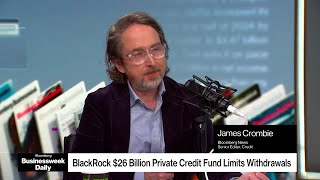
The higher interest rates that we've been seeing are now causing Wall Street to crack. It's gotten so bad that Black Rockck, the world's largest asset manager, just said that you can no longer pull your money out from their private credit fund. But the real reason why this is such a nightmare for the Fed isn't just because Black Rockck is losing money. It's because we're seeing the perfect storm for stagflation. Number one, our job market is not doing good. February was the worst month for the job market that we have seen since the pandemic. Number two, before the United States attacked Iran, inflation was already going up in the United States. And now, after the crisis in the Middle East, oil prices are going higher, which are making more concerns for inflation. And now, number three, the part that most people are overlooking, but you definitely want to pay attention to this. I'll explain why is Wall Street is beginning to crack, starting with these private credit funds. So, I'm going to break this all down, and then I'm going to show you how you can use these shifts in Wall Street to your advantage. that way you can use it as a potential investment opportunity. So, make sure you stick with me until the end. And by the way, if you are an investor, this is why on March 18th, I'm hosting a live free and virtual investor workshop because if you're thinking about your investments, you're thinking about your retirement and you're feeling a little bit of unease because of all the craziness happening. I invite you to join me on March 18th because I'm going to show you my firm's research as to number one where the economy is moving and number two how these changes create new and unique investment opportunities because things are changing very quickly. It's a free workshop. It's live. I'm doing it twice on March 18th, once in the morning at 10:30 a.m. Eastern time and then again in the evening at 8:00 p.m. Eastern time. Now, if you do want to join, please register soon because we have a limited number of people that can actually join me live. And as an added bonus, when you do show up live on March 18th, we're also going to send you a free digital copy of my team's new book, How Money Changed Forever. But you have to actually show up on March 18th to get a copy of this book. So, if you're an investor, invite you to join me on March 18th. It's free and I have that link to register down in the description below. Now, to understand why the private credit market is collapsing, you have to understand how the basics of banking works. Because when you go and you want to borrow money from the bank, the way it works is the bank is going to review your credit score. They're going to review your income. They're going to review your payment history. And based off of that, they will see if you can qualify for this loan. And this loan is going to be regulated by the Federal Reserve Bank. The bank is going to be regulated by the FDIC. That way, when you go and deposit money at the bank, well, you're protected because even if the bank collapsed, you're protected with FDIC insurance up to $250,000. So this entire process is very regulated. Private credit is a little bit different. This company wants to go out and raise $300 million and they go to this bank, they go to Chase, they go to Bank of America just like you did, but the bank says, "No, you're too risky." Because of whatever the nature of a business is, we are not going to lend you this money. So the bank says no. This company because it's $300 million, it's not enough to go to the stock market and try to raise money from the public markets. So they get denied over there. Instead, they go to a third party. This other company right here, something like Blackstone, something like Blue Owl, sometimes even something like Black Rockck. And they go and they borrow money from these third-party companies. And then these third party companies will then lend this money. is called private credit to this company. Now, there's two things that I want you to understand. This company right here that's making the loan, it's not a bank. So, it's not regulated the way that a bank is. So, it doesn't have the same oversight. It doesn't have the same rules and requirements when it comes to issuing loans. And these loans are not reviewed the way that these banks loans are. The second thing is that because this is a private credit company, well, it's going to charge you a higher rate of interest. So it's a much more expensive loan than if you went to the bank to borrow that money because you are a more risky borrower. Now you might say well Jasp if these companies are making these loans without the oversight. Why would this company in the first place go to borrow this money and pay the higher rate of interest? Because they can't get the money anywhere else. And because they're desperate, this private credit company is going to charge you a higher rate of interest. Now, this is where things start to become problematic because now you have these private credit companies right here that are issuing these high interest rate loans to these companies. And these private credit companies are saying, "hm, we need more money to keep making these loans because we're charging high rates of interest. We're charging 10% 15% rates of interest. So, how about you as an investor come and lend money to us?" So, private investors would come and lend money to these private credit companies hoping that they're going to make 8% to 12% a year, maybe even more in interest because now you are lending money here. This company's going to lend it to these companies. But there was a problem. The problem is is that these companies weren't always vetting who they were lending the money to. For example, more than 40% of the companies who borrowed from private lenders had negative cash flows when they took the loan. Meaning almost half of these companies that were borrowing this private credit were borrowing money when they were already losing money every single month. And what's been happening over the last number of months is that more and more of these companies are saying, "We don't have the money to pay back these loans. We're just going to declare default." And now these private credit companies are not getting paid back. So they're losing money and now they cannot pay back their investors. And these investors are regular people, their pension funds, their retirement funds, their other banks on Wall Street. And now it's starting to cause so much pain that these private credit funds are shutting down and they are limiting investors ability to even get their money back. We've seen huge institutions like Blackstone and Black Rock stop you from pulling your money out. Now you might hear that and say, "Well, Jasper, I've never even heard of private credit before. Why does this even matter to me? Well, it matters to you because this is exactly how the 2008 crash started. Let's go back in time almost two decades to 2007. Beer Sterns is one of the most powerful investment banks on Wall Street. And the two of their hedge funds, their investment divisions, which were loaded up with these risky mortgages started to crack. In 2007, when Barefund's hedge fund started to crack, investors try to pull their money out. And as they pulled their money out, the investment bank Bear Sterns then said, "You can no longer pull your money out." Now, when that happened in 2007, you still had a lot of people on Wall Street saying, "Oh, this is just a one-off problem with Wall Street. There's not bigger issues in the economy." Well, fast forward to 2008 and Bear Sterns completely collapsed. And JP Morgan came in and they bought Beer Sterns for pennies on the dollar because the company had completely collapsed. And that was when the 2008 collapse really started and the stock market got cut in half. Millions of people lost their jobs because it started with one of these cracks in Wall Street which then exposed all the others. Now, the reason why I'm telling you this is if you hear a hedge fund or an institution saying that we're limiting withdrawals, we're not letting you pull your money out, that's not a normal thing to happen. That's a warning sign that something else is a problem. And the reason why you want to pay attention to that today is because that's exactly what we're seeing happen right now with multiple hedge funds, multiple institutions across Wall Street today. But that's not all. This problem has become a little bit bigger. I made a video about this many months ago. But the reason why this is a bigger problem is because there are many banks and many institutions that are tied up in this private credit system which is currently failing with your assets that could also be tied up. Read what the IMF had to say. The International Monetary Fund, the IMF, has warned that banks in the United States and Europe hold $4.5 trillion in exposure to hedge funds, private credit, and other non-bank financial institutions. What that means in plain English is that there are banks in the United States that are so exposed to this private credit industry that if this private credit industry continues to fail, there are certain banks that will not be able to absorb all those losses. So let me diagram what this means. You have banks as one of the investors to these hedge funds. So there's banks, there's regular people, there's institutions that have been lending money to these hedge funds. And banks have been lending a lot of money to these hedge funds. These hedge funds then lend this money out to these companies at these very high rates. Banks have been getting rich. Investors have been getting rich for a long time. But now because of these higher interest rates, some of these companies are beginning to fail. as they fail. The hedge fund is not getting paid. The hedge fund is not getting paid. And now they're limiting withdrawals. They're saying all of you people, including you banks that lend money to these hedge funds. Well, we can't give you your money back. At least right right now. Now, in case you're wondering which banks have the highest exposure to these hedge funds lending money to these companies, well, according to Moody's, number one in the United States as well as Fargo, number two, Bank of America, number three PNC, number four, Cityroup, and number five JP Morgan Chase Bank. So now you understand what these hedge funds did and you understand why it's a problem for banks because banks are exposed to these hedge funds which have been lending money to these companies. But let's talk about these companies. What's going on with these companies? Because this really started in 2025 and that's when I started making videos about this. In September 2025, Triricolor, which is a subprime auto lender, declared bankruptcy. And what happened was they were borrowing huge sums of money from these hedge funds and then they were making these subprime loans for people to buy cars. Well, people with subprime loans are getting extremely high interest rates. And because interest rates continue to stay high, they were not able to refinance. Those subprime borrowers saw more repossessions. As more repossessions happened, those subprime lenders stopped making money. Tricolor went bankrupt and now they're not able to pay back the hedge fund. That was one example. Another example was a company called First Brands, also in the auto industry. But what First Brands did is they were an auto parts supplier. Just like withricolor, they were an auto parts supplier. People still weren't buying cars at the rate that they expected. Higher interest rates slowed things down. And then there were concerns about other financial mishandlings of money. In any case, hedge funds kept lending the money. And now we have these big institutions that declared bankruptcy that are no longer paying back huge sums of money. And because they're not paying back their money, these hedge funds don't have money to pay back your investments as well. And this is where Jamie Diamond, who is the CEO of JP Morgan Chase Bank, says that there's probably more out there because what he said is quote, "Seeing one cockroach generally means that there's more hiding in the shadows." The cockroach that he's referring to are these companies that don't have the ability to pay back the loans. And anytime you go through any sort of financial disaster, what happens is one or two companies start to fail. And that shows, oh, there's other problems that are hiding. Now, if you made it this far, you're probably wondering, "Well, Daspri, doesn't the government regulate these loans the way that the government regulates these loans?" And the answer is no. Not exactly. We know that because this is not a bank that it doesn't have the same regulations as these banks over here. But the Federal Reserve Bank is still running stress tests across banks and financial institutions across Wall Street. And do you know what the Federal Reserve Bank said in 2025? They said that all major banks have passed the stress test with flying colors. that made everybody feel calm and happy about what's going on Wall Street. But the thing that they did not tell you is that they eased the requirements of the stress test. They made it easier to pass. Between 2024 to 2025, the stress test that the Federal Reserve Bank ran made it easier for banks to pass assuming there was a commercial real estate collapse, assuming there was a housing market collapse, and assuming that there was a stock market crash. In each one of these three instances, it became easier for you to pass as a bank because the stress test lowered the requirements. But there's one more change that the Federal Reserve Bank did in 2025 that we really didn't hear about until now in 2026. The Federal Reserve Bank knowingly did not test banks ability and stress on their test and stress on hedge funds and private equity. Meaning they did not look at the bank's ability to withstand these types of financial problems. Want to know why? Because according to the Federal Reserve Bank, these private equity investments are typically held for the long term and are not typically sold at times of distress. Well, I hate to break it to you, but the Federal Reserve Bank was wrong. We are in a time of distress today and Black Rock's clients are selling. Blackstone's clients are selling and these institutions are not letting you pull your money out. Now, to be clear, I'm not telling you this to say that the markets are going to collapse tomorrow. I'm telling you this because this is a real warning sign. This is a real concern and something you want to pay attention to, but it can also create opportunity and that's the key thing that you want to understand as an investor. Now, if you have money in a 401k, you have money in an IRA, you just want to understand that markets go up and they go down. There are volatile moments. There are recessions that happen. They are a part of our economy. We've seen 16 recessions over the last 100 years. We've seen 25 market crashes over the last 100 years. They are a part of our economy. They're going to continue happening. And market crashes and recessions create more millionaires than any other time because they allow the financially savvy to come in and buy good investments at a discounted price. The people that lose money are the people that panic sell out of good investments when things are going down. And that's the first thing that you have to understand. The second thing you want to think about is where your money is being saved. Because remember, you're protected with FDIC insurance up to $250,000 per depositor. And so if you're investing or saving your money in a bank that's heavily exposed and you're way beyond FDIC insurance, you might want to think about getting a few different bank accounts. That way you can preserve and protect your money just in case bad things happen. And then last but not least is you want to think about how this can also create a potential investment opportunity for you. Again, on March 18th, I have my live investor workshop where I'll be showing you my firm's research as to how the economy is changing and how it creates investment opportunities. So, if you haven't registered for their workshop, again, I have the link for you down in the description. The first thing I want you to understand is generally if we take a look across history from the 2022 market crash to the 2020 market crash to the 2008 market crash to the 2000 market crash, in each one of these instances, even if you bought right at the peak, well, you'd be wealthier today because markets go up over the long run. But there's a simple strategy that you can use which has been proven to win as long as you are a long-term investor. I call it ABB. Always be buying assuming that you're buying a broad market fund that's giving exposure to a broad index. So for example, if you believe that the economy is going to be bigger in 10 years than is today, we know that there's going to be volatility over the next number of years. There's a war in the Middle East. There's concerns about inflation. There's concerns about the job market. There's concerns about private credit, we could see a recession at some point. We could see a market crash at some point. But if we take a look at over the next 5, 10, 15, 20 years, we expect markets to continue going up. And the way that you can win is just owning a piece of the economy and buying it when markets go up and down. Because when they go down, it allows you to buy more of the market for the same amount of dollars. Because, well, markets go on sale. It's kind of like shopping on Amazon on Cyber Monday. they can buy more stuff with that same $100 bill. That's what a market downturn means. And that's where ABV can become very powerful. Now, I can't tell you what to invest in. I'm just a random guy on YouTube. Investing has risks. You're never guaranteed to make money when you invest. In fact, you will lose money at some point. So, make sure you always do your own due diligence and never blindly trust a random guy on YouTube. But here's a few ways that you can start thinking like an investor. VTI is a fund that gives you exposure to the total stock market. SPY is a fund that gives the exposure to the top 500 companies in the stock market and QQQ is a fund that gives exposure to the NASDAQ 100. It's the top 100 companies in the stock market that are not financial. So primarily tech just understand this is the most volatile because tech goes up more when markets are booming but it also goes down more when markets are going down. So understand the volatility with this. But the idea is if you invest into one of these broad market funds and you follow something like ABB every week or every two weeks or every month, you just buy more. Well, over time, this has been a proven strategy to win. The key is the aim. Always be buying. Whether markets are up and markets are down. When people are panicking, people say that the world's going to end, that the market's going to collapse, keep buying. In fact, that's the time to buy even more because when there's blood on the streets, that's the time to go in and buy aggressively because that's the time for you to purchase good investments at a discounted price. Now, you could be a little bit more sophisticated and you can get into more niche funds depending on where you see the most opportunity. For example, if bank stocks get hit, that could be a great opportunity for you to come in and buy the right bank stocks. Now this requires a more sophisticated level of analysis to be able to understand the financials of a bank to understand which banks have more healthy balance sheets which ones are less exposed which ones have the most upside potential or you can just invest in ETF giving exposure to banks when they go down but that is now being more of an active investor again it's a great opportunity but that's the way that I want you to start thinking is understanding well markets go up markets go down there are some red flags in the markets but if you just want to be a general investor ABB into the broad market that's a great place to start And then you can layer in some active investing as well to get started because active investing can help you get better returns. I like to say that everybody should have some active investments because that can help you grow your wealth, but it does require you to put in some research because when you do that research that lets you lower your risk to get better returns. Is it guaranteed? No, absolutely not. But if you can get slightly better gains, it can lead to significantly more wealth over the course of your investing career. So, if you got value out of this video, the best thank you was a referral. If you could please share this video with a friend, family member, colleague, or fellow investor. That way, we can continue to spread this type of financial education. Thank you. President Trump just confirmed that he wants to get rid of your income tax. Take a listen. I believe that tariffs paid for by foreign countries will like in the past substantially replace the modern-day system of income tax, taking a great financial burden off the people that I love. All right.
Video description
Register for my investing Workshop & get Market Briefs as a bonus: https://go.briefs.co/2026-portfolio-playbook/?utm_campaign=TOF_Content&utm_medium=organic&utm_content=d54EhQg_gVk&utm_term=minority_mindset&utm_source=youtube&utm_placement=youtubedecription My recommended tools*! *Please note: Yes, these are our sponsors & advertisers. However, these are companies that I trust and use (or have used). The compensation doesn't affect my recommendations or advice. That being said, you should always do your own research & never blindly listen to a random guy on YouTube. ---------- ➤ Life Insurance 1) 🛡 Policygenius - Get a free life insurance quote: https://theminoritymindset.com/policygenius ---------- ➤ Real Estate Investing Online 2) 🏠 Fundrise* - Invest in real estate passively! https://www.theminoritymindset.com/fundrise *Jaspreet Singh is an equity owner in Fundrise and has invested in Fundrise. He receives a commission if you use his affiliate link. ---------- ➤ My Favorite Credit Cards 3) 🪪: See my top credit card picks for this month: https://www.theminoritymindset.com/creditcards ---------- ➤ Invest In Stocks Passively 4) 📈 M1 Finance - Buy stocks & ETFs on autopilot: https://theminoritymindset.com/m1 ---------- ➤ Business Accounting 5) 💸 CommonWealth - Does your business do over $250k/year? If yes, get a free consultation from my partner accounting firm: https://theminoritymindset.com/tax ---------- Buy Gold Passively 6) 👑 Vaulted - Buy physical gold on autopilot: https://theminoritymindset.com/yt/vaulted ---------- Recommended: Trump's 2026 Plan To Cancel The Income Tax https://youtu.be/0jsc8Dqz0os What Is The Minority Mindset? "The Minority Mindset has nothing to do with the way you look. It's the mindset of thinking differently than the majority of people" ~Jaspreet Singh Follow me: Instagram: https://www.Instagram.com/MinorityMindset Website: https://www.TheMinorityMindset.com Want More 🥑🥑? Briefs Finance website: https://www.briefs.co Minority Mindset Clips: https://www.youtube.com/minoritymindsetclips Minority Mindset En Español: https://www.youtube.com/minoritymindsetenespanol Video host: Jaspreet Singh DISCLAIMER: This description may contain links from our affiliates, sponsors, and partners. If you use these products, we will get compensated - but there's no additional cost to you. DISCLAIMER CONT'D: I'm just a random guy on YouTube so do your own research! Jaspreet Singh is not a licensed financial advisor. He is a licensed attorney, but is he is not providing you with legal advice in these videos. This video, the topics discussed, and ideas presented are Jaspreet's opinions and presented for entertainment purposes only. The information presented should not be construed as financial or legal advice. Always do your own due diligence.