We can't find the internet
Attempting to reconnect
Something went wrong!
Attempting to reconnect
Analysis Summary
Worth Noting
Positive elements
- This video provides rare on-the-ground visual evidence from Tehran regarding the environmental and civilian impact of strikes on energy infrastructure.
Be Aware
Cautionary elements
- The transition from reporting military events to speculating on 'regime change' as an established objective without questioning the geopolitical consequences of that goal.
Influence Dimensions
How are these scored?About this analysis
Knowing about these techniques makes them visible, not powerless. The ones that work best on you are the ones that match beliefs you already hold.
This analysis is a tool for your own thinking — what you do with it is up to you.
Related content covering similar topics.
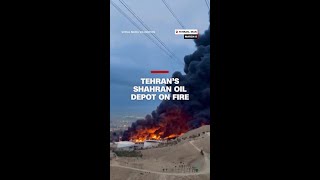
Tehran’s Shahran oil depot on fire
CNN
Former Israeli ambassador on the possibility of ground troops in Iran
ABC News
LIVE: US-Israel war with Iran | BBC News
BBC News
World War III and the Failure of American "Shock and Awe" – Prof. Jiang Xueqin
Prof Jiang Media

📱WHO IS WINNING THE IRAN WAR? - w/ Stanislav Krapivnik
Mario Nawfal
Transcript
As Iran's Gulf neighbors report a new wave of strikes after the Iranian president apologized. Q8 says it's fending off drone and missile attacks that set fire to a fuel storage facility as well as a high-rise government building. Bahrain's interior ministry says falling missile fragments wounded three people and damaged a university building. We're also getting reports of attacks in Saudi Arabia and the UAE where a Pakistani national was killed by missile debris according to Pakistan's embassy. We're following this story from all across the Middle East. Paula Hanox is live for us from Dubai. Uh Paula, just a bit over 24 hours ago, Iran's president said Tean would stop targeting Gulf nations, yet Iranian missiles and drones continue striking across the region. What are officials there saying about this escalating threat? Well, Linda, we have been seeing here in the UAE for the couple of hours ago, there were uh emergency alerts and interception overhead. 3 hours ago in Abu Dhabi, a similar situation. And what we have seen on Saturday night was uh one more person being killed here in the UAE, someone who was in a car and was hit by debris from one of the interceptions. Uh we did hear a number of interceptions on Saturday night in in both cities. So certainly what we are seeing on the ground since that statement by the Iranian president uh does not mirror what he said at all. Now it could suggest uh that that the president does not have control over uh those people who were firing the uh the missiles and the drones that the president does not speak for the IRGC. This is something uh we know uh to be a fact. He did say that that was a decision from the three member leadership council. Uh but clearly this message is not either trickling down or it is simply not a message uh that they endorse. We have heard other statements saying that US military targets across the Gulf region are still uh very much uh targets. But of course, we're seeing across the Gulf, it's far more than just military that is being targeted at this point. Now, we did also see a very rare appearance from the UAE uh leader Muhammad bin Zed as he was visiting some of those in the UAE who have been injured in Iran's retaliation. Uh and he called Iran, referred to Iran as the enemy. Now, this is uh a remarkable statement from the UAE leader also saying uh that Iran should not see the response from the UAE as weakness. The UAE is strong. We're hearing from leaders across the Gulf, that they reserve the right for retaliation. they're obviously not being public about what that uh might look like or or whether there have been any change to their situations on the ground. Uh certainly not wanting to make themselves even more of a a target for Iran. But quite frankly, the UAE has been targeted more than any other country in the Gulf nation, potentially more than Israel itself when it comes to uh this retaliation. We've also heard that the uh the Qatari leader has spoken to the US president and he has said uh that the ongoing escalation could have quote dangerous repercussions for the world pushing the message that it is important to try and intensify diplomacy. This is a message we've been hearing uh from the Gulf nations as well. Uh certainly publicly it doesn't appear to be a message that the US is ready to hear. It may be a different uh message that Gulf nations are getting behind the scenes. Linda, all right, Paula Hancock's for us in Dubai. Stay safe and thanks very much. CNN is the first US network to start reporting from the ground inside Iran since the conflict began. We're operating there with only government permission. Our senior international correspondent Fred Plton and producer Claudia Otto filed this report a short time ago on the black rain that's falling in the capital following air strikes and fires at Iran's fuel storage areas. This is what Thran is waking up to this morning. The sky above the city is covered in very thick black clouds. You can see that everywhere. That's the west of the city over there. And this is the north of the city. Normally, if you look to that direction, you could actually see the Albor's mountains, but now all of that is also covered in clouds. That comes after major air strikes in the south and the west of the city happened last night where oil installations were hit, oil storage facilities. Uh, apparently also a refinery might have been hit as well. And now you can see this morning that the sky is still very dark. We saw thick black plumes of smoke in the sky yesterday. There were massive fires in the south of the city. But I want to show you something else cuz it's also raining. But you can see that the rain the rain water is actually black also saturated. It appears with oil. And then if we look over there, you can see that the the water that's running down here also is uh is black. So that's what's coming down this morning. this sort of oil filled rain that we have right now on the Iranian capital after those strikes took place. Israel and the US are ramping up pressure on Tehran as the war enters its second week. Israel's military says a new wave of strikes is now underway targeting military sites across Iran. We're learning that Israel's air force hit a number of Iran's F-14 fighter jets at the Ishvahan airport. A source telling CNN that Israel is also hitting energy resources in the country. Video shows a massive fire burning near a fuel storage facility in Tehran. We've also seen flames and smoke rising from an oil refinery in the capital. US President Trump is threatening to escalate the attacks and he's not ruling out the possibility of US boots on the ground. What are the circumstances where you'd send in ground troops? How are you thinking about that? I don't even want to talk about it now. I mean, it's uh I don't think it's an appropriate question. You know, I'm not going to answer it. Could there be? Possibly for very good reason. Have to have have to be very good reason. And I would say if we ever did that, they would be so decimated that they wouldn't be able to fight at the ground level. I want to go to Orin Lieberman who joins us from Tel Aiv. Orin, Israel says it will keep hitting Iran with all its might and it has launched another broadscale round of strikes inside Iran. What can you tell us about the targets in this latest wave? Among the target list that Israel is now striking are oil refineries and fuel storage facilities, according to the Israeli military. As an Israeli source tells us, this is part of what Israel's military chief, Lieutenant General Ael Zamir, had hinted to a few days ago, the next phase of Israeli operations against Iran, Israeli strikes on Iran. And this, of course, being done in conjunction with the United States. It seems that over the course of the first week and a couple days of the war here, Israel went after the Iranian regime itself and the Islamic Revolutionary Guard Corps, its intelligence arm, its military arm, even its military university as well as its military assets to strike at the centers of power. Now, as we watch the second phase here, or rather the next phase unfold, it seems Israel is going after the economic and financial arms of the Iranian regime. And that's why likely we're seeing strikes against the refineries and the fuel storage facilities that have that have left the skies overran and and Iran, a flame with smoke pouring into the sky from the fires and the explosions at these refineries. So this on day nine here seems like what we're seeing play out as as Israel and the United States go after more parts of the Iranian regime and what helps to support it. as Prime Minister Benjamin Netanyahu made clear last night when he gave a pre-recorded statement that the goal here is to destabilize the regime. He even tried to speak to the Iranian people saying, "Your time to rise up is coming." And I'm paraphrasing there, but that also hints at another problem here. Where is this going? And if the if the goal is is regime change, and I think that's quite clear by this point. What is the plan to change the regime? So far, all we've heard from Israel is the expectation that at some point the Iranian people will finish the job that Israel and the US have started of overthrowing the regime, but it's unclear how that's expected to play out. Meanwhile, Iran has at least retained some capability to keep striking back and firing back. At about 7:30 this morning, there was a siren warning of incoming missile fire. And we have seen that on a fairly regular basis throughout the first nine days of the war, even as Israel and the US have gone after ballistic missile arrays and launchers. Linda, and of course, Orurin, you know, despite the fact that six American military members have already been killed in this week old war, President Trump says the US is prepared to escalate. He says there's no shortage of munitions. What can you tell us about Israel's capability and its readiness for a prolonged conflict? Israel's military has been rearming and re-equipping. They've had cargo flights coming in likely with munitions. It's really all that would enter the country at this point. Uh especially as as the US has been part of the campaign since the very beginning. So, in terms of offensive capabilities, it seems, and we're watching this play out in real time over over Iran and the capital of Tran, that Israel has has plenty left in the tank, so to speak, and is able to keep on striking the targets that that it planned on striking. And keep in mind that Israel had months to prepare for this campaign. On the defensive side, and this is mostly missile interceptors, Israel has been able to intercept the vast majority of missiles that Iran has fired. We have also seen video from from northern Israel in the exchanges of fire with Hzbollah, likely Iron Dome, the short range Israeli uh interceptor taking out Hezbollah drones and potentially missiles there as well. So, at least from what we're able to see here, Israel has the capabilities it needs to keep on to keep on continuing in this fight with some Israeli officials saying uh this could be weeks long and and they are prepared and ready for it. I should note that actual stockpiles of missiles, actual stockpiles of interceptors, those are not anything the Israeli military will ever frankly talk about. But from what we can see, the fight very much is hot from Israel's perspective and they had the have the weapons they need to keep fighting. All right, our labor man for us in Tel Aviv.
Video description
Countries across the Persian Gulf reported a new wave of drone and missile strikes on Sunday morning. Kuwait, Saudi Arabia, Bahrain and the UAE all reported Iranian strikes. The various drone and missile attacks come after Iran’s President Masoud Pezeshkian apologized to Gulf nations on Saturday for the many drone and missile attacks of the past week on US bases in the region, saying Iran would stop striking its neighbors unless it came under attack. On Sunday, Tehran’s nearly 10 million people woke to a morning overcast by thick black clouds after Israeli strikes hit Iran’s oil storage sites, CNN’s Fred Pleitgen reports from the capital. “You can see that the rain, the rainwater is actually black – also saturated, it appears, with oil,” Pleitgen reported. 0:00 Gulf nations report new strikes after Iran's apology 0:32 Paula Hancocks reports from Dubai on new Iran strikes 3:15 Qatar warns of "dangerous repercussions" from Iran war 3:53 Black rain falls in Tehran after Israel hits oil facilities 5:28 IDF says new wave of strikes launched against Iran 6:01 Trump threatens to escalate attacks, doesn't rule out US ground troops 6:34 Oren Liebermann reports from Tel Aviv on new Israeli strikes on Iran For live updates, visit https://cnn.it/4reX6qJ #Iran #Tehran #News