We can't find the internet
Attempting to reconnect
Something went wrong!
Attempting to reconnect
Analysis Summary
Conditional emotional appeal
Using guilt, fear, or obligation to pressure you into compliance. The message is: "If you were a good person, you would do this." It bypasses rational evaluation by making refusal feel like a moral failure.
Forward's FOG model (1997) — Fear, Obligation, Guilt
Worth Noting
Positive elements
- This video provides specific, current data on the scale of displacement in Lebanon and the specific living conditions in emergency shelters.
Be Aware
Cautionary elements
- The segment blurs the line between independent journalism and a promotional platform for a non-governmental organization's fundraising goals.
Influence Dimensions
How are these scored?About this analysis
Knowing about these techniques makes them visible, not powerless. The ones that work best on you are the ones that match beliefs you already hold.
This analysis is a tool for your own thinking — what you do with it is up to you.
Related content covering similar topics.
"This is a moment of grave peril" says UN humanitarian chief. #UN #Iran #BBCNews
BBC News

Lindsay Graham Wants U.S. To Join Israel To Attack Hezbollah
The Young Turks
UN Humanitarian Chief warns of 'moment of grave peril' | BBC News
BBC News
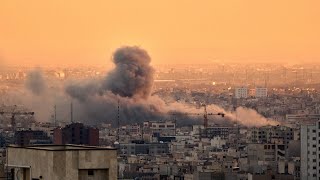
Iranian citizens ‘paying the price’ for the conflict
Sky News Australia
Transcript
As Iran has launched retaliatory strikes across the Middle East, thousands of people have been forced to flee their homes, creating urgent humanitarian needs across the region, including in Lebanon. So, joining me now with more is Kelly Razuk, the International Rescue Committee's vice president for policy and advocacy. Kelly, thank you for being with us. What has the humanitarian impact of the pe of the fighting on the people of Lebanon been? >> Thanks, Jana. And you just showed some of those images. We're really seeing a crisis within a humanitarian crisis in Lebanon. Lebanon already had 80% of its population living in poverty. And now with these Israeli orders to leave their homes, many are leaving with very little. They are leaving southern Beirut, the southern suburbs, and coming to these shelters with just the clothes on their back without much to sustain them for the coming days. And so the International Rescue Committee has activated our emergency response to be able to meet these people where they are, to provide cash assistance to families, to provide things like blankets. We've heard from our staff that there are five families living in one room without mattresses, without the ability to sleep. And as this wave of displacement continues, those needs are only going to grow. And you talked about the impact on children, Jana. Last week we saw in just the span of 24 hours 18,000 children displaced and those needs are rising, those numbers are rising and we are working on the ground to meet those needs. >> Oh, Kelly, some of those statistics you said 80% of the people there were already living in poverty and the idea that some 18,000 children have now been displaced. Can you talk to us about the psychological impact of renewed violence in the area? >> Absolutely. That is a top concern for us as well. Um, our teams on the ground are working to provide health services to also provide psychosocial support. As you know, children who are leaving these situations, who are leaving their homes, don't know when they're going to go back. Many children are not able to sleep at night. They're scared of the bombs. They're scared of what will come. And so, we need to be able to provide them with that support. And even after these bombs stop dropping, as we know, the trauma continues and we need to be able to support that. >> Yeah. And that's that is the the the thought of the ongoing trauma even once the fighting ends. So, Kelly, how do you see this humanitarian crisis playing out moving forward, especially when when there's really no end in sight at this point? It is a top focus for us what what we can do as this crisis continues and and as you said, we're a week into this. We don't know what it's going to look like even a week from now, especially with the mass displacement we're seeing. We're also very concerned because there have been so many global cuts to humanitarian aid and we really need to ensure that donor governments that donors are stepping up with the support needed to be able to sustain an emergency humanitarian response in Lebanon and in other countries who are also affected. >> Yeah. All right, Kelly Ruk, thank you so much for the work that you're doing and for being here to talk about it with us this morning. We appreciate you. Thank you, Jana.
Video description
Kelly Razzouk, vice president for policy and advocacy at International Rescue Committee, discusses the urgent humanitarian impact in Lebanon in the wake of escalating violence across the region. ---- Subscribe to ABC News on YouTube: https://abcnews.visitlink.me/59aJ1G ABC News Digital is your daily source of breaking national and world news, exclusive interviews and 24/7 live streaming coverage. Download the ABC News app for the latest headlines and alerts: https://abcnews.go.com/devices Watch 24/7 coverage of breaking news and live events on ABC News Live: https://www.youtube.com/watch?v=gN0PZCe-kwQ&ab_channel=ABCNews Watch full episodes of World News Tonight with David Muir here: https://youtube.com/playlist?list=PLQOa26lW-uI8ixlVw1NWu_l4Eh8iZW_qN&feature=shared Read ABC News reports online: http://abcnews.go.com ABC News is the home to the #1 evening newscast “World News Tonight” with David Muir, “Good Morning America,” “20/20,” “Nightline,” “This Week” with George Stephanopoulos, “ABC News Live Prime” with Linsey Davis, plus the daily news podcast “Start Here.”Facebook: https://www.facebook.com/ABCNews Instagram: https://www.instagram.com/abcnews TikTok: https://www.tiktok.com/@abcnews X: https://twitter.com/ABC Threads: https://www.threads.net/@abcnews WhatsApp: https://whatsapp.com/channel/0029VajTNakKWEKkXoAPIR11 LinkedIn: https://www.linkedin.com/company/abcnews