We can't find the internet
Attempting to reconnect
Something went wrong!
Attempting to reconnect

Communication Profile (across 11 videos)
Stated Purpose
Valuetainment is a leading source of information for all. Our Mission TO ENLIGHTEN, ENTERTAIN AND EMPOWER CURRENT AND FUTURE LEADERS AROUND THE WORLD. WHO WE ARE: Valuetainment is the leading sour...
Operative Pattern
Across 11 videos, this channel demonstrates moderate persuasion intensity, primarily through Anchoring. Recurring themes suggest consistent operative goals beyond stated content.
Avg Intensity
Avg Transparency
Top Technique
Anchoring
Presenting an extreme number or claim first so everything after seems reasonable by comparison. The first piece of information becomes your reference point — even when it's arbitrary or deliberately inflated. Works even when you know the anchor is irrelevant.
Tversky & Kahneman's anchoring heuristic (1974)
Persuasion Dimensions
Intensity Over Time
Per-Video Operative Goals — detected in individual analyses
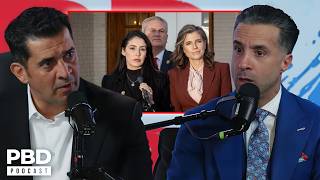
The content aims to channel public outrage over a specific congressional vote into a broader, generalized distrust of all government institutions and 'elites' to build loyalty to the Valuetainment brand.
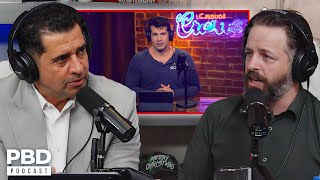
The content seeks to validate a high-conflict, aggressive style of cultural engagement by framing it as a necessary 'warrior' response to societal evil.
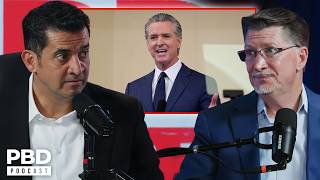
The content aims to discredit Gavin Newsom's 2028 presidential viability while reinforcing the channel's pro-capitalist, anti-regulation brand to its existing audience.
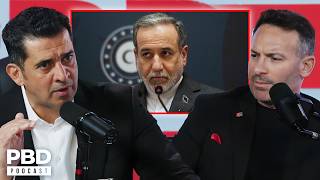
The content aims to frame current geopolitical conflicts through a lens of 'business efficiency' and 'strongman leadership' to validate the host's pro-capitalist and pro-Trump worldview.

The video aims to humanize Terrence Howard through fatherhood anecdotes while funneling viewers toward the 'Minnect' platform for paid consultations.
What's Valuable Here

Offers granular updates like 86-90% drops in Iranian missile/drone launches from admiral clips and details on laser weapons from New York Post, useful for tracking reported conflict metrics.
“21st Century Warfare” - U.S. BLASTS ...

Provides real-time charts and poll data on oil price spikes tied to specific events like Hormuz closure, offering granular market context.
“China Has 21 Days” - Strait Of Hormu...

Provides structured historical context on regime change successes/failures and clear distinction between change vs. collapse with specific examples like Operation Ajax.
Iran’s Future: Regime Collapse or Reg...
The video highlights a genuine and critical issue in modern defense: the 'cost-exchange ratio' where cheap consumer-grade tech can deplete expensive, high-end military stockpiles.
“$20,000 Drone vs $4 Million Missile”...

The video provides a candid look at the intergenerational struggle of moving away from corporal punishment and the honest admission of parental hypocrisy.
"The HARDEST Thing About Being A Dad"...

The video provides a practical look at how easily high-profile figures can be manipulated by social engineering and the importance of basic due diligence.
“My Name Is Adolph” - Reza Pahlavi PR...
Viewer Guidance (3 tips)
Consider alternative frames
Information is consistently shaped from one angle. Seek out how other sources present the same facts.
Question unstated assumptions
Arguments rely on assumptions treated as obvious. Ask what you'd need to already believe for the claims to land.
Watch for emotional framing
This content frequently uses emotional appeal. Notice when feelings are being prioritized over evidence.
Technique Fingerprint (from knowledge graph)
Moral framing
AI detected as: Moral Decoupling Via The 'warrior' Archetype
Presenting a complex issue with genuine tradeoffs as a simple choice between right and wrong. Once something is framed as a moral issue, compromise feels like complicity and disagreement feels immoral rather than reasonable.
Haidt's Moral Foundations Theory; Lakoff's framing research (2004)
Us vs. Them
AI detected as: Dehumanization Through Mockery And Gamification
Dividing the world into two camps — people like us (good, trustworthy) and people not like us (dangerous, wrong). It exploits a deep human tendency to favor our own group. Once you accept the division, information from "them" gets automatically discounted.
Tajfel's Social Identity Theory (1979); Minimal Group Paradigm
Association
AI detected as: Associative Leaping
Pairing a new idea, product, or person with something you already feel positively or negatively about. The goal is to transfer your existing emotional response without any logical connection. It works below conscious awareness.
Evaluative conditioning (Pavlov); IPA 'Transfer' technique (1937)
Parasocial leveraging
AI detected as: Strategic Vulnerability
Leveraging the one-sided emotional bond you form with creators you watch regularly. Because you feel like you "know" them, their opinions carry the weight of a friend's advice rather than a stranger's. Creators can monetize this by blurring genuine sharing with paid promotion.
Horton & Wohl's parasocial interaction theory (1956); Reinikainen et al. (2020)
Contextual Bridging
This technique was detected by AI but doesn't yet map to our curated glossary. We're tracking its usage patterns.
Narrative Mirroring (aligning Global Events With The Host's Proprietary Business Framework To Validate His Expertise).
This technique was detected by AI but doesn't yet map to our curated glossary. We're tracking its usage patterns.
Anchoring
Presenting an extreme number or claim first so everything after seems reasonable by comparison. The first piece of information becomes your reference point — even when it's arbitrary or deliberately inflated. Works even when you know the anchor is irrelevant.
Tversky & Kahneman's anchoring heuristic (1974)
False Taxonomy (the 'six Camps' Framework)
This technique was detected by AI but doesn't yet map to our curated glossary. We're tracking its usage patterns.
Us vs. Them
AI detected as: Ideological Labeling And Categorization
Dividing the world into two camps — people like us (good, trustworthy) and people not like us (dangerous, wrong). It exploits a deep human tendency to favor our own group. Once you accept the division, information from "them" gets automatically discounted.
Tajfel's Social Identity Theory (1979); Minimal Group Paradigm
Moral framing
Presenting a complex issue with genuine tradeoffs as a simple choice between right and wrong. Once something is framed as a moral issue, compromise feels like complicity and disagreement feels immoral rather than reasonable.
Haidt's Moral Foundations Theory; Lakoff's framing research (2004)
Association
Pairing a new idea, product, or person with something you already feel positively or negatively about. The goal is to transfer your existing emotional response without any logical connection. It works below conscious awareness.
Evaluative conditioning (Pavlov); IPA 'Transfer' technique (1937)
In-group/Out-group framing
Leveraging your tendency to automatically trust information from "our people" and distrust outsiders. Once groups are established, people apply different standards of evidence depending on who is speaking.
Social Identity Theory (Tajfel & Turner, 1979); Cialdini's Unity principle (2016)
Us vs. Them
Dividing the world into two camps — people like us (good, trustworthy) and people not like us (dangerous, wrong). It exploits a deep human tendency to favor our own group. Once you accept the division, information from "them" gets automatically discounted.
Tajfel's Social Identity Theory (1979); Minimal Group Paradigm
Similar Channels (shared influence techniques)
Featured People
Analyzed Videos (11)
“People HATE Us For This” - Anna Paulina Luna RIPS Congress After Sexual Harassment Probe KILLED
48.4K views
Iran’s Future: Regime Collapse or Regime Change?
507.6K views
"The HARDEST Thing About Being A Dad" - Terrence Howard Gets Honest About Fatherhood
7.9K views
Why Stopping These Shahed Drones Costs Millions
416.7K views

“This Job Is NOT For Everyone” - Trump OUSTS Noem For Mullin In DHS SHAKEUP Surprise
61.1K views
“21st Century Warfare” - U.S. BLASTS Iran Drones With LASER WEAPONS In Futuristic War
254.8K views
“This Strategy ISN’T Working” - Newsom’s Anti-Trump FEAR MONGERING Falls Flat On Kimmel
96.7K views
“My Name Is Adolph” - Reza Pahlavi PRANKED During Awkward German Interview
30.8K views
“$20,000 Drone vs $4 Million Missile” - Iran Drone Warfare EXPOSES U.S. Cost Problem
40.2K views

“China Has 21 Days” - Strait Of Hormuz Crisis THREATENS China’s Oil Lifeline
204.9K views
“Destroying World Views” - Cultural Commentator SHREDS The Myth Of Civil Debate
327.7K views