We can't find the internet
Attempting to reconnect
Something went wrong!
Attempting to reconnect

Communication Profile (across 10 videos)
Stated Purpose
No description available
Operative Pattern
Across 10 videos, this channel demonstrates moderate persuasion intensity, primarily through Us Vs. Them. Recurring themes suggest consistent operative goals beyond stated content.
Avg Intensity
Avg Transparency
Top Technique
Us vs. Them
Dividing the world into two camps — people like us (good, trustworthy) and people not like us (dangerous, wrong). It exploits a deep human tendency to favor our own group. Once you accept the division, information from "them" gets automatically discounted.
Tajfel's Social Identity Theory (1979); Minimal Group Paradigm
Persuasion Dimensions
Intensity Over Time
Per-Video Operative Goals — detected in individual analyses

The content aims to delegitimize U.S. and Israeli foreign policy by framing them as 'gangsterism' while positioning Jeffrey Sachs as a moral authority on global peace.

The content aims to frame current geopolitical conflicts as a direct result of US 'megalomania' and the abandonment of international law, specifically to advocate for a shift toward multipolar diplomacy and a reduction in US global influence.

The content aims to promote a multipolar world view by critiquing American hegemony and presenting China's rise as a benign, purely economic success story.

To persuade viewers that the US-Iran war is a catastrophic failure for Trump politically and militarily, aligning with the stated purpose of geopolitical analysis and opinion.

To persuade viewers that the US war on Iran is a manipulated Israeli agenda unpopular with Americans, fostering opposition to US intervention.
What's Valuable Here

Jeffrey Sachs provides a detailed historical and legal critique of the United Nations' decline and the erosion of multilateralism.
WW3 HAS ALREADY STARTED — And Washing...

Offers detailed military logistics analysis (e.g., resupply challenges via Diego Garcia, missile stocks) and global oil dependency insights specific to India, China, Japan that inform strategic thinking on Middle East conflicts.
The Iran War Just Became Unstoppable ...

Provides a retired colonel's detailed military assessment of air/missile defenses, regional alliances like Kurds, and Gulf state sentiments amid the Iran conflict.
The Iran War Just Entered A Dangerous...
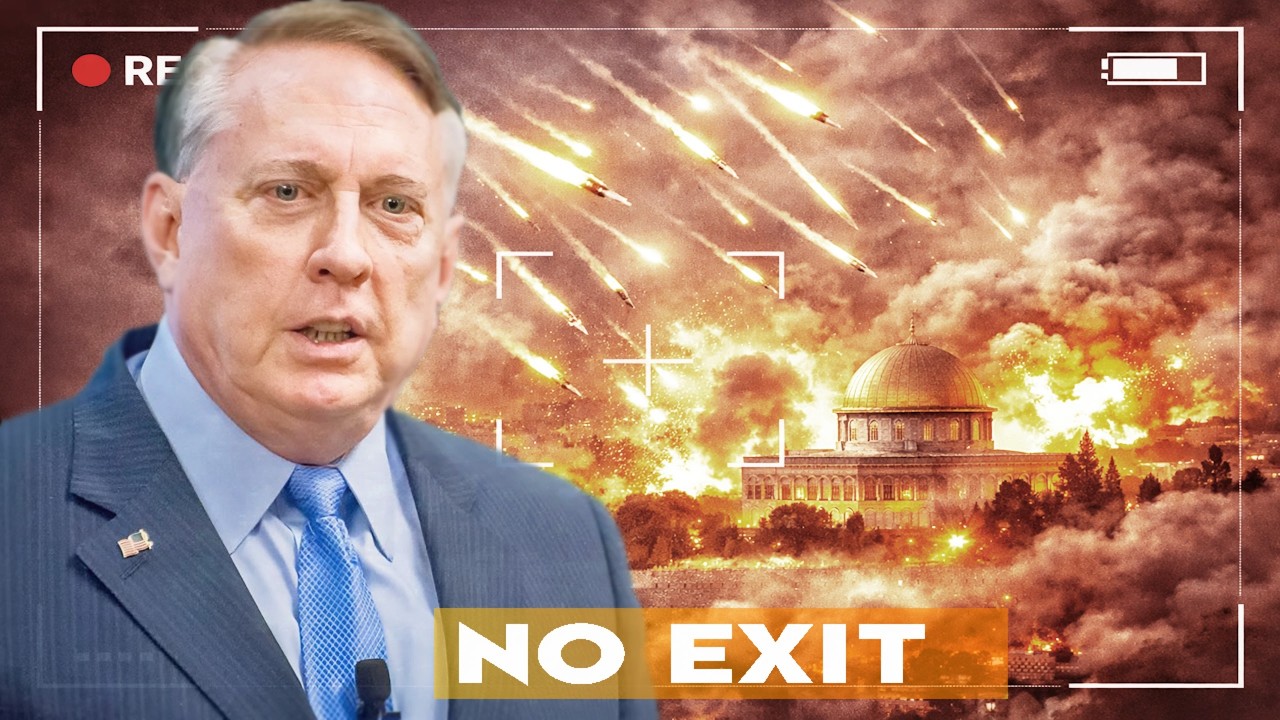
Provides detailed historical and regional context on Middle East dynamics from a retired colonel's experience, like Turkish-Iranian signaling and Kosovo parallels.
THIS IRAN WAR CAN’T BE WON — AND CAN’...

Provides detailed military analysis of US air/naval limitations against Iran, including missile math, troop requirements, and historical comparisons from a claimed expert perspective.
THE IRAN WAR JUST TURNED INTO A NIGHT...

Provides granular details on Iran's underground missile infrastructure and hypersonic threats from a retired colonel's experience.
What Happens In Hormuz Next Will Shoc...
Viewer Guidance (3 tips)
Consider alternative frames
Information is consistently shaped from one angle. Seek out how other sources present the same facts.
Watch for group characterization
People or groups are reduced to types. Consider whether the characterization serves the argument more than the truth.
Watch for emotional framing
This content frequently uses emotional appeal. Notice when feelings are being prioritized over evidence.
Technique Fingerprint (from knowledge graph)
Intensity amplification
AI detected as: Sensationalism
Inflating the importance, drama, or shock value of information using superlatives, alarming framing, and emotional language. Once your alarm system activates, you stop evaluating proportionality.
Cultivation theory (Gerbner, 1969); availability heuristic (Tversky & Kahneman, 1973)
Confirmation appeal
AI detected as: Confirmation Bias
Selectively presenting information that confirms what you probably already believe. Content that matches your existing worldview requires almost no mental effort to accept — it just feels obviously true.
Wason (1960); Nickerson's confirmation bias review (1998)
In-group/Out-group framing
AI detected as: Shadow Intelligence Framing
Leveraging your tendency to automatically trust information from "our people" and distrust outsiders. Once groups are established, people apply different standards of evidence depending on who is speaking.
Social Identity Theory (Tajfel & Turner, 1979); Cialdini's Unity principle (2016)
Appeal to authority
AI detected as: Credentialed Subversion
Citing an expert or institution to support a claim, substituting their credibility for evidence you can evaluate yourself. Legitimate when the authority is relevant; manipulative when they aren't qualified or when the citation is vague.
Argumentum ad verecundiam (Locke, 1690); Cialdini's Authority principle (1984)
Moral framing
AI detected as: Moral Inversion And False Equivalence
Presenting a complex issue with genuine tradeoffs as a simple choice between right and wrong. Once something is framed as a moral issue, compromise feels like complicity and disagreement feels immoral rather than reasonable.
Haidt's Moral Foundations Theory; Lakoff's framing research (2004)
Predictive-fact-patterning
This technique was detected by AI but doesn't yet map to our curated glossary. We're tracking its usage patterns.
Us vs. Them
AI detected as: Moral Binary Framing
Dividing the world into two camps — people like us (good, trustworthy) and people not like us (dangerous, wrong). It exploits a deep human tendency to favor our own group. Once you accept the division, information from "them" gets automatically discounted.
Tajfel's Social Identity Theory (1979); Minimal Group Paradigm
Fear appeal
AI detected as: Fear-to-commercial Pipeline
Presenting a vivid threat and then offering a specific action as the way to avoid it. Always structured as: "Something terrible will happen unless you do X." Most effective when the threat feels personal and the action feels achievable.
Witte's Extended Parallel Process Model (1992)
Pseudo-historical Projection
This technique was detected by AI but doesn't yet map to our curated glossary. We're tracking its usage patterns.
Intensity amplification
Inflating the importance, drama, or shock value of information using superlatives, alarming framing, and emotional language. Once your alarm system activates, you stop evaluating proportionality.
Cultivation theory (Gerbner, 1969); availability heuristic (Tversky & Kahneman, 1973)
Moral framing
Presenting a complex issue with genuine tradeoffs as a simple choice between right and wrong. Once something is framed as a moral issue, compromise feels like complicity and disagreement feels immoral rather than reasonable.
Haidt's Moral Foundations Theory; Lakoff's framing research (2004)
Fear appeal
Presenting a vivid threat and then offering a specific action as the way to avoid it. Always structured as: "Something terrible will happen unless you do X." Most effective when the threat feels personal and the action feels achievable.
Witte's Extended Parallel Process Model (1992)
Confirmation appeal
Selectively presenting information that confirms what you probably already believe. Content that matches your existing worldview requires almost no mental effort to accept — it just feels obviously true.
Wason (1960); Nickerson's confirmation bias review (1998)
In-group/Out-group framing
Leveraging your tendency to automatically trust information from "our people" and distrust outsiders. Once groups are established, people apply different standards of evidence depending on who is speaking.
Social Identity Theory (Tajfel & Turner, 1979); Cialdini's Unity principle (2016)
Us vs. Them
Dividing the world into two camps — people like us (good, trustworthy) and people not like us (dangerous, wrong). It exploits a deep human tendency to favor our own group. Once you accept the division, information from "them" gets automatically discounted.
Tajfel's Social Identity Theory (1979); Minimal Group Paradigm
Moral outrage
Provoking a sense that something is deeply unfair or wrong, activating a feeling that demands action — sharing, protesting, punishing — before you've fully evaluated the situation. It's one of the most viral emotions online because it combines anger with righteousness.
Haidt's Moral Foundations Theory (2004); Brady et al. (2017, PNAS)
Similar Channels (shared influence techniques)
Featured People
Analyzed Videos (10)
WW3 HAS ALREADY STARTED — And Washington Is Lost | Prof. Jeffrey Sachs
28.3K views

What Happens In Hormuz Next Will Shock Everyone | Col. Douglas Macgregor
138.6K views

THIS IRAN WAR CAN’T BE WON — AND CAN’T BE ENDED | Col. Douglas Macgregor
81.1K views
WW3 WARNING — AMERICA’S EMPIRE IS COLLAPSING Faster Than You Think | Prof. Jeffrey Sachs
72.6K views

TRUMP STARTED A WAR HE CAN’T WIN | Scott Ritter
59.2K views

The Iran War Just Became Unstoppable | Col. Douglas Macgregor
119.2K views

What Happens Next In This War Will Shock You | Col. Douglas Macgregor
454.4K views
THE IRAN WAR JUST TURNED INTO A NIGHTMARE | Larry C. Johnson
72.4K views
The Iran War Just Entered A Dangerous Phase | Col. Douglas Macgregor
418.8K views
WW3 HAS ALREADY STARTED — No One Is Ready | Prof. Jeffrey Sachs
178.1K views