We can't find the internet
Attempting to reconnect
Something went wrong!
Attempting to reconnect
Lezzet Yöresi · 81.1K views · 2.7K likes
Analysis Summary
Ask yourself: “If I turn the sound off, does this argument still hold up?”
Us vs. Them
Dividing the world into two camps — people like us (good, trustworthy) and people not like us (dangerous, wrong). It exploits a deep human tendency to favor our own group. Once you accept the division, information from "them" gets automatically discounted.
Tajfel's Social Identity Theory (1979); Minimal Group Paradigm
Worth Noting
Positive elements
- Provides detailed historical and regional context on Middle East dynamics from a retired colonel's experience, like Turkish-Iranian signaling and Kosovo parallels.
Be Aware
Cautionary elements
- Us vs. Them framing positions US/Israel as aggressors against a coalescing regional bloc, potentially deepening viewer polarization without acknowledging counter-perspectives.
Influence Dimensions
How are these scored?About this analysis
Knowing about these techniques makes them visible, not powerless. The ones that work best on you are the ones that match beliefs you already hold.
This analysis is a tool for your own thinking — what you do with it is up to you.
Related content covering similar topics.

Ritter’s Rant 071: Give Peace a Chance?
Scott Ritter
Why America is Engineered to Destroy Itself in the Middle East – Prof. Jiang Xueqin
Prof Jiang Media
How the War on Iran Will End the American Empire – Prof. Jiang Xueqin
Prof Jiang Media

📱WHO IS WINNING THE IRAN WAR? - w/ Stanislav Krapivnik
Mario Nawfal
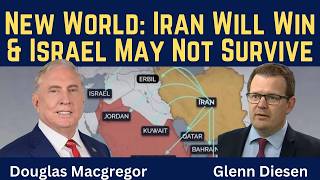
Glenn Diesen 3/2/2026
douglasmacgregorTV
Transcript
Don't underestimate something else. There are other state actors in the region that are very unhappy about this war. I mean, obviously, no one in the Arabian Peninsula wants to see this occur. As far as they're concerned, this is an economic catastrophe waiting to happen. So, the Saudis, the Emirates, Oman, Yemen, nobody wants this war. Secondly, I think you have to assume that the Turks, for instance, uh recognize that if Iran is completely destroyed by us, that they are probably next on the menu. The hatred for Israel and what it's done in Gaza, in Turkey, is at a fever pitch. The Turks have been very dissatisfied and unhappy with us for a long time because of our meddling in the region. got to remember that there are two great powers that have dominated the region for about the last 1500 to 2,000 years. One is Persia which is a civilizational state in its own right and the other are the Ottoman Turks and before the Ottoman Turks you had the Seljuk Turks and they dominated everything in the region northern Persia most of the Middle East and they're not happy about our interference in a region which they regard as their backyard. Now I don't think the Turks are going to intervene against us directly. I think they'll provide whatever assistance they can to the Iranians. We've already seen that. Uh the CIA and the Mossad organized about 400 fighters inside Syria to cross the border into Iran to try and raise Kurdish opposition or Turkish opposition in the country to the Iranian government. The Turks let the Iranians know what was happening. The Iranians picked up the signatures, found the 400, and the 400 were annihilated by Iranian fire. So you you've got a a you've got more going on in the region right now than people realize. It's not just what you can see, it's what you cannot see, and it's what you can't calculate. Does this I mean well with Turkey just going back to that really quick with it being a NATO member I mean how does that complicate things in the process because it seems like they Turkeykey's always kind of had one foot in each on each side of the door. Um they haven't they've never fully committed to the west but they've never been fully opposed to the west either. >> No you're absolutely right and that's Mr. Erdogan's modus operendi to try and be on all sides with everyone, but the Turkish population doesn't agree with him. Uh he's he's really a minority government in that sense. And I think if pushed hard enough, and that could happen depending upon what we do in Iran, you might see the Turks uh become more deeply involved. Now, how would that happen? Remember, the Turks don't want any more refugees. Millions of people that went to Europe also went to Turkey and then Turkey tried to offload them onto people in the Balkans and Italy and elsewhere. This war will create refugees. Every war does. If we fundamentally destroy the infrastructure in terms of transportation, water, uh food distribution, those kinds of things, then I would expect millions of people that would migrate out of the country. Now, that's a worst case scenario, but that's the kind of thing the Turks absolutely do not want. The Turks are also very very uh angry at what the Israelis have done. And there's an uneasy peace between Israel and Turkey that we have brokered because the Turks were told, "Look, you get your piece of Syria, you know, that you can control and manage because the Serbs frankly regard Syria as an old Ottoman province." And they told the Israelis, you know, you can move into southern Syria, but don't come to blows with the Turks near Damascus because Damascus is in the far south of the country. This is too reminiscent in my view of the Nazi Soviet pact where the two agreed to split Poland and eventually they came to blows. So I think something is going to happen between Israel and Turkey. The question is when and under what circumstances. Now there's another factor and that is what if we have mass casualties? What if we lose a couple of ships? And remember when we say lose, understand that you don't have to sink a ship to put it out of action. You don't have to sink an aircraft carrier. All you have to do is put holes in the deck. The aircraft carrier isn't very useful anymore. But let's say we we suffer some serious setbacks. This could have a very very negative impact on our influence and power around the world and it could tempt the Turks and others in the region to become involved. Now, the Russians and the Chinese have both invested heavily in Iran. They don't want to see the country destroyed. They're going to give the Iranians everything they possibly can short of intervening themselves on behalf of Iran. Now, as this drags on, and this could drag on, remember the Kosovo air campaign of 1999 was supposed to last uh three or four days, a week, maybe two weeks. That's what Bill Clinton was told. It dragged on for 78 days. And it did not end because of the effects of the bombing from high altitude by the air force. It ended because the deputy secretary of state Talbot was sent to Moscow to negotiate an end to Russian support for Serbia. The Serbs from the very beginning had bet heavily that the Russians would provide them with food, fuel, medicine through the winter. When it became clear that wasn't going to happen, the Serbs said, "Well, then I've got to make my peace with NATO because otherwise hundreds of thousands, maybe a million people could die of disease and starve to death over the Balkan winter." So that's what brought it to an end. This time with the Shiites in Iran, I think you're in a fight to the finish. I see no evidence that they will ever ever submit to Israel because remember when they're fighting us as far as they're concerned that's Israel because they know this is all driven by the Israelis. Why else would we attack Iran? There's no particular reason. If you look at Iran today, it bears almost no resemblance to what existed 40 years ago. Women aren't running around in bags. Ramadan which has just begun uh is being observed throughout the Arab world but is largely ignored in ter in uh Iran. People are in the cafes and restaurants eating and drinking. They're not sitting at home or going to work and starving themselves, you know, until the sun goes down. So Iran is a very different place from what it once was. Although you you would never know that when you listen to the propaganda that comes out of the mainstream media. >> All right, quick break here because if you're buying gold or silver the normal way, you're probably overpaying by a lot. And that's because most retail dealers quietly tack on these huge markups. Sometimes 10%, sometimes 20%, sometimes even 30%. And you don't even notice it. It's like paying $115 for a $100 bill. Doesn't make sense, right? So, that's why I've been using the Boolean Standard Pro. It's a membership that basically lets you buy precious metals at real wholesale prices, the same prices that dealers get. So, no inflated premiums, no middleman games. They're platform updates every 5 seconds straight from mints and distributors. So, what you see is literally the real market. And here's the crazy part. If you buy something like this gold American Eagle, here's the amount of money you're going to be saving at the time of this recording at least. So, it basically pays for itself multiple folds on many occasions depending on what you buy. And if you want to try it out, they're hooking up my viewers with an exclusive 10% off their first month. Just use promo code COSM10 at checkout. That's coosm 10 at checkout. So, if you're stacking, investing, or just tired of getting hit with hidden markups, check them out now. Boolean Standard Pro, click on the link down below in the description box and use promo code. Now, let's get back to the video. Are we inadvertently driving Iran and Turkey to some sort of not I don't want to say alliance, but I mean, it seems like the incentives align in this case. I think you're I think you're pushing the entire Islamic world to coalesce into a very powerful block that is incurably hostile to us and to Israel. I think that's happening without question. Now, back to my point on fighting the future. Why would Russia and China, setting aside the billions that they've invested in Iran, be willing to risk a confrontation with us? Well, we've talked about Iran's dependence upon oil. I'm sure you've seen that on many, many shows and channels. Roughly uh 30% of all the oil that the Chinese utilize and refine and so forth comes out of Iran. Well, that's part of it, but there's something larger. You have this bricks Brazil, Russia, India, China, South Africa and and so forth and growing. Right now it's I think up to 10 members. Uh I I think there are probably at least 50 or 60 other nations waiting in line to join. What what what is BRICS? Well, BRICS is a an alternative financial system to what we have had since the end of the Second World War. In other words, you're talking about marching away from all of the institutions we have in the west, the IMF, World Bank, all these things, and new institutions emerging under the leadership of China and Russia on the other half of the world. And that that half right now, it's already 44% uh of world gross domestic product. And I think you've got at least that much in terms of population. You add these additional countries, now you're looking at a a different kind of currency. In other words, people are moving away from the petro dollar. Right now, Saudi Arabia, for instance, does most of its business with China in Chinese or Saudi currency. Now, why is that? Because it's goldbacked. Whereas the Chinese have established a gold vault in Riad. They have one operating out of Hong Kong. The gold there is moved back and forth dependent upon who buys what from whom. In other words, your currency in bricks is increasingly goldbacked, which means it's truly worth something. Whereas our fiat currency is not backed by anything except faith and uh confidence in the United States government, its economy, and its armed forces. Well, I think that credibility is on the line right now in the Middle East. And if they see weakness in us militarily, if what we say we're going to do doesn't happen, if Iran endures the punishment and survives and is assisted in that process by others, then I think we're seeing the beginning of the end of this world that we've dominated. And I think that's one of the reasons there are so many people in Washington willing to fight this. They're not just fighting here, they're also fighting in Ukraine. I mean, this morning I received reports from people who insist that US and Dutch pilots are flying aircraft against the Russians in Ukraine. Uh, it's it's possible. I can't verify that. We've already seen thousands of soldiers from NATO serving on the ground helping the Ukrainians fight who've been killed by the Russians. So again, we're back to this. What are we fighting? We're fighting this different future. We're fighting this multipolarity, this this world that we don't like because it no longer responds to us. We want to dominate the financial system. So, it's a financial war as well. Because if we can't impose our financial system, then we're going to be on our own. We'll have some Europeans with us. We may have a few people in Latin America, the United States, maybe Japan. I don't know. We We'll have to see. Meanwhile, everyone everyone everywhere, even in Europe, is dumping our debt. What does that mean for our bond market, for the 10-year bond, you know, for the yield? For years, people have told me repeatedly that are much more expert in this area than I am, watch for the 5% mark. You hit the 5% mark, it's game over. Well, these kinds of things can also happen as a consequence of what we're doing now against Iran. >> And so it seems like whatever happens in Iran doesn't stay in Iran. And one of the ramifications of that is I mean it's it's widely talked about that's a straight of Hormuse. >> What happens? What are the ramifications of that Colonel? Uh suppose they do close off the straight of and they most likely will if we do attack them. Uh what are the global ramifications of that? >> Well, I I think they're catastrophic. I think you could see oil go to well north of $100 a barrel. Uh you know, markets flee conflict zones. They love stability. You know, one of the reasons that we've done so well for decades is because the United States was always seen as a place of stability. Our society was stable. Our military establishment was strong, robust, and was seen as a component of a stable international system. That's being flipped on its head now. Not only is our society itself visibly no longer stable as it once was, we've got armed forces that are being used against anyone anywhere that we don't particularly like. Just like the tariffs, remember we when President Trump applied his tariffs, he applied them to everyone, friend and and so-called foe alike. It's a catastrophe. It hasn't worked well at all. So, I think all of these things are bound up together. And I think the world is watching what we're doing and is saying, who's in charge? I ask that every day. Who is really in charge? I think the CIA is very much in charge of what goes on in Ukraine because I don't think President Trump really knows everything that's going on over there and I think the Mossad with the CIA is in charge in the Middle East and I don't think President Trump is really aware of all the complexities. Now I hope I'm wrong but listening to him I can't imagine it. You know, you're this Kosovo air campaign that we had in 1999 that was supposed to be over in a couple of weeks. That was a very very educational experience because you're talking about the best technology that that you could have in the world in the air and at sea being employed against the Serbs, a small country of only perhaps 8 million people with vintage 1970s aircraft and missiles and radars. Well, we never degraded their air and missile defense below 83%. After 78 days, that's remarkable if you stop and think about it. They managed to manipulate radars and shoot down a stealth fighter, a Lockheed 117, 117 stealth fighter. They did a lot of damage to other aircraft. In most cases, the aircraft that were heavily damaged, the pilots announced engine failure over the Adriatic and bailed out. We got the pilot and the plane sank. So, we acted like nothing had happened, that we'd gotten through Scott free with with very little damage. That's not true. The other thing that we found out is that a small country was capable of innovation. They they managed to manipulate radars to pick up the stealth target form and they they downed the aircraft and they provided the pieces and parts of the downed aircraft to both the Russians and the Chinese. I mean, why am I saying this? What I'm saying is that you're talking about a nation of over 90 million. Somebody said to me it's 93 million people living in Iran. Now, we know where they live. They don't live in the southern desert and so forth, but nevertheless, that's 93 million people. The these people have high human capital. They are some of the best mathematicians and engineers in the world. They have put together some remarkable technology. We're going to find out how good it is. But I think it's a much bigger adversary and challenge than anything we've seen before. So that's why I say we will definitely take some losses. What are they going to be? I don't know. But we will. And I don't know how you end it. That's the real question. You know, you start a war. That's one thing. How do you end it? You know, wars recently have not ended easily or well. They usually end in strategic defeat, which happened to us in Vietnam. Dramatic strategic defeat. We covered it up and concealed it and then we walked away. Now, the 91 Gulf War, a lot of us who fought in that thought that we ended it prematurely, but there was a decision made. We're not going to destroy the Iraqi state. Okay? So, we pulled out. We destroyed most of their Republican guard. Well, a lot of their Republican guard, not all of it, and a lot of their army. But that didn't fundamentally change the equation because we did not make peace with Saddam if we had turned around and said, "All right, enough's enough. You should have the message now. Do business with us on our terms or we'll remove you." That could have been done. But nobody wanted to talk to Saddam. If you continue to take this position that you can't talk to anybody because everybody that you're opposed to is is always some version of Hitler or Stalin, which is ridiculous, frankly. But if you take that position, then how do you bring the war to an end? So I I'm I'm really worried that this starts and we can't end it. >> Yeah. President Trump is really in a difficult position right now because even if he wanted to turn around and and and undo all of this rhetoric, he's now deployed this huge military buildup in the Mediterranean and the Gulf of Oman. And I mean to just turn around to say you can just go home. I mean he would lose a tremendous amount of face trying to do so. Well, remember that most of these ships to reload missiles and and ammunition, they have to go back to port. So, they can't sit out there in perpetuity. The you have to have replenishment ships go out and keep everybody fed. Right now, the uh Ford battle group, I think, has been at sea for 9 months. Before this is over, they could well have been gone for a year. That is not a healthy thing for people on on an island the size of an aircraft carrier, which is really what it amounts to. These people need a break. Uh I, you know, I was very concerned when I heard that that battle group was being moved to the Mediterranean because I I think their their morale must be absolutely devastated. You've got to give people breaks. you when you go into action, you want to send in fresh fresh troops, fresh people, fresh soldiers, fresh sailors, fresh marines, people that are rested, wellfed, and and ready to fight. And then you have to have behind them uh you know, the release team. In other words, you're sending in your first team. You've got to have something behind them some depth to bring them in to replace it. Now, the Navy says that they can do that, but I'm I'm looking at the setup and I'm very disc very very concerned about it. So, again, you're starting something, how do you end it? If the only way it can end is if your opponent submits unconditionally to your demands, you're probably in for a long wait. So you mentioned I want to tie this into Ukraine because you mentioned that the CIA has their hands all over Ukraine where whereas the MSAD is you know was in within the Middle East. Are there uh these factional disputes within the bureaucratic state, the deep state, whatever you want to call it. Are are there people that are are there groups that are more interested in deploying all of that military capital in in one place over the other? Is there is the CIA more invested in Ukraine as opposed to Iran? And is the more is the Mossad kind of wing of the deep state more aligned with the Middle East and against not not I don't want to say against but just not as interested in Ukraine. >> I think the uh center of gravity for interest and power has very definitely shifted to the Middle East. So, we're we're sort of keeping the pot boiling in Ukraine. We haven't turned off the heat, which is a great frustration for the Russians because when President Trump met and talked with him in Anchorage, they had the distinct impression that he was looking for a resolution and some sort of normalization with the Russian state. They've discovered it was absolutely vaporware. It was nothing. Uh which again leads people to question, well, who's in charge? you know, President Trump, what what is he really doing? What level of influence has he got? Well, he can certainly apparently without any constitutional constraint declare war on Iran, but how much influence does he have over any of these events? I mean, we know that he is beholden to donors, wealthy billionaires that help put him into the White House, and they want this war with Iran. That's clear. What about Ukraine? You know, I get the impression that he is predisposed to sort of walk away from Ukraine because he sees no benefit in being involved with it. He's not going to get the Nobel Prize for it. That's obvious. Uh so why bother? But he keeps it going. And maybe he's not even aware that we are keeping it going. You understand what I mean? Last the last time he was president towards the end of his term, people told him that we had evacuated Syria. We had pulled troops out of there. We found out nothing nothing like that had happened. All the all the soldiers were kept in place. Then we found out there are pockets of soldiers inside Iraq. They live in fortified positions. But you know, President Trump wanted to remove them. Well, they never went anywhere. In other words, what real influence does he have? What what is on autopilot? The CIA is probably on autopilot. I think that's pretty clear. How much of the Department of Defense is on autopilot? I don't know. Uh this this is this is a question I wrestle with on a re regular basis. But for our purposes today, especially if you look at markets, if this thing drags on for any length of time, you know more about the financial markets than I do, I can't see anything good happening there. And I we know how President Trump loves to point to the markets. Oh, the market's up. See, everything's great. You what? 10% of the population is invested in the market, but we do have a lot of pension funds for boomers and they are very much at risk in the market as you know. So I I I wish I I wish I had a good answer, but right now I see this thing starting and then pretty soon within a week or two is going to say, "Uh, how do we get out? Where do we go from here?" >> Well, Colonel, I know you've got to run here in a bit and I'm very grateful for your time. Uh, one last question though. This is uh developing now from Thomas Massie and and Roana. They said they will force the US Congress to hold a vote on a war powers resolution next week to prevent Trump from attacking Ron without prior approval from Congress. Um, is this a little too too little too late at this point? >> Yes. Remember that unlike Massie and Roana, both of those men, whether you agree with them politically or not, and they come from very different political backgrounds, but they are both men of character and integrity, and they have been saying these things for a long time, and I salute them. The problem is it is too late because most of the people on the hill are corrupt. They will take money from whoever gives it to them, and they will do whatever they like. uh otherwise the Israeli lobby wouldn't have the power and influence over our country that it does. And it's not just the Israeli lobby. We can go through the agricultural lobbies. We can we can look at the uh oil and gas lobbies. You know, this is a big problem. Uh it's something that no one who wrote the constitution really anticipated. But now we have to accept the fact Congress is corrupt. So what can we expect out of Congress? They'll wait and see. That's what they do. They wait and see. If the president is successful, they will all cheer and say, "Oh, that's wonderful, Mr. President." If the president fails, they'll try to impeach him. That's where we are. So, Massie and Roana are good men. They're doing the right thing, but it's probably not going to make any difference because by the time they get it to the floor for a vote, we'll be at war.