We can't find the internet
Attempting to reconnect
Something went wrong!
Attempting to reconnect

Communication Profile (across 11 videos)
Stated Purpose
Every day, NBC News helps people understand what’s happening and why it matters — through fact-based reporting, meaningful conversations, and powerful stories. From its leading news broadcasts — TODAY...
Operative Pattern
Across 10 videos, this channel demonstrates low persuasion intensity, primarily through Forced Equivalence. Recurring themes suggest consistent operative goals beyond stated content.
Avg Intensity
Avg Transparency
Top Technique
Forced equivalence
Presenting two things as equally valid when they aren't. By giving equal weight to a well-supported position and a fringe one, it manufactures the appearance of legitimate debate. Feels like fairness — "hearing both sides" — even when one side has overwhelming evidence.
Boykoff & Boykoff (2004) on media false balance
Persuasion Dimensions
Per-Video Operative Goals — detected in individual analyses

The content serves to frame ongoing military actions against Iran as a defensive 'ending' of a 47-year war rather than a new escalation, while preemptively justifying potential ground troop deployment.

The video aims to elicit a confirmation of Russian-Iranian military intelligence sharing to validate NBC's own reporting and highlight geopolitical threats.

The content serves as a platform for a government official to defend and reframe controversial administration policy decisions to the public.

The content aims to present a high-stakes diplomatic confrontation for news value while allowing the Iranian government a platform to respond to US military actions and rhetoric.
The content aims to frame Democratic opposition to military funding and DHS budgets as a matter of fiscal responsibility and civil rights rather than partisan obstruction.
What's Valuable Here

Provides a clear look at the Democratic leadership's official messaging strategy regarding executive war powers and the 2026 midterm priorities.
Hakeem Jeffries insists ‘American peo...

Provides a clear, data-backed snapshot of how specific issues like inflation and border security are currently impacting public perception of the presidency.
Steve Kornacki: Democrats hold midter...

Provides a concise record of the President's public interactions and the specific identities of service members killed in Kuwait.
Trump honors 'heroes' killed in Iran war

Provides a concise summary of major global and domestic events, including rare footage of strikes in Tehran and updates on severe weather recovery.
NBC Nightly News Full Episode - March 7

Provides a concise summary of the specific political and military developments occurring on March 6, including the appointment of Markwayne Mullin and the status of DHS funding.
This Morning’s Top Headlines – March ...
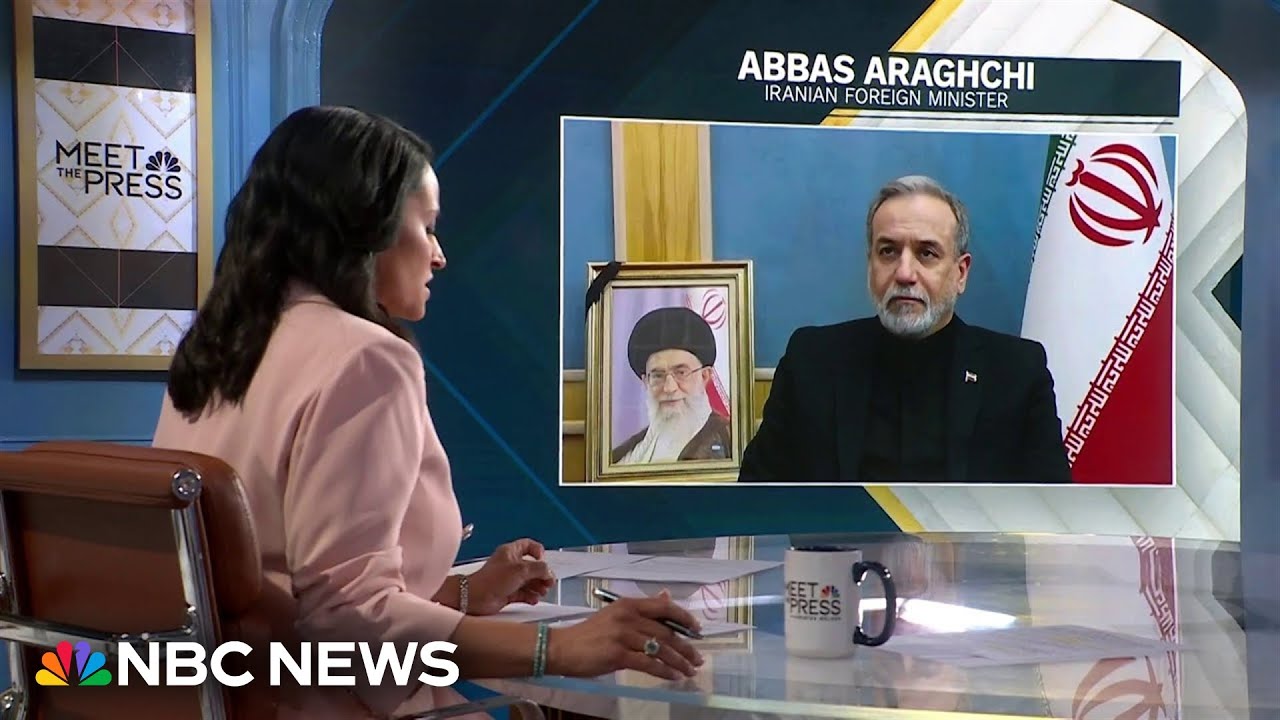
Provides a direct look at how Iranian leadership uses diplomatic ambiguity to navigate questions about sensitive military alliances.
Iran foreign minister says 'we have a...
Viewer Guidance (3 tips)
Consider alternative frames
Information is consistently shaped from one angle. Seek out how other sources present the same facts.
Question unstated assumptions
Arguments rely on assumptions treated as obvious. Ask what you'd need to already believe for the claims to land.
Watch for emotional framing
This content frequently uses emotional appeal. Notice when feelings are being prioritized over evidence.
Technique Fingerprint (from knowledge graph)
Normalization Of Escalation
This technique was detected by AI but doesn't yet map to our curated glossary. We're tracking its usage patterns.
Anchoring
Presenting an extreme number or claim first so everything after seems reasonable by comparison. The first piece of information becomes your reference point — even when it's arbitrary or deliberately inflated. Works even when you know the anchor is irrelevant.
Tversky & Kahneman's anchoring heuristic (1974)
Responsibility reframing
AI detected as: Strategic Reframing
Reframing a situation so the person who caused harm appears to be the real victim, and the actual victim appears responsible. It forces observers to reconsider who deserves sympathy, distracting from the original wrongdoing.
Freyd's DARVO framework (1997) — Deny, Attack, Reverse Victim and Offender
Juxtaposition
This technique was detected by AI but doesn't yet map to our curated glossary. We're tracking its usage patterns.
Narrative Pivoting
This technique was detected by AI but doesn't yet map to our curated glossary. We're tracking its usage patterns.
In-group/Out-group framing
AI detected as: Presumptive Framing
Leveraging your tendency to automatically trust information from "our people" and distrust outsiders. Once groups are established, people apply different standards of evidence depending on who is speaking.
Social Identity Theory (Tajfel & Turner, 1979); Cialdini's Unity principle (2016)
Forced equivalence
AI detected as: False Dilemma Framing
Presenting two things as equally valid when they aren't. By giving equal weight to a well-supported position and a fringe one, it manufactures the appearance of legitimate debate. Feels like fairness — "hearing both sides" — even when one side has overwhelming evidence.
Boykoff & Boykoff (2004) on media false balance
Presumptive Questioning
This technique was detected by AI but doesn't yet map to our curated glossary. We're tracking its usage patterns.
Moral framing
AI detected as: Moral Asymmetry Framing
Presenting a complex issue with genuine tradeoffs as a simple choice between right and wrong. Once something is framed as a moral issue, compromise feels like complicity and disagreement feels immoral rather than reasonable.
Haidt's Moral Foundations Theory; Lakoff's framing research (2004)
Pathos
AI detected as: Emotional Sequencing
Appealing to your emotions — fear, joy, anger, sadness — to make an argument feel compelling. Rather than persuading through evidence, it works by putting you in an emotional state where you're more receptive. The emotion becomes the proof.
Aristotle's Rhetoric; Kahneman's System 1 processing
Moral framing
Presenting a complex issue with genuine tradeoffs as a simple choice between right and wrong. Once something is framed as a moral issue, compromise feels like complicity and disagreement feels immoral rather than reasonable.
Haidt's Moral Foundations Theory; Lakoff's framing research (2004)
Responsibility reframing
Reframing a situation so the person who caused harm appears to be the real victim, and the actual victim appears responsible. It forces observers to reconsider who deserves sympathy, distracting from the original wrongdoing.
Freyd's DARVO framework (1997) — Deny, Attack, Reverse Victim and Offender
In-group/Out-group framing
Leveraging your tendency to automatically trust information from "our people" and distrust outsiders. Once groups are established, people apply different standards of evidence depending on who is speaking.
Social Identity Theory (Tajfel & Turner, 1979); Cialdini's Unity principle (2016)
Forced equivalence
Presenting two things as equally valid when they aren't. By giving equal weight to a well-supported position and a fringe one, it manufactures the appearance of legitimate debate. Feels like fairness — "hearing both sides" — even when one side has overwhelming evidence.
Boykoff & Boykoff (2004) on media false balance
Pathos
Appealing to your emotions — fear, joy, anger, sadness — to make an argument feel compelling. Rather than persuading through evidence, it works by putting you in an emotional state where you're more receptive. The emotion becomes the proof.
Aristotle's Rhetoric; Kahneman's System 1 processing
Similar Channels (shared influence techniques)
Featured People
Analyzed Videos (11)
Iranian foreign minister: Russia is helping Iran ‘in many different directions’
61.3K views
U.N. Amb. Mike Waltz says ‘Iran has been at war with us’ and ‘Trump is ending it’: Full interview
11.3K views
Hakeem Jeffries: ‘No, I don’t think’ Kamala Harris has lost relevancy after Crockett endorsement
14.8K views
U.N. Amb. Mike Waltz on Russia helping Iran amid the war: 'Trump will deal with it accordingly'
2.1K views
Iran foreign minister reacts to Trump saying he'll pick the next leader of Iran: Full interview
161.9K views
Hakeem Jeffries insists ‘American people deserve answers’ on Iran: Full interview
11.7K views

Iran foreign minister says 'we have a very good partnership with Russia’ amid Iran war
2.8K views
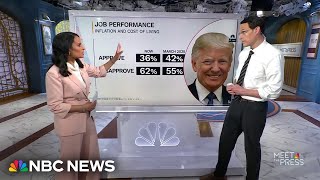
Steve Kornacki: Democrats hold midterm edge in new NBC News poll
20.5K views

Trump honors 'heroes' killed in Iran war
52.5K views

NBC Nightly News Full Episode - March 7
334.0K views

This Morning’s Top Headlines – March 6 | Morning News NOW
71.0K views