
Samuel Aziz
Executive Summary
The official Channel of Samuel Aziz - From German Village Atheist to Muslim Millionaire Revert on a Life Mission for Islam. Uniting the Ummah and Building a Digital Islamic Golden Age with the Muslim Silicon Valley and Ihsan Bank.
Across 6 videos, this channel demonstrates low persuasion intensity, primarily through Parasocial leveraging. Recurring themes suggest consistent operative goals beyond stated content.
Key Metrics
Channel Rating
Minimal persuasion techniques detected. Content is primarily informational.
Recurring Themes
The channel operates as a high-level recruitment funnel for a private financial ecosystem, specifically Ihsan Bank and the 'Muslim Silicon Valley'. By merging religious identity with wealth accumulation, the creator convinces viewers that investing in his specific commercial ventures is a spiritual obligation necessary for the restoration of Islamic global influence.
The channel consistently frames investment and participation in its specific financial products as a divine mandate and a moral escape from global 'enslavement'.
The content systematically funnels high-net-worth individuals and entrepreneurs into a private tech and banking pipeline under the guise of a 'Digital Islamic Golden Age'.
The creator uses critiques of traditional Islamic and global banking to position his own ventures as the only authentic and ethical alternative for the Ummah.
What's Valuable Here

Offers a structured breakdown of riba as 'invisible poison' and core Islamic finance principles like asset-backing, useful for viewers exploring halal options.
$100M CEO Reveals the Truth about Islamic Banking

Provides a Forbes-inspired breakdown of billionaire business models reframed for halal scalability, highlighting patterns like US dominance and acquisitions.
7 Halal Businesses to Make 1 Billion $
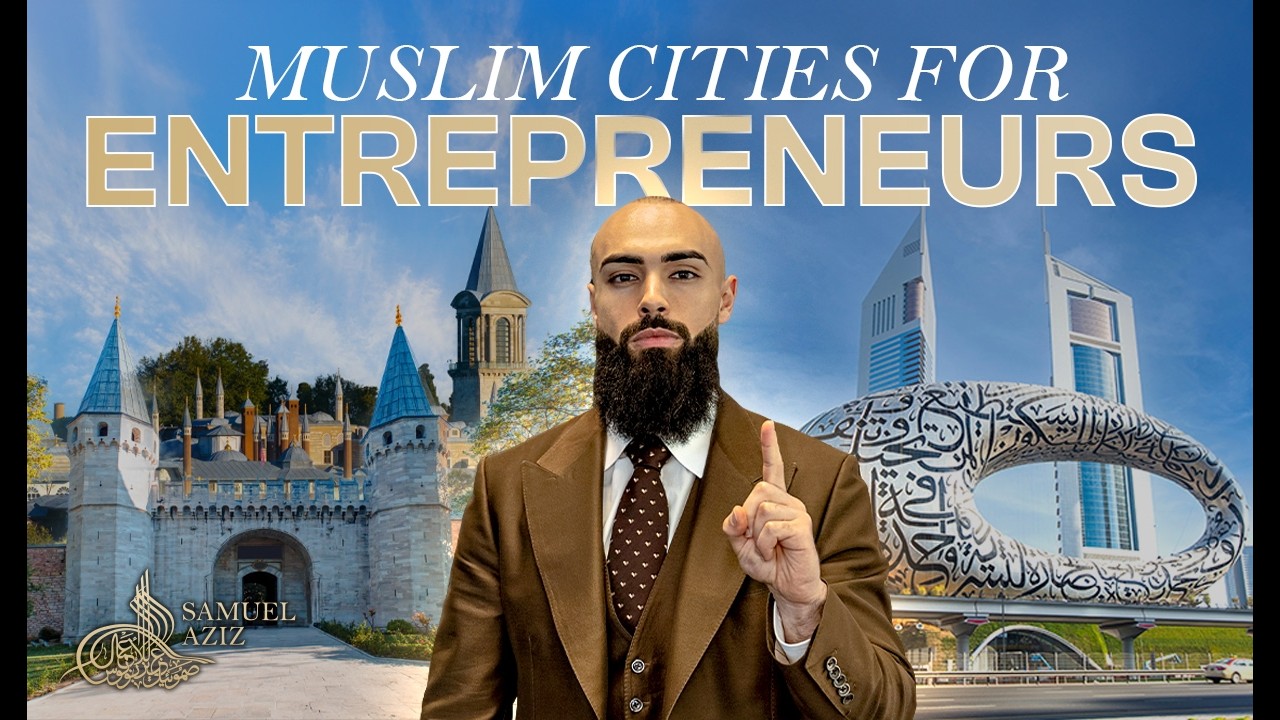
Provides granular, firsthand details on financial districts (KAFD, DIFC, ADGM, QFC, Istanbul IFC), tax perks, and setup processes in specific Muslim cities for digital entrepreneurs.
Best Muslim Cities for Entrepreneurs in 2026

Provides rare real-time documentation of pursuing a banking license and defining Islamic company principles from a self-funded entrepreneur's viewpoint.
Muslim Millionaire Building a Bank | EP1

Provides specific historical examples like the House of Wisdom and early Muslim currency/dinars to inspire Muslim entrepreneurship in tech and finance today.
Muslim Millionaire uniting the Ummah

Provides a unique perspective on how a high-net-worth individual reconciles sudden wealth with a search for existential meaning and ethical responsibility.
Why I converted to Islam after I became a Millionaire
Persuasion Dimensions
Most Used Techniques
Fear appeal
Presenting a vivid threat and then offering a specific action as the way to avoid it. Always structured as: "Something terrible will happen unless you do X." Most effective when the threat feels personal and the action feels achievable.
Witte's Extended Parallel Process Model (1992)
In-group/Out-group framing
Leveraging your tendency to automatically trust information from "our people" and distrust outsiders. Once groups are established, people apply different standards of evidence depending on who is speaking.
Social Identity Theory (Tajfel & Turner, 1979); Cialdini's Unity principle (2016)
Performed authenticity
The deliberate construction of "realness" — confessional tone, casual filming, strategic vulnerability — designed to lower your guard. When someone appears unpolished and honest, you evaluate their claims less critically. The spontaneity is rehearsed.
Goffman's dramaturgy (1959); Audrezet et al. (2020) on performed authenticity
Viewer Guidance
People or groups are reduced to types. Consider whether the characterization serves the argument more than the truth.
This content frequently uses emotional appeal. Notice when feelings are being prioritized over evidence.
Information is consistently shaped from one angle. Seek out how other sources present the same facts.