Bobby Parrish
Executive Summary
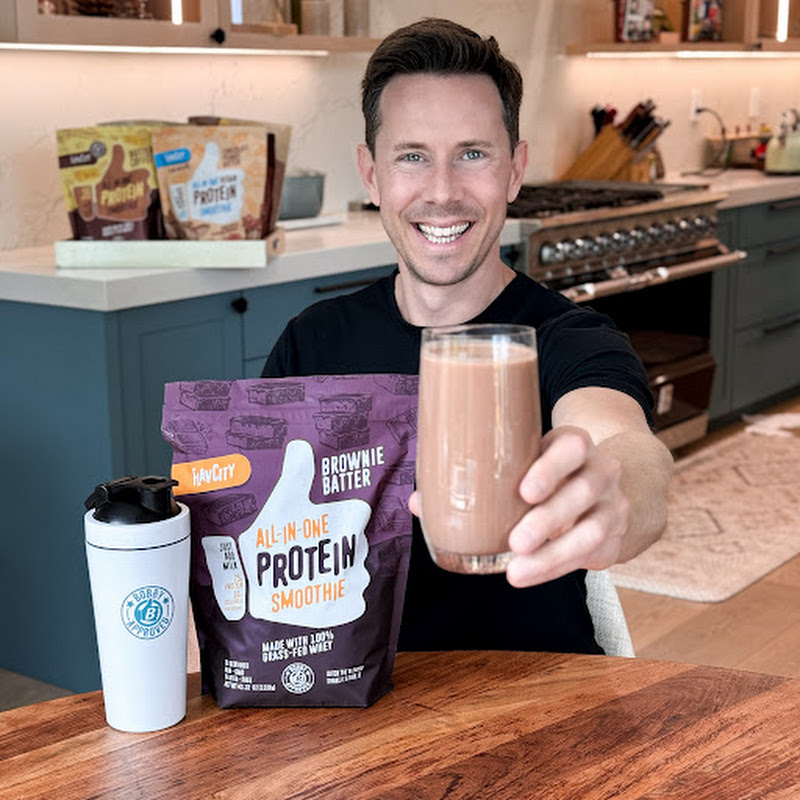
On my channel you will : - Learn how to shop for the best quality items at the grocery store - Learn how to eat the better and help eliminate inflammatory oils and processed sugars from your diet - Learn about my best-in-class Protein Smoothies, Elec...
Across 11 videos, this channel demonstrates low persuasion intensity, primarily through Appeal to authority. Recurring themes suggest consistent operative goals beyond stated content.
Key Metrics
Channel Rating
Moderate persuasion used transparently. The channel is upfront about its perspective — this is rhetoric, not manipulation.
What's Valuable Here

Provides specific ingredient breakdowns, sugar visualizations in teaspoons, and price comparisons for 20 cereals, helping viewers evaluate options in stores like Walmart.
I Tried Every CEREAL & Ranked Them from Healthy to TOXIC

This video identifies specific, high-protein, and organic options at Aldi that offer significant cost savings compared to name-brand health food stores.
4 ALDI Finds I Bought Today

Provides a detailed look at specific Costco price drops and physical product features (like the Ninja air fryer's ceramic coating) that help viewers plan a shopping trip.
Top 10 COSTCO Deals You NEED To Buy in March 2026 (and what ...

Provides a practical look at specific Costco product labels and identifies snacks with minimal added sugars and alternative oils.
Top 10 COSTCO Snacks in 10 Minutes That Are Actually Worth B...

Provides a quick look at specific product ingredients and pricing at Costco, which is helpful for budget-conscious shoppers following a whole-foods diet.
3 NEW Costco Deals I Bought Today

Provides specific examples of 'clean label' snack alternatives for parents looking to reduce processed sugar and seed oils in their children's diets.
Rose’s Fave School Snacks
Persuasion Dimensions
Most Used Techniques
Urgency framing
Creating artificial time pressure to force a decision before you can think it through. 'Only 3 left!' 'Act now!' The technique works because genuine scarcity is a real signal, so the urgency feels rational even when it's manufactured.
Cialdini's Scarcity principle (1984); dark patterns research (Mathur et al., 2019)
Association
Pairing a new idea, product, or person with something you already feel positively or negatively about. The goal is to transfer your existing emotional response without any logical connection. It works below conscious awareness.
Evaluative conditioning (Pavlov); IPA 'Transfer' technique (1937)
Loaded language
Using emotionally charged words where neutral ones would be more accurate. Calling the same policy 'reform' vs. 'gutting,' or the same people 'freedom fighters' vs. 'terrorists,' triggers different reactions to identical facts. The word choice does the persuading.
Hayakawa's Language in Thought and Action (1949); Lakoff's framing (2004)
Us vs. Them
Dividing the world into two camps — people like us (good, trustworthy) and people not like us (dangerous, wrong). It exploits a deep human tendency to favor our own group. Once you accept the division, information from "them" gets automatically discounted.
Tajfel's Social Identity Theory (1979); Minimal Group Paradigm
Viewer Guidance
Arguments rely on assumptions treated as obvious. Ask what you'd need to already believe for the claims to land.
Information is consistently shaped from one angle. Seek out how other sources present the same facts.
Calls to action follow emotional buildup. Consider whether the ask would feel as urgent without the preceding framing.