We can't find the internet
Attempting to reconnect
Something went wrong!
Attempting to reconnect

The Still Report
@thestillreport · 171.0K subscribers · 893 videos · 10 analyzed
Share Influence ReportCommunication Profile (across 10 videos)
Stated Purpose
The latest US and world news, current events in Washington, and the United States political climate. Bill Still is a former newspaper editor and publisher. He has written for USA Today, The Saturday ...
Operative Pattern
Across 10 videos, this channel demonstrates low persuasion intensity, primarily through In-group/out-group Framing. Recurring themes suggest consistent operative goals beyond stated content.
Avg Intensity
Avg Transparency
Top Technique
In-group/Out-group framing
Leveraging your tendency to automatically trust information from "our people" and distrust outsiders. Once groups are established, people apply different standards of evidence depending on who is speaking.
Social Identity Theory (Tajfel & Turner, 1979); Cialdini's Unity principle (2016)
Persuasion Dimensions
Intensity Over Time
Per-Video Operative Goals — detected in individual analyses

The content aims to reinforce a specific geopolitical worldview of American dominance and 'monetary reform' while soliciting financial support and product sales from a self-selected audience.

The video advocates for US-backed regime change in Iran and promotes the Second Amendment by framing the Iranian situation as a cautionary tale about the dangers of a disarmed citizenry.

The content aims to reinforce a pro-Trump, national security-focused worldview while soliciting financial support and product sales from a self-selected audience.

The content aims to provide a critical report on Kristi Noem's removal from DHS while positioning the channel as an 'insider' source for political and economic survival.

The content wants viewers to celebrate US military strikes on Iran under Trump as a victory for freedom and support the channel's pro-Trump, anti-Iran regime perspective, aligning with its stated purpose as opinionated news commentary.
What's Valuable Here

Offers a clear, concise retelling of the Purim story with timely geopolitical parallels for context-aware viewers.
5060, How Queen Esther Saved the Jews...

Offers a concise recap of a specific military analyst's take on Trump's Iran strategy and rumor debunking, useful for followers tracking hawkish viewpoints.
5057, Gen Holt on Iran: We’re Going ...
Provides a full clip of John Fetterman's interview on Iran policy with host analysis highlighting his unique Democratic support for Trump's position.
5058, Why Fetterman Was the Only Dem ...

Provides a timely, detailed rundown of specific primary results like Texas races and Ken Paxton runoff, plus fresh geopolitical updates like the Iranian drone ship sinking, useful for conservative viewers tracking elections.
5063 Afternoon News with Beth and Bill

Provides a timely, enthusiastic recap of reported strike details like targets hit, casualties, and geopolitical ripple effects from a pro-Trump viewpoint useful for aligned viewers seeking unfiltered celebration.
5059 IRAN

Provides specific historical reminders of 1979 hostages, Beirut bombing, and Obama-era cash payments to contextualize current Iran events for viewers unfamiliar with the timeline.
5062 News at Noonish with Beth and Bill
Viewer Guidance (3 tips)
Consider alternative frames
Information is consistently shaped from one angle. Seek out how other sources present the same facts.
Watch for group characterization
People or groups are reduced to types. Consider whether the characterization serves the argument more than the truth.
Watch for emotional framing
This content frequently uses emotional appeal. Notice when feelings are being prioritized over evidence.
Technique Fingerprint (from knowledge graph)
Informational Blurring
This technique was detected by AI but doesn't yet map to our curated glossary. We're tracking its usage patterns.
Conditional emotional appeal
AI detected as: Emotional Hijacking Via Patriotic/familial Sentimentality
Using guilt, fear, or obligation to pressure you into compliance. The message is: "If you were a good person, you would do this." It bypasses rational evaluation by making refusal feel like a moral failure.
Forward's FOG model (1997) — Fear, Obligation, Guilt
In-group/Out-group framing
AI detected as: Threat Convergence Framing
Leveraging your tendency to automatically trust information from "our people" and distrust outsiders. Once groups are established, people apply different standards of evidence depending on who is speaking.
Social Identity Theory (Tajfel & Turner, 1979); Cialdini's Unity principle (2016)
Archetypal Mapping
This technique was detected by AI but doesn't yet map to our curated glossary. We're tracking its usage patterns.
Moral framing
AI detected as: Theological Priming And Moral Absolutism
Presenting a complex issue with genuine tradeoffs as a simple choice between right and wrong. Once something is framed as a moral issue, compromise feels like complicity and disagreement feels immoral rather than reasonable.
Haidt's Moral Foundations Theory; Lakoff's framing research (2004)
Anchoring
Presenting an extreme number or claim first so everything after seems reasonable by comparison. The first piece of information becomes your reference point — even when it's arbitrary or deliberately inflated. Works even when you know the anchor is irrelevant.
Tversky & Kahneman's anchoring heuristic (1974)
The 'reasonable Defector' Narrative
This technique was detected by AI but doesn't yet map to our curated glossary. We're tracking its usage patterns.
Moral framing
Presenting a complex issue with genuine tradeoffs as a simple choice between right and wrong. Once something is framed as a moral issue, compromise feels like complicity and disagreement feels immoral rather than reasonable.
Haidt's Moral Foundations Theory; Lakoff's framing research (2004)
Conditional emotional appeal
Using guilt, fear, or obligation to pressure you into compliance. The message is: "If you were a good person, you would do this." It bypasses rational evaluation by making refusal feel like a moral failure.
Forward's FOG model (1997) — Fear, Obligation, Guilt
Us vs. Them
Dividing the world into two camps — people like us (good, trustworthy) and people not like us (dangerous, wrong). It exploits a deep human tendency to favor our own group. Once you accept the division, information from "them" gets automatically discounted.
Tajfel's Social Identity Theory (1979); Minimal Group Paradigm
In-group/Out-group framing
Leveraging your tendency to automatically trust information from "our people" and distrust outsiders. Once groups are established, people apply different standards of evidence depending on who is speaking.
Social Identity Theory (Tajfel & Turner, 1979); Cialdini's Unity principle (2016)
Similar Channels (shared influence techniques)
Featured People
Analyzed Videos (10)
5066, Why Is China Helpless To Fight Trump’s Attacks?
308 views
5065, Iranian Who Targeted Trump Found Guilty
585 views
5064, Kristi Noem Removed as Sec of Homeland Security
811 views

5063 Afternoon News with Beth and Bill
746 views

5062 News at Noonish with Beth and Bill
897 views
5061, How Can Iranians Take Back Power Without Guns?
2.2K views

5060, How Queen Esther Saved the Jews of Persia on Purim
1.0K views
5059 IRAN
1.4K views
5058, Why Fetterman Was the Only Dem Who Supported Trump
2.3K views
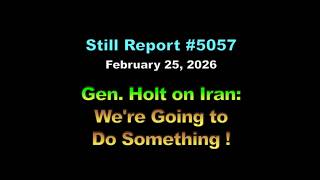
5057, Gen Holt on Iran: We’re Going to Do Something!
1.2K views